



Let us know how you did!


If you like a good nap, Mexico’s noisy neighborhoods present a challenge

I’ve always been an early riser. When the sun starts coming up, my eyes start opening on their own while the thoughts in my brain start darting around. Though I can occasionally stay in bed later, I’m usually up by 8 a.m.
Oh, but I do love naps. I would say that I especially like them when I didn’t sleep well the night before, but the truth is, I think I’m one of those people who just need 10 hours of sleep out of every 24 to feel well-rested. Getting those hours all in at the same time is not reasonable under the circumstances of my life, and so I usually tap out on my night’s sleep somewhere between six and eight hours.

So my ideal sleep schedule involves a one or two-hour afternoon nap, which is just not reasonable in my part of Mexico, and probably not in most.
Napping issues in Mexico
Why, you may ask? In part, it’s because I have a child, and school is indefinitely not in session. I can’t count the number of times I’ve been almost entirely asleep and she’s woken me up to watch whatever movie I’ve put on for her in order to get my nap in the first place. I’ve also been woken to look for missing toys that are suddenly an emergency and, of course, for snacks.
She’s actually not my primary source of nap interruption, though: It’s people coming to the door.
Easily five people a day ring my doorbell. Though it makes me grouchy when it happens during my nap, I can hardly be mad at them: It’s a common occurrence.
Sometimes it’s the guys who carry off trash in their truck, an appreciated service in a city with rather unreliable and unpredictable trash collection (plus, I have to carry it a few blocks away because the truck apparently can’t make it up to where I live).

Other times, it’s the man and his cute son who sell fruits and vegetables door-to-door. There’s an Indigenous woman and a young child who speak very little Spanish who sell flowers as well, and the Yakult (those tiny probiotic yogurt drinks) lady comes by every Wednesday.
I can also expect at least once a week that the guy decked out in military gear who “protects” the neighborhood by walking around during the night blowing a whistle will arrive to collect his 10-peso “voluntary” donation.
Unfortunately, the people who came around selling ice cream haven’t been back in a while. But I have been able to buy pens that double as smartphone cleaners, made-in-China 3D puzzles of houses that my daughter adores — even though they’re even less-than-dollar-store quality — and the occasional lollipop in exchange for a donation to some good cause. Or the idea of a good cause.
Delivery drivers bring convenience but also ruin naps
And since this is modern Mexico, we’re having quite a few things delivered: everything from groceries to packages to medical devices for my houseguest with mold allergies.
When people seem curious about moving to Mexico, one of my first warnings is this: If you value silence, quiet neighborhoods and generally being left alone, this is not the place for you.
If my daughter or the doorbell ringing doesn’t wake me up, the neighbor’s dog does. It’s situated on the side of the house, on a little strip of a patio that seems designed specifically to make lonely animals neurotic. We don’t live on a busy street, but anything that passes in front of the house — human, animal, something on wheels, a piece of plastic being carried by the wind — will usually set this dog off.
The acoustics are such that when it starts barking, the noise goes right into the rooms at the front of my house. Turning up the TV volume isn’t enough; it must be paused until the dog quiets down again. The neighbors are well-meaning and have tried to keep it quiet, but in the end, it’s a “guard dog” for all of us, and the unfortunate acoustics of our two places are not their fault.
The cowbell ringer doesn’t help either

What other sounds might you hear? Well, there’s the person who runs up and down the streets with a cowbell to let you know that you’ve got perhaps a 15-minute window of opportunity to take out the trash.
There’s the “gas” song that blares from the truck to let you know they’re around. If you need a new tank of fuel for cooking and heating your shower, that’s your cue to run out the front door and flag them down.
There’s the high-pitched whistle of the guy who will sharpen your knives for you. Then there are the people selling elotes or tamales — the latter of which doesn’t happen nearly enough on my street, if you ask me; I should have proposed to the guy selling those delicious mole tamales when I had the chance. Or there are the people offering to buy your large domestic appliances, which they let you know about via a megaphone stuck to the roof of their car.
‘Quiet down’ doesn’t work
The notion of telling children to quiet down seems about as logical to most people here as getting mad at the wind for blowing, and if a neighbor, or five, is having a party nearby, you’ll get to hear all of their music and probably some loud drunken conversations as well. Most Mexicans, including my daughter, don’t seem to be bothered in the least by all of these noises. I, as a grouchy, bougie gringa, seem to be the only one having to stop herself from jumping up and down like Rumplestiltskin throwing a tantrum whenever the doorbell’s just been rung for the sixth time in as many hours.
My saving grace? I have a bad ear. While I can’t ignore my child or the doorbell, if I’m expecting a delivery, I can lie on my “good” ear and be at least a little deaf to the world. So, if you live in Mexico and value silence, I recommend that you learn to accept any one-sided hearing loss as a blessing in disguise.
This article was first published in 2020.
Sarah DeVries writes from her home in Xalapa, Veracruz.
How San Miguel de Allende’s hotels became the center of the city’s social scene
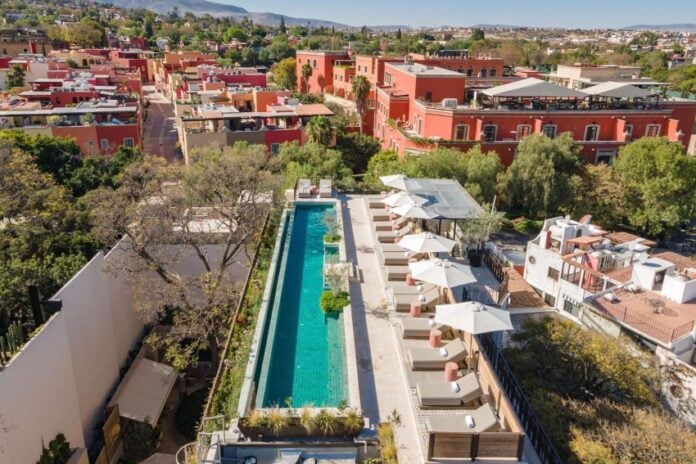
I arrive at NUMU Hotel, tucked into a quieter residential pocket south of San Miguel de Allende’s historic center near Parque Juárez, and I’m immediately greeted by the biggest, laziest and cutest Bernese Mountain Dog that I’ve ever seen.
Pancho, the hotel’s dog, doesn’t do much more than wait around for a belly rub or slowly meander to the closest square, but he bridges what would be a wide gap in most tourist towns between hotel guests and neighborhood locals. Over the next two nights, it will become widely apparent that in San Miguel, visitors and residents move through the same spaces with an ease that feels unusually comfortable. The social scene here spins, in large part, around the city’s design-forward hotels. The doors, quite literally, are open to everyone.
San Miguel’s architecture is built for gathering
View this post on Instagram
This is partly a product of history: In the early 20th century, foreign artists discovered San Miguel’s baroque and neoclassical colonial structures, establishing institutes here like the Escuela de Bellas Artes. Muralists, painters and eventually former U.S. G.I. Bill students followed. The city’s identity as an artist community took root and, with it, so did a culture of interiors worth lingering in.
Little has changed, and today, hotel lobbies in San Miguel are punctuated by the works of Mexican artists, inviting passersby inside to ogle. NUMU, for example, recently showcased Tijuana-born artist Miguel Milló; Casa No Name regularly features paintings by resident artist Cecilia García Amaro, originally from Mexico City.
The tradition is alive, and it pulls people off the street and into San Miguel’s hotels.
If it’s the art that catches the eye, it’s the colonial layout that keeps folks inside. Central courtyards — built originally to provide air circulation and outdoor relief from the heat — are natural gathering spaces. Flat rooftops now feature string lights and are populated with bars, framing a terra-cotta-dotted skyline and spectacular sunsets.
A quick scan of Google Maps reveals at least a dozen rooftop bars and pools within a few minutes’ walk of Jardín Allende, San Miguel’s main central plaza. In a city where temperatures peak around 30 degrees Celsius, it’s no wonder locals eagerly purchase a day pass and spend an afternoon poolside at a hotel they’ve never slept in. But more on that later.
The manager knows everyone’s name, and the dog knows everyone’s schedule
NUMU’s ground-floor dining area, El Fogón de Enrique — often referred to by locals simply as Restaurant Enrique — sits on an internal patio wrapped in colorful murals and hanging vines. Breakfast runs until 2 p.m., a generous, unhurried window of time that locals love. Afterward, the space transforms into a wine bar.
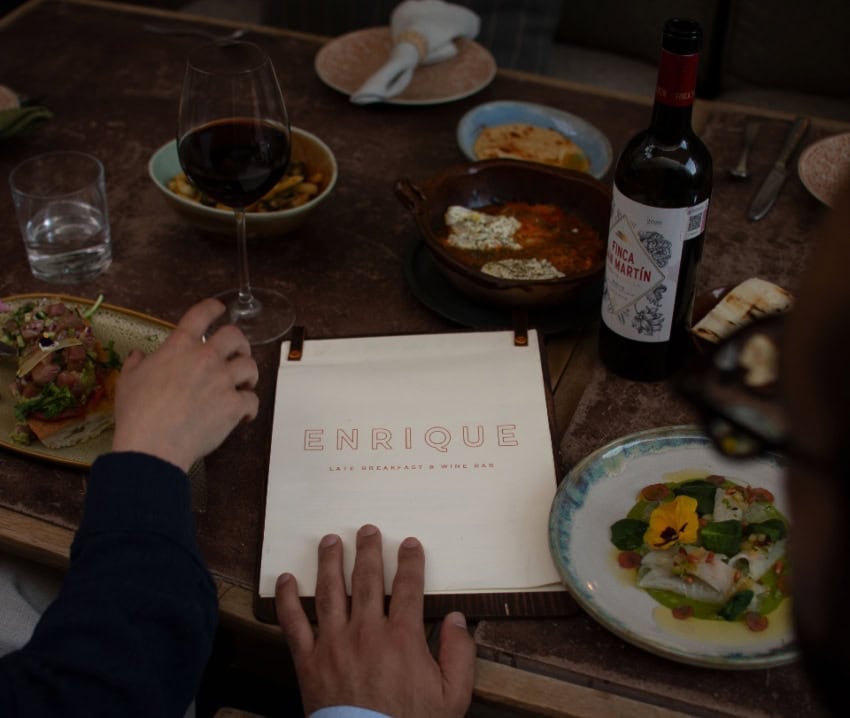
Digging into an açaí bowl one morning, I eavesdropped on the tables around me and clocked at least two groups whose conversations placed them as neighborhood residents, not spectators passing through. I asked Raúl, the general manager, whether this was common.
“We have many local people — expats and Sanmiguelenses — who come to our activities and enjoy our food and beverage spaces,” he said.
That evening, after a tequila tasting on the rooftop bar with some of the best views I’d seen in the city, I settled into Noia, the hotel’s top-floor Mediterranean restaurant, to try and soak up the spirit of the place. A group of eight women in the corner was deep into a private wine tasting — boisterous, clearly having a good time. Upon further investigation, I discovered that they lived in town.
Beyond gastronomy, locals and visitors meet on the mat too. A small-group Pilates class on the hotel patio the next morning drew a handful of participants, one of whom, it turned out, wasn’t a guest either.
Hanging out at hotels is a San Miguel specialty
Melissa Bastinelli teaches fitness classes in San Miguel, and she often hosts wellness events in hotels like NUMU.
“I feel like there are a lot of hotels you want to stay at or hang out in, even if you live here,” she told me.
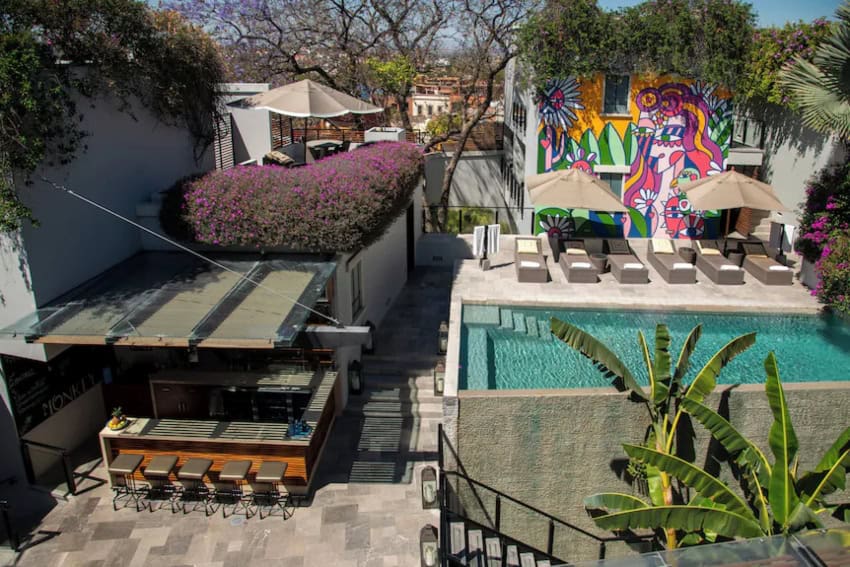
According to Raúl, NUMU’s regular schedule of classes — yoga, barre, meditation and tai chi — draws a consistent mix of people, many of whom buy a day-pass package that bundles pool and gym access — with some options like spa treatments.
Pancho, for his part, is doing his own version of community outreach.
“Many locals, on their daily walks with their own pets, make a mandatory stop to say hello to Pancho,” Raúl said, smiling. “And he is the happiest when they visit.”
Since the hotel has been pet-friendly from the beginning, Pancho — who’ll be turning four in June — was brought in to host the animals that come and stay. He’s since become something of a neighborhood fixture, a celebrity in his own right. He even has his own Instagram.
Pancho is, by any reasonable measure, doing more for local-hotel relations than any marketing campaign could.
San Miguel de Allende’s best hotels for locals
NUMU sits directly across from the Rosewood San Miguel de Allende, a luxury hotel that’s one of the city’s most storied addresses. Its rooftop bar, Luna, functions less like a hotel amenity and more like an elevated town square.
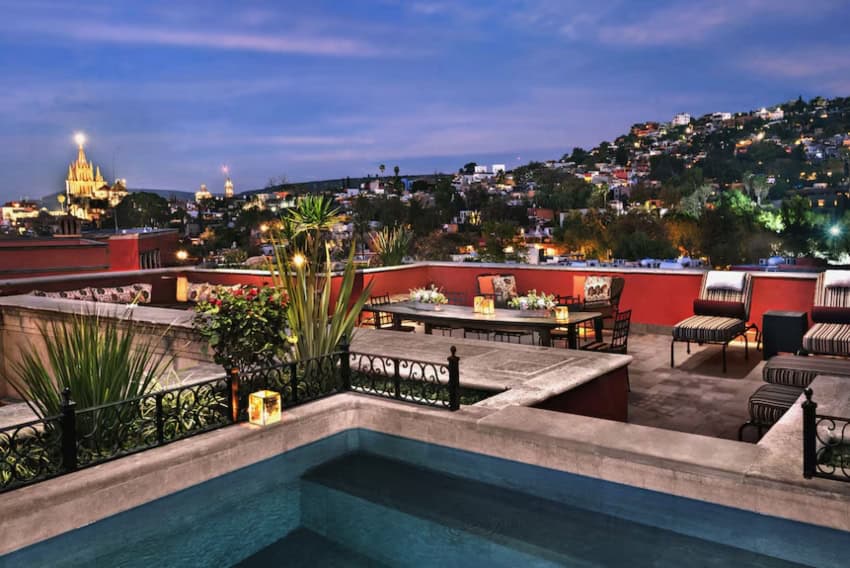
Open to nonguests on a walk-in basis, Luna draws locals and visitors with the same pull: unobstructed views of La Parroquia’s neo-Gothic spires, a bold sunset and a Mediterranean-inspired menu built for drawn-out dining. For residents who want something more permanent, Rosewood offers a high-end wellness membership that gives year-round access to the spa, fitness center and an outdoor pool.
Speaking of pools, Live Aqua Urban Resort, Real de Minas, NUMU and Hotel Piedras Negras are all hotels that offer pool day passes to nonguests — a small but telling detail about how these properties see themselves in relation to the community around them.
Where to find San Miguel de Allende’s greatest rooftops
Melissa, who scouts hotel spaces for her wellness events partly through Instagram and partly through Savant — the city’s weekly cultural guide — puts it simply.
“Many of the best rooftops in San Miguel are at hotels. I usually find events because I’ve already been to the hotel for something else: the design, the rooftop or the vibe.”
A few blocks away, the boutique Hotel Matilda operates on a different register but with the same open-door philosophy. Its sleek interiors house an impressive collection of contemporary Mexican artworks by Bosco Sodi and Aldo Chaparro, which were commissioned specifically for the hotel’s opening in 2010.
Through its Culture Club platform, Matilda hosts art exhibitions, culinary events and experiences like La Cena Negra, a dinner now in its 14th edition that the hotel describes as “a ritual — a tribute, an act of resistance, art and community.”
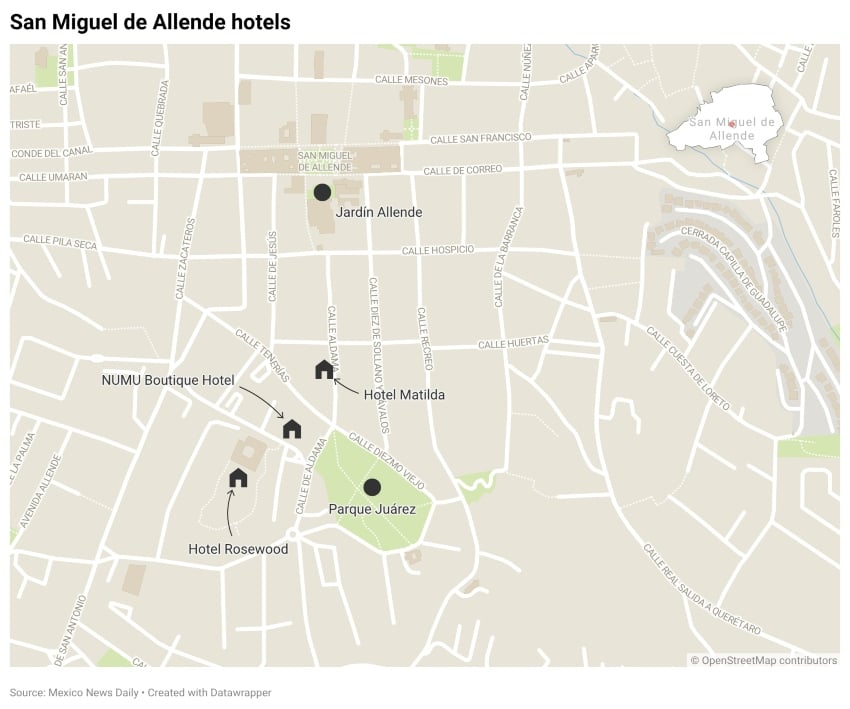
For live music, Casa de los Soles has built a reputation as one of San Miguel’s more reliably programmed hotel venues. The San Miguel Live calendar regularly lists concerts there that are ticketed and open to the public. And for new residents looking for an entry point, the San Miguel Newcomers group hosts a monthly meet-and-greet on Casa Grande Boutique Hotel’s rooftop terrace, a deliberately low-key way to get to know your neighbors.
Why San Miguel’s hotel culture is unlike any other in Mexico
It’s rare to see locals hanging out at boutique hotels in a place like Mexico City or Guadalajara. Yet, in San Miguel, hospitality is integrated into the community; neighbors meet in lobbies or rooftops for talks and tastings, live music and art openings, morning yoga and long Sunday brunches, with no one moving the nonguests along. In fact, Mexico News Daily’s own CEO, Travis Bembenek, spoke at the 21st San Miguel Writers’ Conference & Literary Festival at the Hotel Real de Minas.
Which brings us back to Pancho: While waiting to check out on the final morning of my San Miguel sojourn, I watched a woman enter the lobby to scratch behind Pancho’s ears and chat with the front desk staff. Whether she was a guest or a neighbor, I can only harbor a guess. Raúl knew her, as he seemed to know everyone who passed through, whether they had a room key or not.
Departure felt premature. There’s a particular sadness to leaving a place that made you feel like an insider upon arrival. San Miguel does that. The consolation is that the connection remains — and so does Pancho, belly-up on the lobby floor, waiting for whoever comes next.
Bethany Platanella is a travel planner and lifestyle writer based in Mexico City. She lives for the dopamine hit that comes directly after booking a plane ticket, exploring local markets, practicing yoga and munching on fresh tortillas. Sign up to receive her Sunday Love Letters to your inbox, peruse her blog, or follow her on Instagram.
Mexico and Japan join forces to study earthquake and tsunami risks off the Oaxaca coast

Scientists from Mexico and Japan have deployed deep-sea instruments off Oaxaca’s coast to better understand earthquake and tsunami risks in a region where seismic energy is believed to be building.
Researchers from the National Autonomous University of Mexico (UNAM), Mexico’s National Center for Disaster Prevention (Cenapred), the Navy, and universities in Kyoto and Tohoku placed eight ocean-bottom seismometers and three pressure gauges more than 5,000 meters below the Pacific Ocean’s surface near the tourist destination of Huatulco.
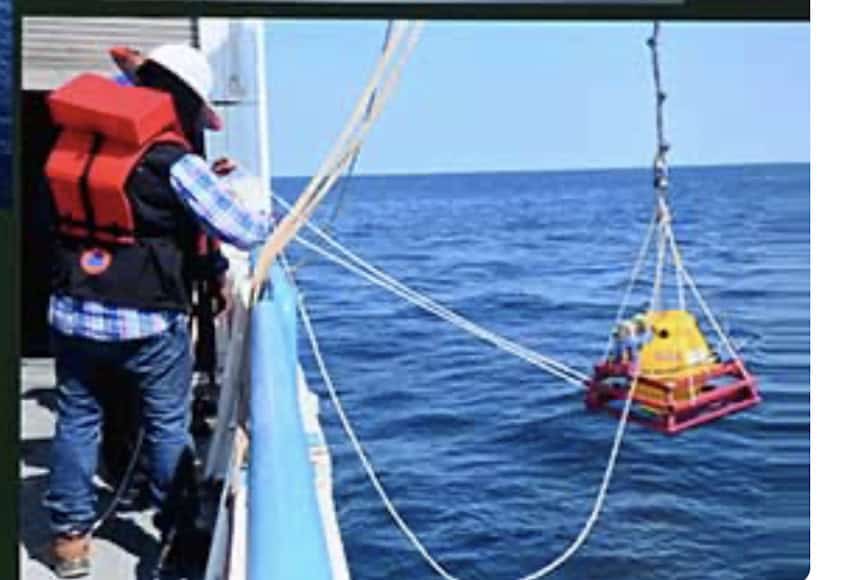
The devices will collect data for a year on slow-slip events linked to major quakes.
UNAM geophysicist Víctor Manuel Cruz Atienza said the offshore segment off Huatulco has not recorded a major earthquake since 1978, despite evidence of slow displacements and significant energy accumulation. The area is designated a seismic “gap,” according to the journal Science.
“Thanks to ocean-bottom seismometers and new tools, including machine learning, we’re finding low-frequency seismic activity offshore that wasn’t listed” in any previous databases, Professor Yoshihiro Ito of Kyoto University said in a UNAM press release. “The seabed is telling us that more is happening down there than we could see on land.”
Added Cenapred director Enrique Guevara Ortiz: “To reduce risks and benefit the population, it is necessary to understand what we are facing.”
The effort is part of the SATREPS program involving Mexico, Japan and El Salvador, aimed at improving hazard models, evacuation planning and disaster response along the Pacific Coast —as well as feeding back into Japan’s own hazard understanding.
Launched by the Japanese government in 2008, the Science and Technology Research Partnership for Sustainable Development supports joint research with developing countries on global issues such as disasters, climate and health.
UNAM announced this specific SATREPS project with Japan and El Salvador in late 2024 as a five-year effort focused on large earthquakes and tsunamis, backed by about US $800,000 a year in Japanese funding.
Though the shallow offshore segment under study had only one large earthquake since 1931, Oaxaca endured a magnitude 7.4 temblor in 2020 that caused about 10 deaths and damaged thousands of homes. Its epicenter was 23 kilometers south of La Crucecita, a town in the Huatulco municipality.
With reports from Publimetro
Mexico’s economy shrank in this year’s first quarter, but less than anticipated
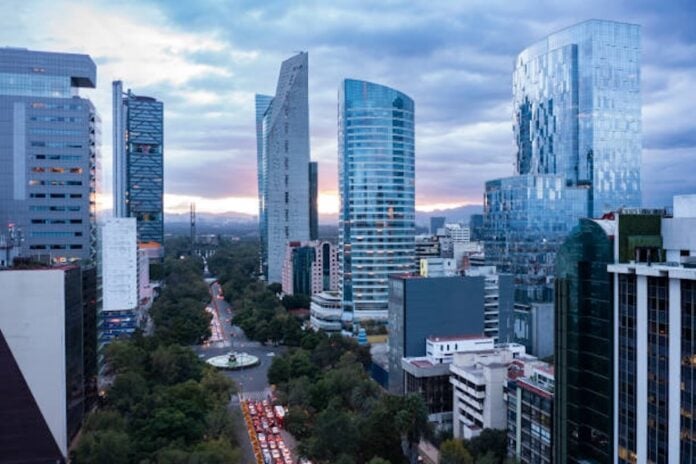
The national statistics agency INEGI on Friday confirmed that Mexico’s economy contracted during the first quarter of the year, but not as much as the preliminary data had suggested.
Even so, GDP registered its biggest drop since the fourth quarter of 2014, shrinking 0.6% in the January-March period compared to the previous three months. It was also the worst first quarter since 2020, when the onset of the Covid-19 pandemic caused the economy to shrink by 1.2%.

The first-quarter contraction revived concerns about a possible technical recession, a scenario defined as two consecutive quarters of negative growth in real GDP.
The decline in GDP overshadows the 0.7% recovery observed in 4Q 2025, which provided a slight bump at the end of a sluggish year.
“The weakness was broad-based across major sectors, reinforcing the view that the slowdown reflects fading domestic momentum rather than an isolated shock,” Andrés Abadía, chief economist for Latin America at Pantheon Macroeconomics, told reporters.
The quarterly downturn affected all three economic activities. The primary sector, which includes agriculture, fishing, mining and similar activities, recorded the steepest decline (–1.7%).
The secondary sector (manufacturing and construction) and tertiary activities (services) were down 1% and 0.4%, respectively.
In year-on-year terms, however, the economy outpaced the performance of the first three months of 2025, growing comparatively by 0.4% in 1Q 2026.
On the other hand, since President Claudia Sheinbaum took office in late 2024, aggregate investment growth has fallen from about 2% year-on-year to –6% by the end of 2025.
Despite these numbers and a challenging environment that includes the ongoing review of the US-Mexico-Canada trade pact and warnings from ratings agencies, the government maintains a growth estimate of between 1.8%-2.8% this year. This forecast relies heavily on a boost from domestic demand, the World Cup and the federal Infrastructure Plan.
The central bank (Banxico) expressed concern about the slowdown in Latin America’s second-largest economy, noting earlier this month that the first-quarter contraction would be significantly larger, cautioning that any eventual rebound would be moderate.
The newspaper El Financiero said Banxico is expected to lower its GDP forecast when it publishes its next quarterly report on May 27.
With reports from El Financiero, El Economista, Reuters and Bloomberg News
El Califa de León, Mexico’s top-rated taco stand, loses its Michelin star
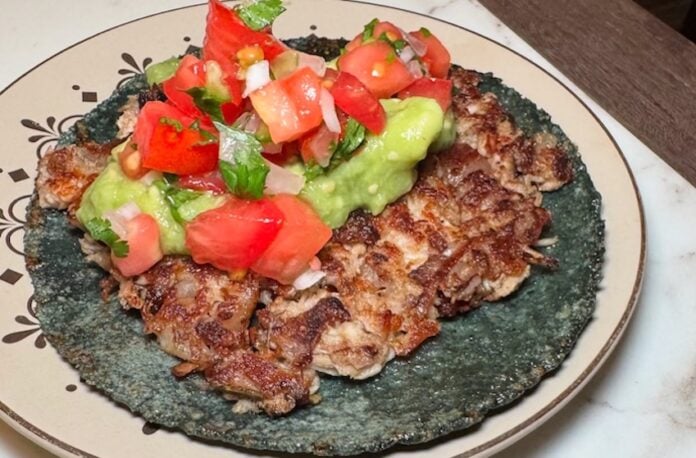
Taquería El Califa de León, the modest Mexico City taquería that made history as the only taco stand with a Michelin star, has lost that coveted recognition two years after earning it.
The latest edition of the Michelin Guide Mexico gives no reason for the downgrade. But it has said in the past that “restaurants can lose their stars if they close during the year of assessment, or if they do not maintain their standards to make it into the next edition of the guide.”
🌮⭐ ¡Cambio en la guía gastronómica!
La taquería El Califa de León perdió su Estrella Michelin 2026, aunque continuará dentro de la lista oficial de establecimientos recomendados 📖🍽️ #Michelin #CDMX #Taqueria #Gastronomía #ElCalifaDeLeon pic.twitter.com/DmWUjJYSuS— SDP Noticias (@sdpnoticias) May 21, 2026
The tiny taquería in Mexico City, which was recognized for its “exceptional” carne asada taco, was the only restaurant in this year’s edition to lose a star.
But El Califa’s misfortune doesn’t mean Mexico is erased from the Michelin map. Another taquería debuted on the coveted list that, other than high quality, has little in common with the outgoing star-holder. While El Califa has a funky taco joint vibe, the new honoree — La Once Mil — is a high-end restaurant where one taco can cost as much as 335 pesos (US $19).
“One bite is enough to convince yourself,” the Michelin Guide said.
Overseen by Chef César de la Parra, La Once Mil sits comfortably in the upscale neighborhood of Lomas de Chapultepec. It replaces EL Califa as the only taquería in the Michelin Guide.
Despite the downgrade, El Califa de León continues to be listed as an official recommendation in the Michelin Guide.
New additions in new states
In a ceremony in Guadalajara, Jalisco, on Wednesday, the Michelin Guide Mexico granted stars to 29 restaurants – two of which received two stars (Pujol and Quintonil, both retaining their stars).
But perhaps the most notable novelty this year is that the guide traveled to new states: Yucatán, Jalisco and Puebla. Until now, the Michelin Guide Mexico has reviewed restaurants only in Mexico City, Oaxaca, Baja California, Baja California Sur, Quintana Roo and Nuevo León.
In Jalisco, the French guide gave one star to Alcalde and another to Xocol. In Yucatán, it recognized Huniik, Ix’im and La Barra de Huniik with one star each. Although Michelin inspectors also reviewed restaurants in Puebla, none got a Michelin star in the current edition.
Overall, the guide offers seven new additions, also including Gaba in Mexico City and Pangea and KOLI Cocina de Origen in Nuevo León.
Mexico News Daily
Mexico and European Union sign modernized trade deal, eliminating tariffs on 99% of products
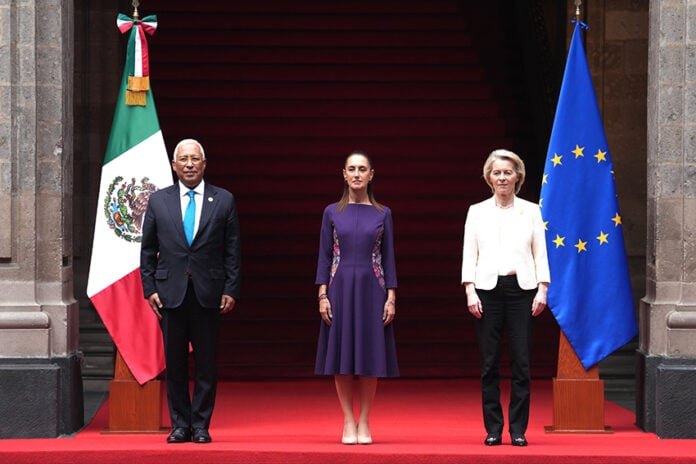
Mexico and the European Union (EU) on Friday signed a long-awaited Modernized Global Agreement (MGA) as both sides seek to expand trade relations and diversify exports away from the United States so as to partially insulate themselves from U.S. tariffs.
The accord, signed at an EU–Mexico summit in Mexico City, will reduce Mexican tariffs on European agricultural products by 95% and boost critical mineral projects in Mexico, officials said.
Wherever there is trust and partnership, there is Global Gateway.
We are investing €5 billion in Mexico, in line with President Sheinbaum’s Plan México.
Your priorities are our priorities ↓ https://t.co/RuGk9mZPK6
— Ursula von der Leyen (@vonderleyen) May 22, 2026
The new pact eliminates tariffs on 99% of products traded between the EU and Mexico, significantly facilitating agricultural trade. It will enter into force once ratified by the European Parliament and the Mexican Senate.
It will also eliminate mutual tariffs on electric vehicles and batteries.
The MGA updates the trade deal in force from 2000 by including services, government procurement, digital trade, investment and farm produce. It allows duty-free access (with some quotas) for goods such as Mexican chicken and asparagus and European milk powder, cheese and pork.
The 2000 accord covered only industrial goods.
The MGA also replaces the old bilateral agreements with a novel Investment Dispute Resolution Tribunal, which is expected to facilitate trade and investment.
Before signing the long-delayed accord (broad agreement was reached last year), Sheinbaum met privately with the European delegation to discuss issues related to political cooperation, trade and investment as part of the Mexico-European Union Summit, the first in more than a decade.
Earlier Friday morning, Ursula von der Leyen, president of the European Commission, and António Costa, president of the European Council, were welcomed by Sheinbaum with an official ceremony in the National Palace’s Courtyard of Honor.
The ceremony included renditions of the Mexican national anthem and the official anthem of the European Union.
Sheinbaum was accompanied by Foreign Minister Roberto Velasco, Interior Minister Rosa Icela Rodríguez, Finance Minister Édgar Amador and Economy Minister Marcelo Ebrard, among others.
Representing the EU were the High Representative for Foreign Affairs and Security Policy and Vice President of the European Commission, Kaja Kallas; the European Commissioner for Trade and Economic Security, Maroš Šefčovič; and the EU Ambassador to Mexico, Francisco André.
Comenzamos la 8ª cumbre #UEMéxico. Presidenta @Claudiashein gracias por su liderazgo y compromiso con el fortalecimiento de las relaciones entre México y la UE. Los acuerdos que cerraremos en CDMX son auténtica declaración geopolítica, una demostración de nuestro compromiso con… pic.twitter.com/yij41sy6QQ
— António Costa (@eucopresident) May 22, 2026
Ebrard said the reduction of more than 90% of the tariff lines would create an opportunity for Mexico to grow much faster with investments from the EU.
“There is a very large opportunity in agribusiness, the entire automotive industry, auto parts, electronics and advanced electronic components,” he said on Thursday. “The trends in our investments and trade today, including financial services, tell you where this is going.”
Trade between Mexico and the EU has risen by 75% in a decade, boosted by transport equipment, machinery, chemicals, fuels and mining products.
The EU was Mexico’s second-biggest export market after the United States last year and Mexico is the second largest importer of European agri-food products in Latin America.
With reports from Euro News, El Economista, Deutsche Welle, Excelsior, Euractiv and The Wall Street Journal
Mexico City moves to regulate cell phone use in schools

Cell phone use will soon be strictly regulated in Mexico City’s primary and secondary schools after the local Congress unanimously approved on Thursday an amendment to the capital’s Education Law requiring the development of guidelines for imposing restrictions.
Legislators insist the reform does not contemplate a total ban on cell phones in school, but rather seeks the elimination of distractions during school hours. Nor are they seeking to hinder technological innovation, but rather aim to promote a balance between digital learning and the well-being of students.
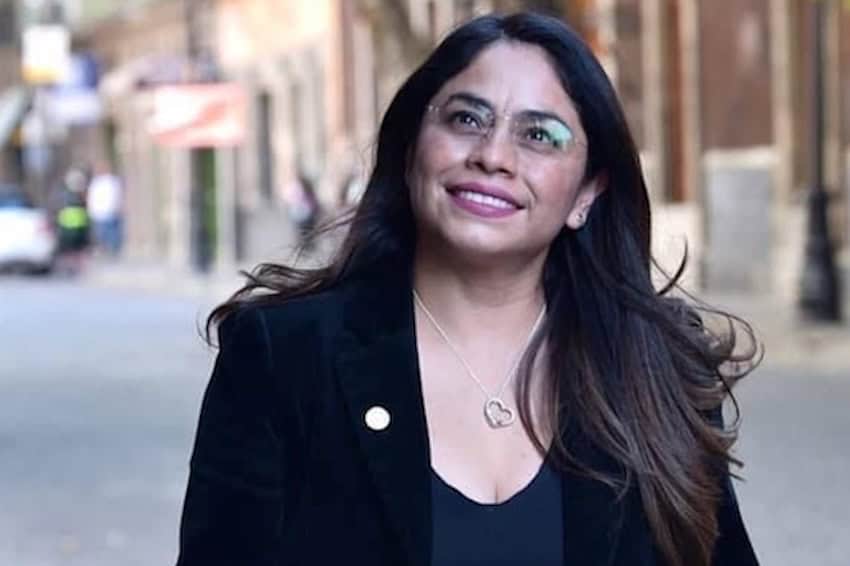
On-campus cell phone use, therefore, will be permitted for expressly authorized educational activities. The new legislation also incorporates the principle of “responsible digital learning,” with the intention of promoting critical and informed use of information technologies among students.
During floor debate, lawmakers voiced concern that the excessive and uncontrolled use of cell phones and screens within schools affects the learning, coexistence and mental health of adolescents.
“We understand that simply prohibiting the use of devices does not solve the underlying problem,” said Claudia Montes de Oca, a member of the Committee on Education, Science, Technology, Innovation, and Artificial Intelligence. “An absolute restriction could contradict the constitutional mandate to incorporate technology and innovation into educational processes.”
Speaking on behalf of the bill she co-sponsored, National Action Party Deputy Laura Alejandra Álvarez said 75% of teachers believe that students are constantly distracted by their cell phones in class, adding that more than 3 million teenagers have been victims of cyberbullying or online sexual exploitation in Mexico.
The reform has been sent to Mayor Clara Brugada, who has up to 30 business days to enact it and order its publication in the capital’s Official Gazette.
The reform will take effect the day after its publication, after which educational authorities will have a yet-to-be specified period of time to define the protocols and oversight mechanisms for implementing the restriction in classrooms.
With this reform, Mexico City joins several other states, including Querétaro, Guanajuato, Morelos, Aguascalientes and México state that have already implemented similar restrictions in basic education.
The new law applies to both public and private schools. It does not call for sanctioning students for an episode of guideline violation.
With reports from El País, Info 7 and Sopitas.com
Puerto Vallarta authorities probe possible link between deaths of 3 women
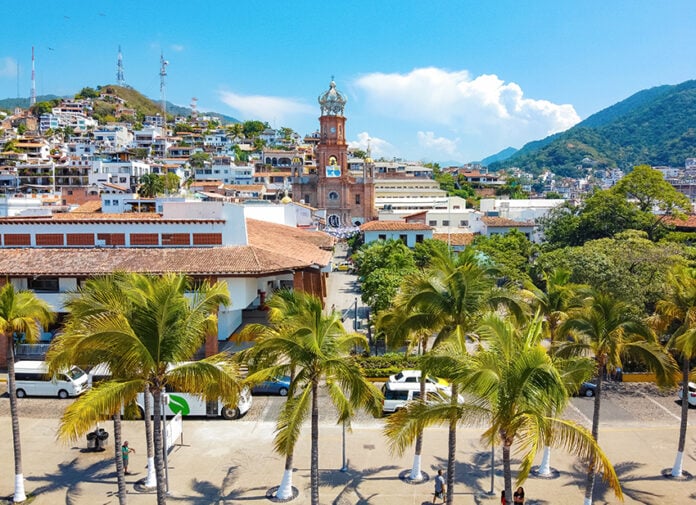
Authorities in Puerto Vallarta are investigating whether a possible serial offender could be linked to the deaths of three women whose bodies have been discovered in separate areas of the city in recent weeks.
The latest case emerged Thursday morning after a woman’s body was found on a dirt road near the Parque Las Palmas neighborhood, off Camino Viejo a Mojoneras. The discovery has prompted investigators to compare the circumstances surrounding her death with two similar cases already under investigation.
The first victim was reportedly discovered near Rancho El Pirulí in the Chimborazo area on May 10. Days later, another woman’s body was found at a roadside stop along the highway to Mismaloya.
According to preliminary information, all three victims were women believed to be between 30 and 35 years old. Investigators say the bodies were found in isolated or lightly traveled areas of Puerto Vallarta, and until now none of the women had been officially identified.
Authorities also noted that each victim had multiple tattoos and was discovered in a similar state of partial undress.
The details have led investigators to examine whether the killings may follow a pattern.
Detectives and forensic teams are now reviewing evidence from each scene in an effort to determine if a single suspect could be responsible or if the similarities are coincidental.
In the latest case, authorities revealed the woman found Thursday had several distinctive tattoos that investigators hoped could help identify her. Among them were an image of a horned woman with a hand covering her mouth, a skull tattoo, and a woman’s name tattooed on her right forearm. Officials said additional identifying marks were located on her neck, hand, and arm.
On Friday morning, unofficial reports emerged suggesting the victim could possibly be a 22-year-old woman from the State of México who was reported missing in late April. Information released by the State of Mexico’s Missing Persons Search Commission described a missing woman with tattoos matching some of those found on the victim.
Authorities in Jalisco have not officially confirmed the identity, but reports do indicate that relatives of the missing woman may travel to Puerto Vallarta on Friday to determine whether the victim is their family member.
The woman found Thursday reportedly showed signs of violence, prompting ministerial authorities to open an investigation under the corresponding homicide and femicide protocols.
Despite the discovery of the bodies over a period of time, no relatives or acquaintances had initially come forward to identify or claim any of the women. Investigators are also exploring the possibility that the victims may have been transported from another location before being abandoned in Puerto Vallarta.
The cases have generated growing concern among locals, residents and tourists, as rumors of a possible serial killer continue circulating on social media. Officials, however, caution that the investigation remains in its early stages and stress that no formal conclusion has been reached.
Investigators from the state prosecutor’s office and local police departments are coordinating efforts, reviewing forensic evidence, surveillance footage, and police reports connected to each case. Authorities say every line of investigation remains open as they work to determine whether the deaths are linked.
While officials have not publicly labeled the case as serial homicide, the similarities between the victims and the crime scenes have intensified scrutiny and increased pressure on investigators to identify those responsible.
For now, authorities continue searching for evidence that could reveal whether Puerto Vallarta is dealing with a single repeat offender or a series of unrelated crimes.
Charlotte Smith is a writer and journalist based in Mexico. Her work focuses on travel, politics and community. You can follow along with her travel stories at www.salsaandserendipity.com.
