Home Blog Page 181

‘We’re doing well and going to do better’: Sheinbaum delivers upbeat first government report

16
Sheinbaum first report
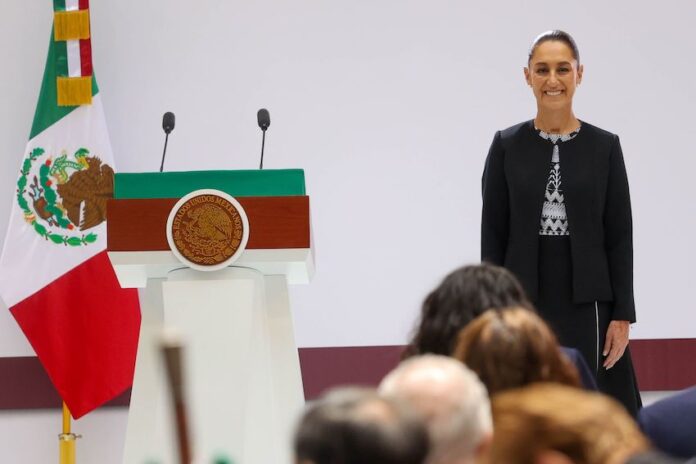
Sheinbaum nears the completion of her first year in office with an approval rating above 70%, making her the most popular president at this stage of her incumbency in decades. (Moisés Pablo/Cuartoscuro)

Exactly 11 months after she was sworn in as Mexico’s first female leader, President Claudia Sheinbaum on Monday delivered her first annual government report in a 70-minute speech, an upbeat address that focused on achievements in a range of areas, including security, the economy and health care.

“We’re doing well and we’re going to do even better,” Sheinbaum said near the end of her address, delivered at the National Palace in the historic center of Mexico City to an audience that included high-ranking federal and state officials as well as leaders in Mexico’s business community.

The president gave a nod to her predecessor and political mentor early in her speech, noting that more than 13 million Mexicans exited poverty between 2018 and 2024, a period that coincided with the presidency of Andrés Manuel López Obrador (AMLO).

She made it clear that governing for women and improving their lives is a priority for her administration, and declared that she didn’t ascend to the presidency on her own, but rather “all” women and girls arrived at Mexico’s top job last October.

Sheinbaum, the leader of the “Fourth Transformation” (4T) political movement initiated by López Obrador, also asserted that the transformation is “not just continuing,” but “deepening” as well.

Before moving into the meat of her speech, she said she was at the National Palace not to offer “empty words” to the nation, but to enumerate the “results” her government has achieved in the past 11 months and which are “reflected in the daily lives of millions of Mexicans.”

Sheinbaum nears the completion of her first year in office with an approval rating above 70%, making her the most popular president at this stage of her incumbency in decades.

However, she is certainly not without her critics, facing claims as serious as that she is turning Mexico into a more authoritarian, less democratic nation — assertions that she unsurprisingly rejects.
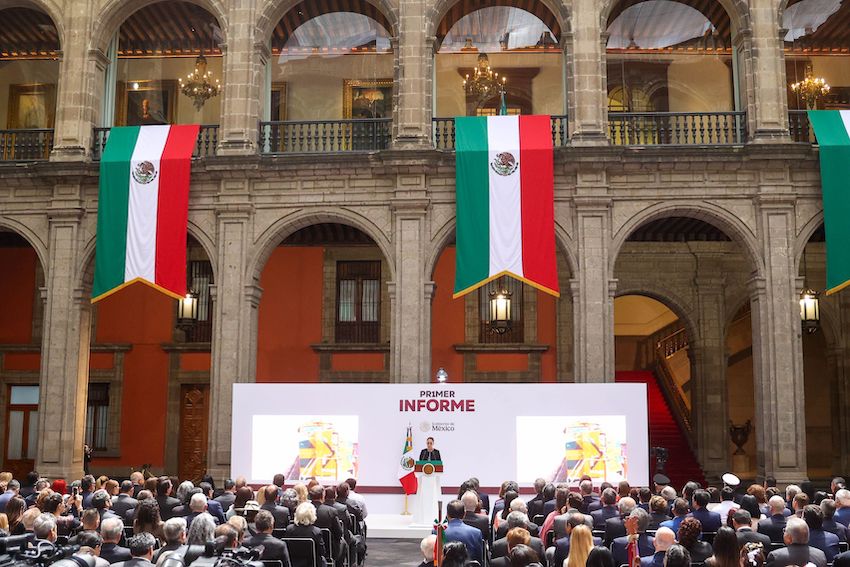
Sheinbaum during her first government report
During her report, Sheinbaum said that the government, with infrastructure projects including the construction of schools, hospitals, railroads, water systems and power plants, “is driving not just the economy,” but also looking after “people’s dignity.” (Moisés Pablo/Cuartoscuro)

Looming across Mexico’s 3,145-kilometer-long border with the United States is President Donald Trump, who, since returning to power in January, has pressured the Sheinbaum administration to do more to combat cartels and the drugs they traffic, and significantly undermined the USMCA free trade pact by imposing tariffs on a range of imports from Mexico, including motor vehicles.

Part of Sheinbaum’s popularity can be attributed to the way she has calmly and confidently dealt with — and won concessions from — an unpredictable and protectionist U.S. president, leading various media outlets to describe the 63-year-old former Mexico City mayor as a “Trump whisperer.”

Security

“In 11 months we’ve reduced homicides by 25%.”

One of Sheinbaum’s greatest challenges is to reduce violence in Mexico, where homicides reached an all-time high during AMLO’s six-year term.

Near the end of her address on Monday morning, the president highlighted that her government has implemented a new security strategy and sought to underscore her administration’s commitment to pacifying Mexico by noting that her security cabinet meets daily at 6 a.m. to “assess and strengthen” that strategy.

In an assertion of Mexican sovereignty amid the ongoing pressure her government faces from its U.S. counterpart, Sheinbaum stressed that her administration’s “policy for the construction of peace” is decided in Mexico without any outside influence.

She went on to highlight that murder numbers in July were 25% lower than in September 2024, the last month of AMLO’s presidency.

“In other words, 22 fewer homicides were committed in July than in September 2024,” Sheinbaum said, without mentioning that the annual decline in murders in the first seven months of 2025 was a more modest, but still positive, 15.9%.

Sheinbaum said that even more “significant” reductions in homicides have been achieved in some of Mexico’s most violent states, including Zacatecas and Guanajuato. She avoided speaking about the sharp increase in violence in Sinaloa, where rival factions of the Sinaloa Cartel have been engaged in a full-blown war since the second half of 2024.

Among other security-related remarks, Sheinbaum noted that her government launched an anti-extortion strategy and reiterated that her government is committed to “zero impunity.”

“I’m certain that the new judiciary will help a lot in this process,” she said.

The economy 

“We’re consolidating a new economic model that guarantees macroeconomic stability, but promotes shared prosperity.”

Sheinbaum said that the “dark, neoliberal night” in which previous governments only looked out for the interests of the top end of town was left in the past when López Obrador came to power in 2018.

Mexico’s GDP expands 0.6% quarter-over-quarter in Q2, slightly below estimates

She railed against past “neoliberal” governments for not seeking to redistribute wealth or play a significant role in the development of the economy and the nation.

“The experience of those decades showed that this idea was completely mistaken: without an active role of the state oriented towards social justice, the concentration of wealth only deepens inequality and leaves millions in poverty,” Sheinbaum said.

“… Fortunately, we’re consolidating a new economic model that guarantees macroeconomic stability, but promotes shared prosperity with fair salaries and welfare programs,” she said.

The president touted her government’s commitment to “honesty and republican austerity” and ran through a range of economic data as she sought to demonstrate the strength of the Mexican economy. She highlighted that:

  • The Mexican economy is expected to grow 1.2% this year, despite the “catastrophic” forecasts of “international financial organizations.”
  • Foreign direct investment hit a record high in the first half of 2025.
  • The Mexican peso remains below 19 to the US dollar.
  • The unemployment rate is 2.7% — “one of the lowest levels in the world.”
  • The annual inflation rate was 3.5% in July.
  • The minimum wage increased 12% at the start of 2025.
  • Tax collection increased 8.5% annually in the first eight months of 2025.

‘Legislative transformations’

‘In the last 12 months, we experienced profound legislative transformations … that make amends for part of the damage caused by the neoliberal period and strengthen social rights, sustainability, sovereignty, freedom, and democracy.”

Sheinbaum outlined a long list of legislative changes that she asserts will make Mexico a fairer, safer, healthier and more prosperous nation.

They included the 2024 judicial reform, which allowed Mexico’s first-ever judicial elections to be held in June, and the approval of a controversial constitutional bill that allowed control of the National Guard to be transferred from the civilian Security Ministry to the Ministry of National Defense.

The popular election of judges, including Supreme Court justices, was “an unprecedented and profoundly democratic event,” Sheinbaum said.

“The era of nepotism, corruption and privileges is over and a new era of legality and justice for everyone begins,” she said.

Mexico’s new Supreme Court takes the bench

Among the other “legislative transformations” the president highlighted were laws that benefit Mexico’s indigenous people, women and workers.

Sheinbaum also enumerated reforms that “recover” Pemex and the Federal Electricity Commission as “companies of the people of Mexico” and recognize workers’ right to housing.

In addition, she outlined a much-criticized reform that disbanded a number of autonomous government agencies — leading to concentration of power claims — and a law that protects Mexico’s native corn and prohibits the planting of genetically modified maize.

Sheinbaum also mentioned legislative efforts to reduce bureaucracy and associated corruption, as well as a constitutional amendment to bolster the protection of Mexico’s sovereignty.

She noted that Article 40 of the Mexican Constitution now says that “the people of Mexico, under no circumstances, will accept interventions, interference or any other act from abroad that harms the integrity, independence, and sovereignty of the nation.”

Mexico-US relations 

‘We’ve managed to build a relationship of mutual respect.’

In recent months, “the whole world has faced complex situations” due to “the new tariff reality established by the United States government,” Sheinbaum said, referring to Trump’s protectionist “America First” agenda.

“Within this framework, we’ve managed to build a relationship of mutual respect,” said the president, who has spoken to her U.S. counterpart on various occasions over the past seven months but has not yet met him in person.

While the United States government has imposed tariffs on various Mexican goods, including steel, aluminum and cars, Sheinbaum asserted that Mexico, “on average,” faces the lowest U.S. duties among the countries of the world.

She said that her cabinet ministers continue to engage in talks with their U.S. counterparts, and declared that “we’re convinced that, within the framework of the [USMCA] trade agreement, we can achieve even better conditions.”

Sheinbaum also noted that U.S. Secretary of State Marco Rubio will visit Mexico on Wednesday “to agree to a [new] security collaboration framework.”

“We have made it clear that the foundation of this understanding is shared responsibility, mutual trust, respect for sovereignty and territorial integrity, and cooperation without subordination,” said the president, who revealed in May that she had rejected an offer from Trump to send the U.S. army into Mexico to combat the nation’s notorious drug cartels.

Plan México

“Throughout the entire neoliberal period, it was claimed that ‘the best industrial policy was the one that didn’t exist’ and, as a result, a good part of the country’s productive sector was dismantled. We have a different vision.”

Sheinbaum highlighted that her government presented Plan México, an ambitious industrial policy, early in its term.

Among the plan’s objectives, she said, are to “produce more” in Mexico for domestic consumption, reduce imports, “strengthen and diversify” Mexico’s foreign trade and promote public and private investment “within the framework of regional development.”

Sheinbaum highlighted that work has begun on five of 15 proposed economic development hubs that will be established in different parts of Mexico. She also said that the construction of 18 of the 100 proposed new industrial parks is underway.

While Mexico’s business community has been largely supportive of Plan México, the president called on the sector’s leaders to do even more to advance the development of the country, which is aiming to become the world’s 10th largest economy by 2030. “Mexico needs even more active and visionary businesspeople [who are] deeply committed to the future of the nation,” Sheinbaum said.

The president also outlined a range of “strategic projects” that are being carried out in Mexico, including the production of a Mexican electric vehicle (Olinia) and the “design and production” of a “cutting-edge” unmanned aerial vehicle (Quetzal).

Welfare programs 

‘In 2025, we’re allocating 850 billion pesos [US $45.6 billion], 2.3% of gross domestic product, to welfare programs.”

Sheinbaum said that 32 million families across Mexico benefit from the government’s welfare programs, which include pensions for seniors, stipends for people with disabilities, scholarships for students and work schemes for young people.

She highlighted that her government created three new welfare programs, including one that provides pension payments to women aged 60-64.

Another is the “Salud casa por casa” (Health house by house) scheme, in which an army of 20,000 health care workers visit the elderly and disabled people in their homes to check up on their health.

“This is the most ambitious social plan in the history of Mexico,” said Sheinbaum, whose high approval rating is undoubtedly linked to her government’s ample support for Mexico’s most disadvantaged people.

Education

“Education is a right.”

Sheinbaum noted that her government created the Bachillerato Nacional (National High School Diploma), which she said “integrates and harmonizes” high-school education systems across Mexico’s 32 federal entities.

She also said that the government is opening this year 38,000 “new spaces” — classrooms and other facilities, including in new schools — for high school education.

“We want all adolescents to have a space to study that is close to them,” Sheinbaum said.

The president also noted that her government is opening new campuses of the Rosario Castellanos public university, and earlier this year gave teachers a 10% pay raise, which didn’t satisfy all of Mexico’s public school educators.

Public health care

“Despite all the bad omens, the lies and the slander, we work every day to supply free medicines.”

Sheinbaum said that her government has opened 15 new hospitals this year and will inaugurate 16 more before the end of 2025.

She said that the construction of an additional 20 hospitals will begin soon.

Among other health care initiatives, Sheinbaum highlighted the “Rutas de la Salud” (Health Routes) program, which involves the delivery of medications and medical provisions to public health centers in government-owned vehicles.
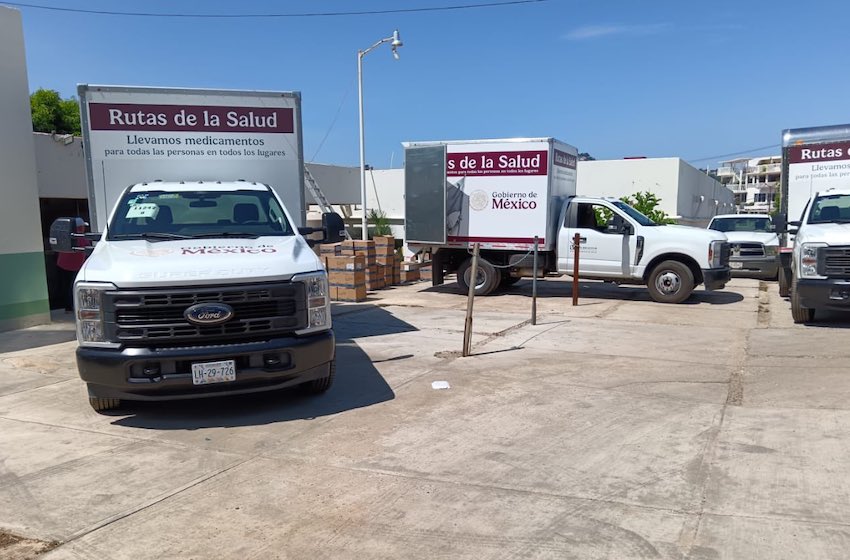
Health Routes
Via Health Routes, kits containing 1,900 units of medicine and 147 essential medical items, including treatments for hypertension and diabetes, as well as basic painkillers, will be delivered monthly to each IMSS Bienestar medical unit. (@IB_Guerrero/X)

In recent years, the federal government has struggled to meet the medication needs of Mexico’s public hospital patients, including children with cancer. Countless protests against the shortages have been held, while federal authorities have responded with a range of initiatives, including the construction of a state-owned “mega pharmacy” that opened in late 2023.

Infrastructure projects 

“Public investment is the engine of well-being and growth with justice”

Sheinbaum said that the government, with infrastructure projects including the construction of schools, hospitals, railroads, water systems and power plants, “is driving not just the economy,” but also looking after “people’s dignity.”

She stressed that public investment doesn’t “replace” private investment, but rather complements it.

Sheinbaum said that her government has completed a range of public infrastructure projects that were started during AMLO’s government, including the Escárcega–Chetumal section of the Maya Train railroad and the Mayo Train hotels, located at different points along the tourist train route in southeastern Mexico.

She also noted that her administration has completed various highway projects and is working on others. The president also said that the government is making progress on a range of new rail projects.

“This year we’re beginning construction of the Maya Train freight [infrastructure],” Sheinbaum noted.

She also highlighted that the government is investing in the nation’s ports and airports, as well as energy infrastructure.

10 more things

During her first government report (informe de gobierno) speech, Sheinbaum also said that:

  • The government has supported more than 86,000 Mexicans who were deported from the United States during the second Trump administration.
  • “Mexico is respected in the whole world” and that “it is known that our people are noble, generous and brave, and that we’re living a stellar moment in our history.”
  • The “strategy” to reach self-sufficiency for beans, corn, rice, meat and milk is “advancing.”
  • Indigenous and Afro-Mexican communities are receiving “for the first time in history” direct government funding that they can use as they see fit.
  • The government is aiming to build 1.7 million homes during the current six-year term of government, with “accessible loans” on offer to low-income citizens.
  • The government signed a National Human Right to Water Agreement, which, along with a review of water concessions, has allowed the recovery of 4 billion cubic meters of water “for the nation.”
  • Public debt at the end of August remained at 50% of GDP.
  • The government’s Anti-Corruption and Good Governance Ministry has a mandate to prevent corruption and “sanction without impunity” any officials who commit the crime.
  • Public money goes further “when there is no corruption.”
  • The government is committed to promoting gender equality and supporting Mexican women in a range of ways, including by working to ensure that their right to a life without violence and with access to education, health care and housing is a reality.

‘I will always honor the trust placed in me’

Near the end of her lengthy address, Sheinbaum said that “11 months of hard work” have taken place since she took office on Oct. 1, 2024. She thanked all the members of her cabinet and other government officials, as well as state governors, for “their support.”

Amigas y amigos: We’re doing well and we’re going to do even better,” Sheinbaum said.

“… For our people, for our homeland, each hour, each minute and each breath of our days is worth it. We arrived to continue transforming the nation, for the peace and the well-being of the people,” she said.

“Rest assured that I will not betray you. With the strength of Mexico, of our people, I will walk tirelessly, with integrity, with courage, and I will always honor the trust placed in me,” Sheinbaum said before launching into a customary speech-end rendition of “Viva México,” which was enthusiastically reciprocated by those in attendance at the National Palace.

By Mexico News Daily chief staff writer Peter Davies (peter.davies@mexiconewsdaily.com)

A pothole toppled 2 wheelchair racers mid-marathon. One fought back to claim 3rd place

1
The Mexico City government said the cause of the accidents was not a pothole, instead claiming that a manhole cover had become dislodged. (Gobierno de la Ciudad de México/Cuartoscuro)

Two athletes competing in the wheelchair division of the Mexico City Marathon on Sunday crashed after hitting a flaw in the pavement about halfway through the race, which was eventually won by Mexican Alan Frias.

During the 20th kilometer of the 42-kilometer course, race leader Colombian Francisco Sanclemente was sent sprawling to the pavement after riding over what appeared to be a pothole.

Trailing close behind, Mexican Gonzalo Valdovinos tried to veer away from Sanclemente, but was unable to avoid the same rut and his wheelchair tipped sideways.

The blow forced Sanciemente out of the race. Valdovinos — refusing the help of attendants and medical personnel on the scene — was able to get back in his chair and finish. However, his chances of winning were lost.

Despite falling behind and battling the bumps and bruises he suffered in the fall, Valdovinos — admitting later that he had to fight back tears — recovered to finish in third place.

“I climbed back into the saddle, managed to overtake quite a few [competitors] and, even though I finished third, it felt like first place to me,” he told the newspaper La Afición.

Alan Frías won first place and Gonzalo Valdovinos
Alan Frías won first place and Gonzalo Valdovinos third place (“but it felt like winning.”) (Gobierno de Puebla)

Upon accepting his prize for finishing second in the wheelchair division, Antonio Caballero criticized the race managers for the condition of the course.

“Every year it’s the same,” he said, with Mayor Clara Brugada just behind him on the podium. “Last year, a competitor got a flat tire because of a pothole. I want to speak out for all of us because this can’t continue to happen.”

Later Sunday, the Mexico City government said the cause of the accidents was not a pothole, instead claiming that a manhole cover had become dislodged.

A press release issued by Brugada’s government celebrated the fact that the marathon ended without further incident (though it mistakenly said both competitors finished the race) and reported that the manhole cover was fixed immediately.

The Mexico City Public Works Ministry said in a social media post that it had carried out preventive maintenance along the entire course. In another post, it said it had repaved 5,000 square meters of road to prepare for the marathon.

Running results: Ethiopians sweep

Ethiopians won the men’s and women’s race titles at Sunday’s 42nd Mexico City Marathon.

Tadu Abate won the men’s race in a time of 2:11:14, just 13 seconds ahead of Kenya’s Benard Kipkorir, while Bekelech Gudeta stood atop the podium in the women’s division, crossing the finish line nearly four minutes ahead of her nearest rival with a winning time of 2:23:22.

The top Mexican finisher in the men’s race was Emmanuel Reyes (2:25:54), who placed 9th, just ahead of Jesús Rendón (2:26:45).

Brenda Flores (2:43:34), Kathya Mirell García (2:44:56) and Ivon Domínguez (2:50:35) finished 8th, 9th and 10th, respectively.

With reports from Aristegui Noticias, Sin Embargo, Milenio and Reforma

The only airport with direct flights to every 2026 World Cup city? It’s Cancún

2
cancún airport
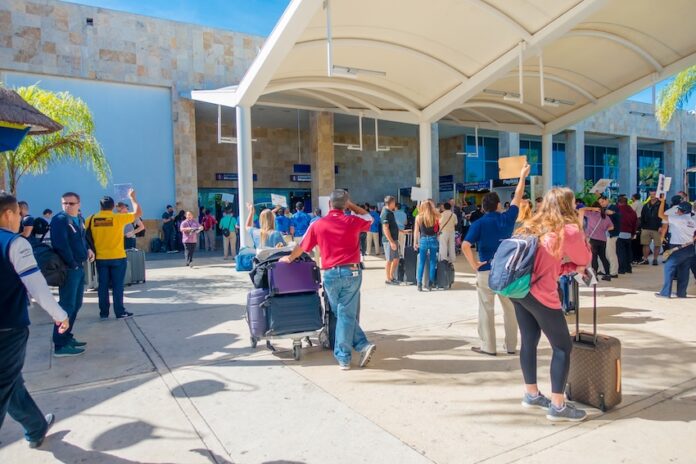
Cancún International Airport will offer visitors next summer not just sun, sea and sand, but also direct flights to all the 2026 World Cup cities in Mexico, Canada, and the United States. (Shutterstock)

Cancún is the only airport in Mexico offering direct flights to all 16 host cities of the 2026 FIFA World Cup, according to Quintana Roo Tourism Minister Bernardo Cueto. 

That unique connectivity, Cueto maintained, positions Cancún as the “gateway to the 2026 FIFA World Cup,” a strategic hub for fans and tourists traveling between the tournament’s matches.


“Quintana Roo [Cancun’s state] is much more than sun and sand,” Cueto said. “Its tourist, historical, natural, and culinary attractions make us a must-see for soccer fans visiting Mexico, the United States, and Canada in 2026.” 

There are frequent flights from Cancún International Airport (CUN) to Mexico City, Guadalajara, and Monterrey, the three host cities in Mexico. The 11 U.S. World Cup sites with a Cancún connection are Boston, Dallas, Houston, Miami, Los Angeles, Kansas City, New York/New Jersey, Philadelphia, San Francisco Bay Area, Seattle and Atlanta. Among the various Canadian destinations with direct flights from Cancún are that country’s two World Cup hosts, Vancouver and Toronto.

Beyond the current destinations, Quintana Roo authorities are exploring the possibility of opening new direct routes from Spain, the United Kingdom and Poland, to facilitate the arrival of international travelers during the 2026 FIFA World Cup.

To further strengthen Cancún’s position as an international hub for the tournament, the Quintana Roo Chamber for Tourism Promotion (CPTQ) revealed that it is holding conversations with FIFA to host a “FIFA Fan Fest,” an event that would serve as a gathering place for soccer fans to watch matches on a large screen in addition to various dynamic activities that create a vibrant World Cup atmosphere. 

“It’s an ongoing initiative,” Rodrigo de la Peña, president of the Cancún, Puerto Morelos and Isla Mujeres Hotel Association (AHCPMIM), told the news outlet Reportur. “.We’re working on the design of a comprehensive package that would include tickets,  a giant screen area, cultural and culinary activities, and, of course, the vibe of the Mexican Caribbean.”

The 2026 FIFA World Cup is expected to bring millions of international travelers to Mexico. The federal Tourism Ministry (Sectur) estimates that the country will receive up to 5 million additional tourists in 2026.

With reports from Quinta Fuerza and Reportur

Mexico says works created by AI cannot be granted copyright

2
Ai hand
According to the Supreme Court, automated systems do not possess the necessary qualities of creativity, originality and individuality that are considered human attributes for authorship. (Cash Macanay/Unsplash)

In an era where artwork is increasingly influenced and even created by Artificial Intelligence (AI), Mexico’s Supreme Court (SCJN) has ruled that works generated exclusively by AI cannot be registered under the copyright regime. According to the ruling, authorship belongs solely to humans. 

“This resolution establishes a legal precedent regarding AI and intellectual property in Mexico,” the Copyright National Institute (INDAUTOR) said on Aug. 28 in a statement on its official X account following the SCJN’s decision.

The SCJN’s unanimous decision said that the Federal Copyright Law (LFDA) reserves authorship to humans, and that any creative invention generated exclusively by algorithms lacks a human author to whom moral rights can be attributed. 

According to the Supreme Court, automated systems do not possess the necessary qualities of creativity, originality and individuality that are considered human attributes for authorship.

“The SCJN resolved that copyright is a human right exclusive to humans derived from their creativity, intellect, feelings and experiences,” it said. 

The Supreme Court resolved that works generated autonomously by artificial intelligence do not meet the originality requirements of the LFDA. It said that those requirements are constitutional as limiting authorship to humans is “objective, reasonable and compatible with international treaties.” 

It further added that protections to AI can’t be granted on the same basis as humans, since both have intrinsically different characteristics. 

What was the case about?

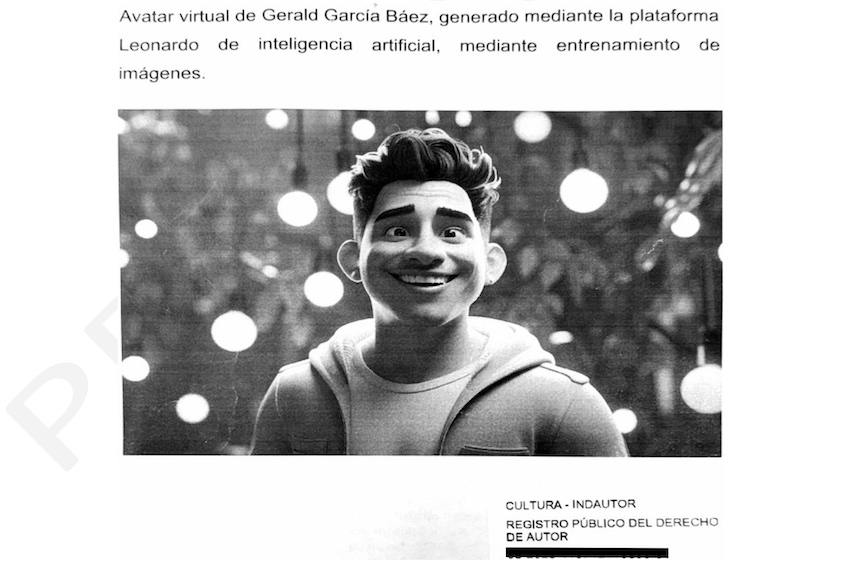
In August 2024, INDAUTOR denied the registration application for “Virtual Avatar: Gerald García Báez,” created with an AI dubbed Leonardo, on the basis that it lacked human intervention.

Virtual Avatar: Gerald García Báez
The AI-created avatar in question. (SCJN)

“The registration was denied on the grounds that the Federal Copyright Law (LFDA) requires that works be of human creation, with the characteristic of originality as an expression of the author’s individuality and personality,” INDAUTOR said. 

The applicant contested the denial, arguing that creativity should not be restricted to humans. In the opinion of the defendant, excluding works generated by AI violated the principles of equality, human rights and international treaties, including the United States, Mexico and Canada agreement (USMCA) and the Berne Convention. 

However, the Supreme Court clarified that such international treaties do not oblige Mexico to give copyrights to non-human entities or to extend the concept of authorship beyond what is established in the LFDA.  

Does the resolution allow registration of works generated with AI? 

Yes, provided there is a substantive and demonstrable human contribution. This means that works created in collaboration with AI, in which humans direct, select, edit or transform the result generated by AI until it is endowed with originality and a personal touch, are subject to registration before INDAUTOR. 

Intellectual property specialists consulted by the newspaper El Economista explained that to register creative work developed in collaboration with AI, it is important to document the human intervention and submit the creative process in a way that aligns with the LFDA. 

Mexico News Daily

Binance to invest US $53M to expand crypto in Mexico

1
Binance app
In Mexico, Binance will launch a new fintech entity called Medá, “a regional cryptocurrency hub and regulated fintech company dedicated to driving fintech innovation across Latin America,” the company said in a statement. (Shutterstock)

Binance, the world’s largest cryptocurrency exchange, will invest US $53 million over four years in Mexico to launch a new fintech entity, Medá.

The goal is to expand digital financial access for Mexico’s population of over 125 million, while enhancing financial inclusion and affordability. At the same time, Binance aims to expand access to innovative and user-friendly digital services through Medá.

“The move highlights Mexico’s role as a strategic fintech hub in Latin America and signals Binance’s commitment to expanding fiat-to-crypto access in the region,” the company said on its content-sharing platform.

Binance — founded in China but currently with no official company headquarters — caters to more than 270 million registered users in over 180 countries, but it is not without controversy.

In June 2021, the UK’s Financial Conduct Authority ordered Binance to stop all regulated activity in the United Kingdom. In November 2023, the company pleaded guilty to U.S. money laundering charges, among other violations, and agreed to pay US $4 billion in fines. 

In May, the U.S. voluntarily dismissed its civil lawsuit against Binance, in a move The Guardian attributed to the new, more friendly approach to cryptocurrencies since Donald Trump returned to the White House.

Just five weeks ago, Mexico’s National Banking and Securities Commission (CNBV) authorized an investigation into what it termed “irregular fundraising” by Binance.

That’s where Medá comes in.

Medá will operate independently under Mexican finance regulations as an Electronic Payment Funds Institution (IFPE) “in accord with the country’s evolving crypto regulations,” Binance announced. It will serve as “a regional cryptocurrency hub and regulated fintech company dedicated to driving fintech innovation across Latin America.” 

Medá’s registration as an IFPE is expected to facilitate deposits and withdrawals in Mexican pesos, with the goal of improving financial inclusion by better catering to local financial needs.

According to brokerage firm AInvest, Medá is viewed as a strategic shift for Binance, “as the company moves beyond its traditional cryptocurrency trading model to offer broader financial services.” 

“We are experiencing significant momentum in the cryptocurrency industry,” Frida Vargas, general manager of Binance in Mexico, said earlier this year. “Digital assets have reached audiences beyond early adopters and technology enthusiasts, with more and more investors entering the world of cryptocurrencies.”

By the end of 2024, Mexico had climbed from 16th to 14th in the Chainalysis global cryptocurrency adoption index.

The newspaper El Economista reported in February that Mexican investors’ interest in cryptocurrencies was on the rise, noting that Binance had become the most downloaded cryptocurrency app in Mexico on the Apple Store.

With reports from El Economista, AInvest and Cointelegraph

Mexico’s new Supreme Court takes the bench

2
Mexico's supreme court justices
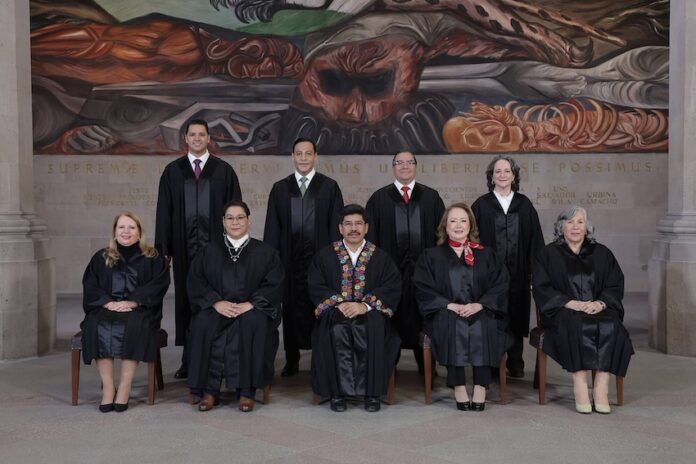
Hugo Ortiz Aguilar, president of the SCJN, sits with Loretta Ortiz Ahlf, Lenia Batres Guadarrama, Yasmín Esquivel Mossa and María Estela Ríos González. Behind them stand Arístides Rodrigo Guerrero García, Giovanni Azael Figueroa Mejía, Irving Espinosa Betanzo and Sara Irene Herrerías Guerra. (Cuartoscuro)

Monday, Sept. 1, is a landmark day in the history of Mexico’s judiciary, as hundreds of judges elected in the nation’s first-ever judicial elections will commence their new roles.

Among the almost 900 new judges who start their duties today are nine Supreme Court justices elected by popular vote on June 1.

The nine new justices and 872 other judges and magistrates will be sworn in at a ceremony in the Senate on Monday night.

The number of justices on the Supreme Court bench will thus decline from 11 to nine.

Three of the nine incoming justices, Lenia Batres Guadarrama, Yasmin Esquivel Mossa and Loretta Ortiz Ahlf, served on the Supreme Court’s final 11-member bench. The other six justices who will be sworn in on Monday night, including incoming Chief Justice Hugo Aguilar Ortiz, have not previously served on the bench of the nation’s highest court.

All of the nine people elected as justices on June 1 are affiliated with, seen as sympathetic to, or were at least tacitly supported by the ruling Morena party, a situation that government critics argue will eliminate a vital check on executive and legislative power.

They were elected in judicial elections that had a turnout of around 13% of Mexico’s eligible voters. The elections were held as a result of a controversial judicial reform that was approved by Congress last September. A second round of judicial elections will be held in 2027.

Judicial reform takes effect after AMLO signs it into law

Supreme Court justices and other federal judges were previously appointed to their roles.

When a Supreme Court justice position became available, the president of the day would nominate three candidates for the role and the Senate would endorse one by a two-thirds vote.

As part of her defense of the judicial reform and judicial elections, President Claudia Sheinbaum highlighted on repeated occasions that she is relinquishing the right to nominate justices in favor of allowing the people of Mexico to decide who should serve on the Supreme Court.

Sheinbaum — who argued that judicial elections were needed to rid the nation’s judiciary of corruption and other ills — asserts that allowing citizens to elect judges enhances democracy in Mexico.

She recently said that the commencement on Sept. 1 of the terms of recently elected judges marks “the end of an era of nepotism in the judiciary.”

The end of the 2-chamber era

The Supreme Court previously had two chambers — one that dealt with cases regarding civil and criminal law and another that heard cases regarding labor and administrative law.

Each chamber was composed of five justices, and the chief justice didn’t participate in their sessions, participating only in Full Court sessions.

Now, all nine justices will deliberate and decide all cases in Full Court sessions. For a ruling to be valid, at least six of the nine justices will have to support it.

The Supreme Court building is in the historic center of Mexico City, a short walk from the National Palace, Mexico’s seat of executive power and now the president’s residence.

Aguilar, the incoming chief justice, has said that the Supreme Court could hold sessions in locations outside its headquarters as part of efforts to “bring justice closer to the people.”

Men in a white shirt
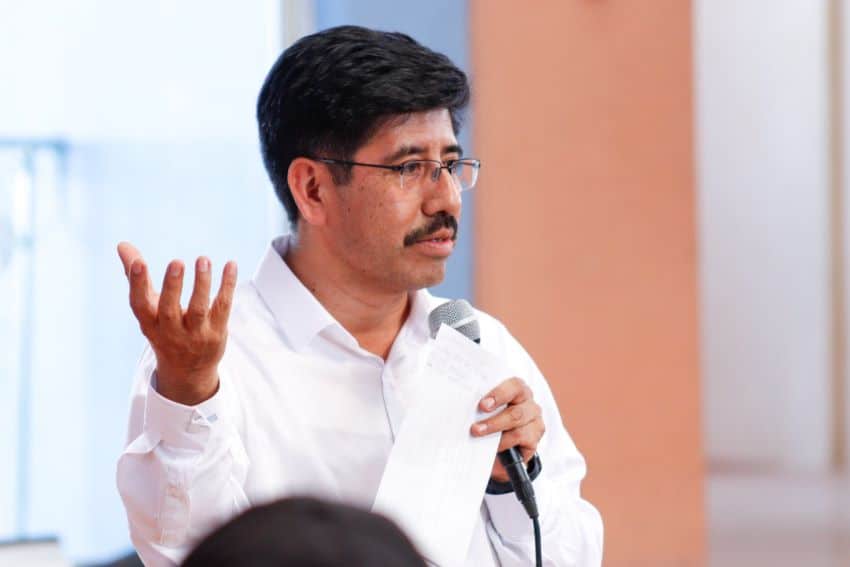
Originally from Oaxaca, Hugo Aguilar Ortiz will preside over Mexico’s new Supreme Court and participate in all court sessions, a significant departure from the previous two-chamber system. (Hugo Aguilar Ortiz/X)

New judges will have a lot on their plate

The recently elected Supreme Court judges will join hundreds of other existing judges whose positions were not contested in the elections on June 1.

They will have an intense workload from the beginning of their terms.

The newspaper Reforma reported on Monday that the federal judiciary has a “historic” backlog of cases to resolve. At the end of July, the federal judiciary had 552,800 active unresolved cases, 25% more than a year earlier, Reforma reported.

That figure, the newspaper said, doesn’t include more than 50,000 federal labor law cases.

Reforma said that the retirement of hundreds of circuit court magistrates and dozens of district court judges who decided not to contest the judicial elections was one reason for the growing backlog of cases.

“Another problem is the lack of resources, since the Chamber of Deputies reduced the budget of the Federal Judiciary Council (CJF) by 10% compared to 2024, so no new courts or tribunals have been created to help address the growing workload,” Reforma said.

With reports from El Financiero, El Universal and Reforma 

What’s on in Los Cabos in September

4
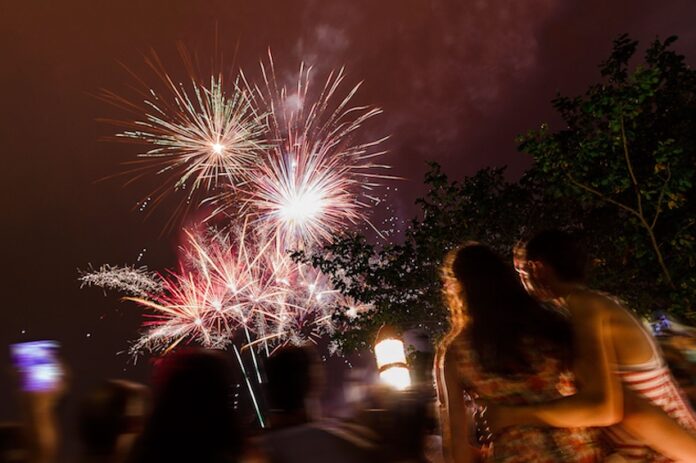
Fireworks in Los Cabos
There's plenty to enjoy in Baja California Sur this month, so don't miss out! (Los Cabos fireworks service)

The most important single September event in Los Cabos, as for every destination in Mexico, is the nation’s Independence Day, celebrations for which start on the evening of Sep. 15, and continue through the official Independence on Sep. 16. Official festivities, along with themed dinners and parties at local restaurants and bars, will provide plenty of fun, as will fishing tournaments like the East Cape’s Wahoo Shoot Out, with its promise of a new Volkswagen Polo to the winner.

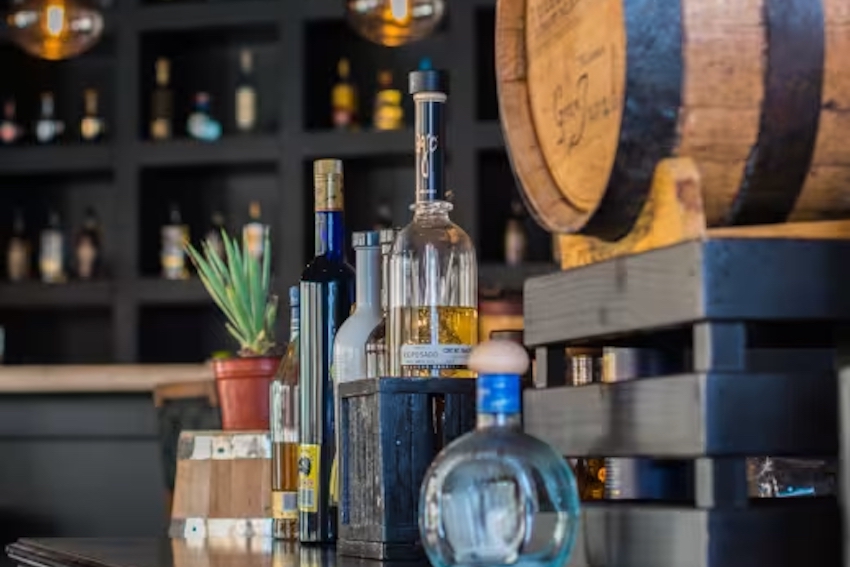
Tequila Tasting Experience at Pueblo Bonito Pacifica

A bottle of tequila on top of a bar
(Visit Los Cabos)

Want to learn about the history and production of Mexico’s most iconic spirit, while also being guided through a tasting menu spotlighting some of the finest examples by a Master Tequilero? Then a visit to one of Pueblo Bonito Pacifica’s weekly Wednesday tasting experiences is a must-add to your vacation plans. 

Dates: Sep. 3, 10, 17, 24

Location: Pueblo Bonito Pacífica Golf & Spa Resort, Previo Paraíso Escondido, Cabo San Lucas

Cost: Call the resort for reservations and details (624-142-9696)

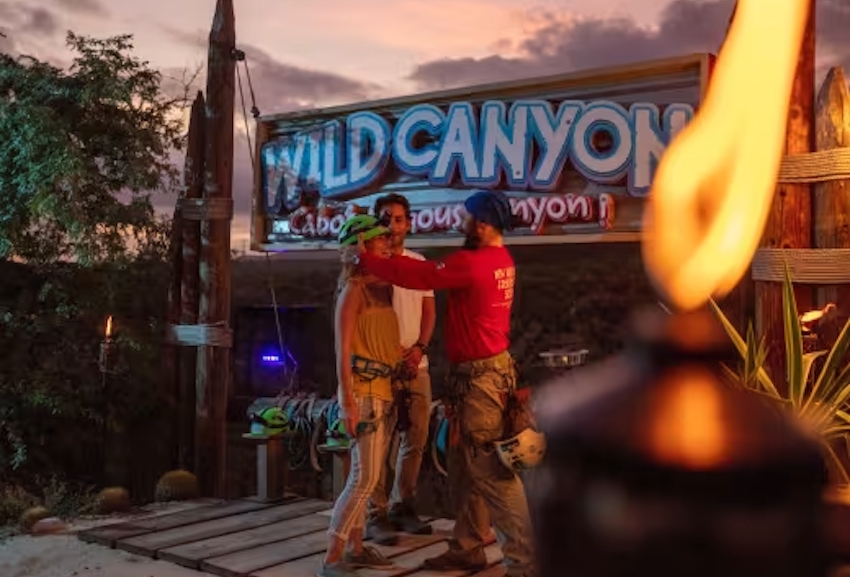
Moon Zipping Fire at Wild Canyon

(Visit Los Cabos)

Tequila tasting is also a focus of this weekly activity package from Los Cabos’ premier theme park. But before you get around to dinner and drinks at the Lion’s Den restaurant, first you’ll enjoy unforgettable adventures as night falls. The fun starts with sunset UTV rides through the desert, followed by moonlit ziplining. 

Dates: Sep. 5, 12, 19, 26

Location: Wild Canyon Adventures, El Tule Canyon, La Ruta Escenica, Los Cabos

Cost: US $146 per person

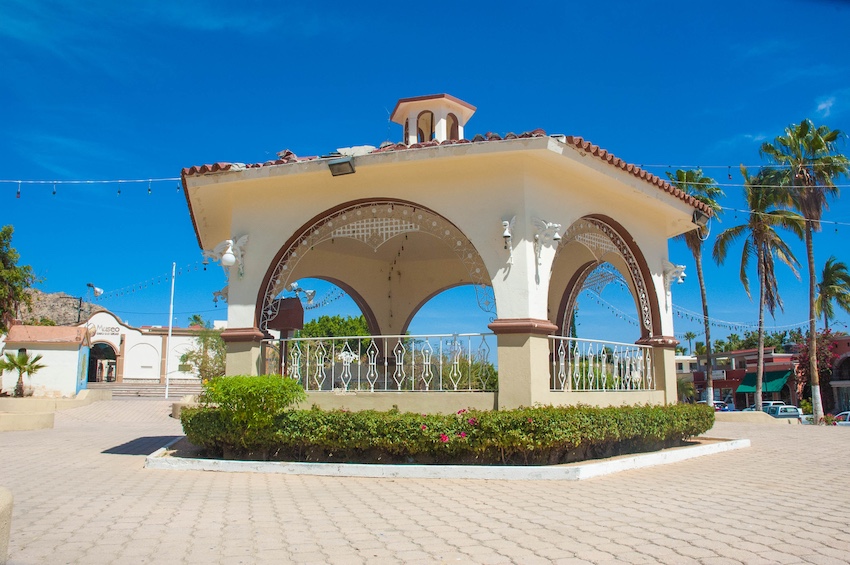
Viva La Plaza

(Los Cabos Guide)

A Sunday evening spotlight (5 to 9 p.m.) for Cabo San Lucas’ historic town square, Plaza Amelia Wilkes, Viva La Plaza has recently returned after a layoff of several years, and is once again welcoming local families and tourists alike to revel in the downtown scene while enjoying art, food, music, and more. 

Dates: Sep. 7, 14, 21, 28

Location: Plaza Amelia Wilkes, Cabo San Lucas

Cost: Free

Independence Day Celebrations in Los Cabos

Fireworks
(Wisconsin Pictures)

The reenactment of Miguel Hidalgo’s famous Grito de Dolores, with its thrice-repeated “Viva Mexico,” is uttered by the president of Los Cabos on Sep. 15 in San José del Cabo’s Plaza Mijares. Fireworks will follow, and will continue on Independence Day itself, along with parades in both Cabo San Lucas and San José del Cabo.

Dates: Sep. 15 and 16

Location: San José del Cabo and Cabo San Lucas

Cost: Free

Viva Mexico Party at El Squid Roe

El Squid Roe, Cabo San Lucas nightlife
(El Squid Roe)

The best non-official Independence Day party in Los Cabos is the one thrown by El Squid Roe, a titan of the Cabo San Lucas nightlife scene since 1990. The multi-level nightclub will be lit up with papel picado featuring patriotic colors, with free-flowing drinks from the bar and tasty cuisine from the onsite Billy Kitchen.

Dates: Sep. 15

Location: El Squid Roe, Lazaro Cardenas in Cabo San Lucas

Cost: Three-hour all-you-can-drink prices start at US $103 (although discounted prices may be available here), with a t-shirt and a souvenir giant cup included.

Herencia en un Plato at Viceroy

(Viceroy Los Cabos)

Less a party and more an immersive culinary experience to honor Independence Day, Viceroy’s “Heritage on a Plate” showcases some of the nation’s finest traditional (and historically relevant) recipes during a dinner under the stars, with entertainment courtesy of a live mariachi band. 

Dates: Sep. 15

Location: Viceroy Los Cabos, Paseo Malecón, Zona Hotelera, San José del Cabo

Cost: US $75 per person

East Cape Wahoo Tuna Shoot Out 2025

A family out tuna fishing in Cabo San Lucas
(Fishing Cabo San Lucas)

This single-day shootout promises a quarter of a million dollars in cash and prizes, which go to those who bag the biggest tuna or wahoo. The overall winner, as usual, gets the keys to a brand-new Volkswagen. 

Dates: Sep. 20

Location: Hotel Palmas de Cortez in Los Barriles, on the East Cape of Los Cabos

Cost: US $600 per team

Chris Sands is the Cabo San Lucas local expert for the USA Today travel website 10 Best, writer of Fodor’s Los Cabos travel guidebook and a contributor to numerous websites and publications, including Tasting Table, Marriott Bonvoy Traveler, Forbes Travel Guide, Porthole Cruise, Cabo Living and Mexico News Daily. His specialty is travel-related content and lifestyle features focused on food, wine and golf.

Western Jalisco and the Riviera Nayarit: beaches, crocs and jungles

5
Western Jalisco is a tropical wonderland, where animals, jungle and the glorious Pacific Ocean collide. (John Pint)

All five of Mexico’s ecosystems can be accessed in what I call the 500-kilometer-wide Magic Circle around Guadalajara.

Driving only a few hours, you can immerse yourself in cool, shady forests, desert scrub land, or flat, highland prairies, and if you go far enough west in the Magic Circle, you’ll come to Mexico’s tropical ecosystems.

Punta Perula coastline in Jalisco
When it comes to ecosystems, Jalisco has almost everything you could ever want. (Mexico.Travel)

According to Richard Rhoda and Tony Burton’s excellent geography book “Geo-Mexico,” you’ll find both Tropical Evergreen Forests and Tropical Thorn Forests along the Pacific Coast. In the states of Nayarit and Jalisco, these tropical forests are likely to take the form of swamps and mangrove thickets.

One of the best places to discover the wonders of mangroves is San Blas, Nayarit, now just a three-hour-and-three-minute drive from the west end of Guadalajara, thanks to improved highways. While not technically part of Jalisco, the southern tip of the state has become one with the Puerto Vallarta area, thanks to rapidly improved transport links.

Western Jalisco is a tropical wonderland, where animals, jungle and the glorious Pacific Ocean collide. (John Pint)

Exploring the mangroves

Some head for San Blas because it is reputed to have  “the world’s longest surfable waves,” but for me, the big attraction is an early-morning panga ride through the mangroves of the Estuary of San Cristobal. So tall are the mangroves and so thick is the vegetation that parts of these channels have become tunnels, interconnected in an extensive labyrinth that only the boaters can navigate.

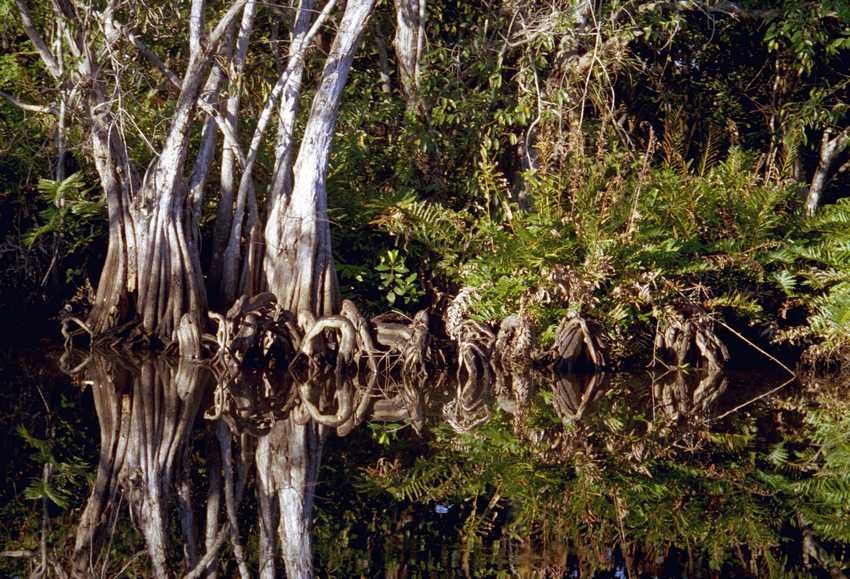
In the early morning, the perfectly still water mirrors the jungle canopy overhead. Long, smooth mangrove roots reach down from the branches above, where giant bromeliads are perched among exotic orchids.

But the birds are the big attraction. People say that half the known birds of Mexico are lurking among the mangroves!

The mangroves of San Blas cast bizarre reflections. (John Pint)

Here you will see whimbrels, wood storks, roseate spoonbills, anhingas, and if you look carefully, you may spot a boat-billed heron, which hides in shady spots and somehow manages to look cute even though it has a bill shaped more like a shoe than a boat.

La Manzanilla Crocodile Sanctuary

While San Blas is the place to go for bird-watching, I suggest you head for El Cocodrilario de La Manzanilla, Mexico’s biggest crocodile sanctuary,  if you really want to learn something about these reptiles. There are close to 500 crocs there, all well cared for by a local group called Cipactli (crocodile in Náhuatl) whose relationship with these creatures may be older than Mexico itself.

Turtle Beach

If it’s turtles you’d like to see, and perhaps release, you can visit the Center for the Protection and Conservation of the Sea Turtle, located 21 kilometers south of San Blas on aptly named Playa de las Tortugas. They liberate turtles every evening at five, and, if you wish, you can camp at the center or along the picturesque, undeveloped beach adjacent to it.

Pristine Dolphin Beach

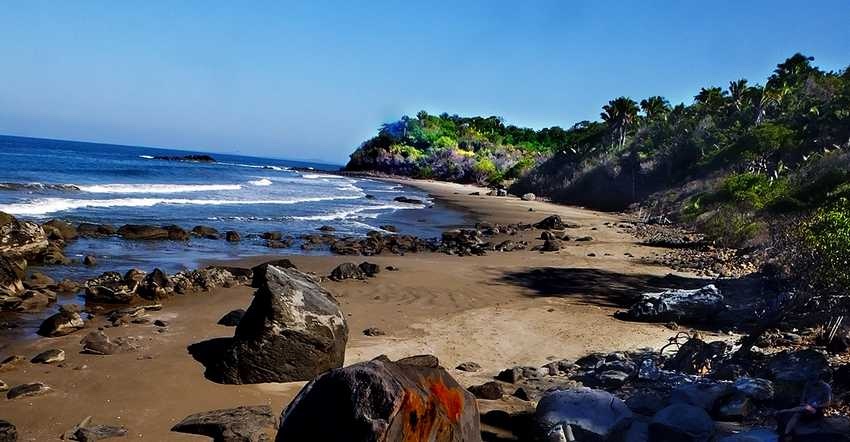
Dolphin Beach as it looked in 2021. (John Pint)

In spite of much development of Mexico’s West Coast — from palapas to luxury resorts — quiet, delightful, undisturbed beaches can still be found.

Many years ago, I discovered my dream beach simply by hiking north at low tide from popular, crowded Playa Platanitos, Nayarit.

We soon came to a solitary stretch of sand bordered by big, beautiful rocks at each end, with a grove of palm trees just above the silver sand, offering precious shade. The only footprints we could find on this idyllic beach were those of raccoons.

Gazing out to sea, we spotted a pod of dolphins leaping out of the water. Fortunately, we discovered a rough dirt road connecting this little beach to the main highway, and it soon became our favorite place to camp on the coast.

Although today a locked gate prevents vehicle access, Dolphin Beach looks the same as it did 30 years ago, and on my last visit the only footprints I found were still those of raccoons.

Hiking through the jungle

The Rock Wall Pass leading to El Nogalito Waterfall, just south of Puerto Vallarta. (Di Minardi)

Besides sandy beaches and mangroves, West Mexico’s Pacific Coast features jungles.

If you’d like to have a truly exotic jungle experience, I recommend a hike to Cascada el Nogalito, located about 16 kilometers south of Puerto Vallarta. It’s a round trip of six kilometers and takes around four hours. Be prepared to get wet: you’ll be walking in — not alongside — a gorgeous river.

The hike turns into a fascinating and educational experience if you go with a local guide. You will discover orchids, bromeliads, medicinal vines, giant ferns, strangler figs and the curious papelillo tree with its paper-thin, peeling bark. You will see termite nests which have been turned into homes by the local parakeets, and you may even spot bizarre creatures like the basilisk, famed for its ability to run across water.

To get the most out of the experience, go there guided by a marine biologist.

Vallarta Botanical Garden

Perhaps the single most beautiful spot in West Mexico’s tropical ecosystems is Vallarta Botanical Garden, which is located 24 kilometers south of Puerto Vallarta on 32 hectares of hills and dales covered with so many plant species that no one can count them.

The owner of the Garden, Robert Price, told me that he fell in love with the place 21 years ago. when he had asked a man selling flowers to show him where he was getting his orchids from.

The beauty of this spot, with its network of fascinating trails, is astounding. Don’t miss it, and when you go, be prepared to spend the whole day there. 

Watch out… if you visit all the sites listed above, you may never want to go home!

John Pint has lived near Guadalajara, Jalisco, for more than 30 years and is the author of “A Guide to West Mexico’s Guachimontones and Surrounding Area” and co-author of “Outdoors in Western Mexico.” More of his writing can be found on his website.

Higher ground: San Miguel de Allende’s most scenic spots (that aren’t rooftop bars)

4
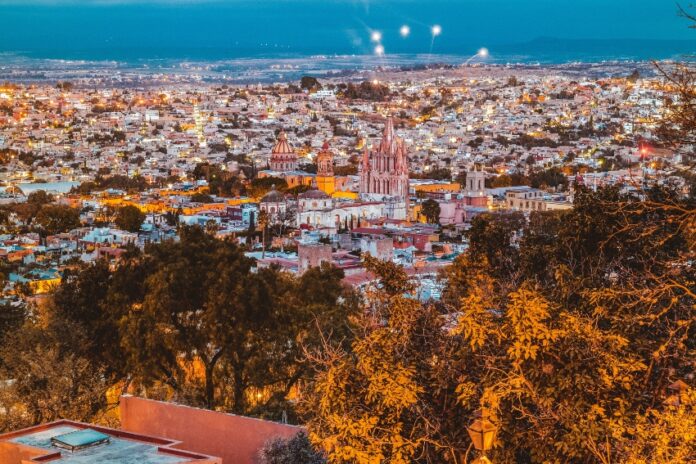
Gaze down on San Miguel's majesty from these great spots. (Unsplash / Daniels Joffe)

“Nature does not hurry,” wrote the Taoist philosopher Lao Tzu. “Yet everything is accomplished.”

And so it is with San Miguel de Allende’s xeric flora, generously offering us a peek at its soft amethyst jacaranda blossoms, sighing open for 30 to 40 breathtaking days each year around Semana Santa. As for the rest of the year, everywhere you look, explosive fuchsia bougainvillea vines are making their skyward climb up the façades of ochre and terracotta blush Spanish colonial buildings.

Ocher colored facades
Ocher colored facades are a specialty in San Miguel de Allende. (Unsplash/Jezael Mengoza)

Keep looking up. Each November, over 200 hot air balloons soar over the Parque Metropolitano in Léon – just two hours away by car – as part of the International Hot Air Balloon Festival. On almost any other day of the week, early risers can enjoy a more modest spectacle of a handful of striped orbs rising over San Miguel de Allende (or, better yet, hop into one) before dawn.

Even better than rooftop bars

In a city that enjoys a remarkable dose of sunshine (300-330 days annually), average high temperatures in the 70s Fahrenheit nearly year-round, an altitude of over 6,000 feet and a reliable mélange of warm days and cool nights, its rooftop bars are magnets for both socialites and mixology enthusiasts. But as mocktail mania and the number of Gen Z’ers eschewing alcohol continue to grow, so do San Miguel’s opportunities to get a breathtaking view from the top — without a bar tab.

Roaming the streets of San Miguel de Allende on foot or by car presents a plethora of iconic photo opportunities, rife with free (or at least cheap) glimpses into the city’s rich artistic heritage and endemic desert botany, with architectural triumphs at nearly every turn.

Bored of meeting up at bars? Have a budget-conscious thirst for adventure? Eager to see the heart of Mexico from higher ground? These often overlooked views are definitely worth the climb.

First stop: Punk Pizza and beef tongue tacos

Bong Pizza
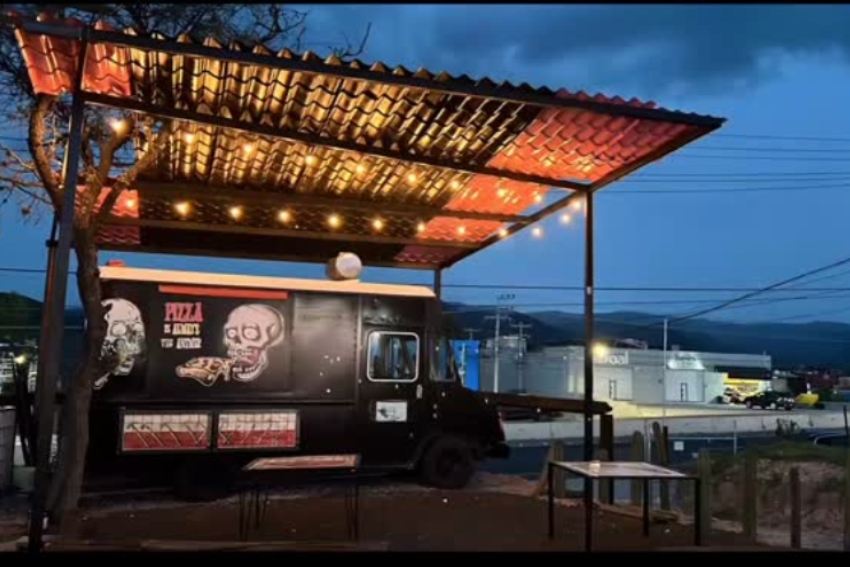
Bong Pizza is one of San Miguel de Allende’s most Instagrammable spots. (Instagram)

As the Salida a Celaya strip heats up San Miguel’s gastronomical landscape, a new food truck plaza quietly hung up its string lights a few months back, with local nomads Bong Pizza announcing via Instagram last week that they’re permanently parked and open for business Wednesday and Thursday, 1:00 p.m. to 8:00 p.m., and Friday and Saturday, 1:00 p.m. to 10:00 p.m. 

Before you make your way down the highway in search of new sights, stop at Celaya 47 (next to Boom Fitness) to indulge in Chef Mauricio Garza’s unbeatable sourdough pies. Or make it a panoramic picnic by adding tender beef tongue tacos and crispy fries to your order from the neighboring trucks. From this elevated vantage point, you’ll have a prime view of the Parroquía de San Miguel Arcángel, a fairly large slice of the city’s pastel feast for the eyes. Nature’s gentle giants, the Picacho mountains, are almost close enough to touch, with the entire panorama sprawling out into equally stunning illuminated tiers at night. Spark up a delicious dialogue between the casual comida corrida and a city beckoning you closer.

Serene hilltop sanctuary: Casa Shala

Casa Shala
Casa Shala offers both a cafeteria, yoga studio, and nearby climbing. (Facebook)

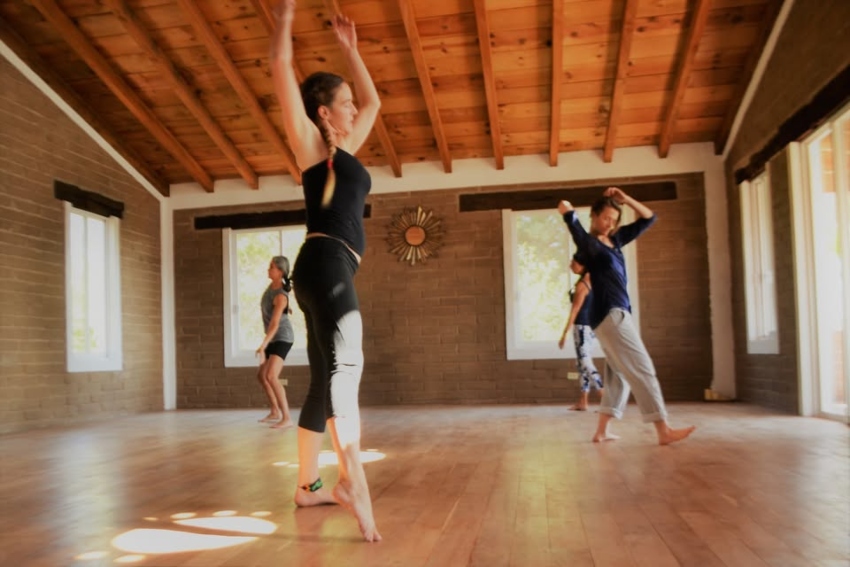
If one were of the gatekeeping mind, this mindfulness lover’s retreat away from the all-hours fireworks in El Centro would remain off the list. Casa Shala’s owners, Diana and Martín, describe their regenerative organic cafeteria (Zen Cafe), sacred space and yoga studio as a place to “explore the expansion of consciousness together,” a tranquil sanctuary where everyone is welcome. Their mind-body-spirit haven is tucked away in La Palmita, an overwhelmingly tourist-free neighborhood where active, outdoorsy types will also find an emerging climbing community and their training gym, plus walking access to several free lookout points, including the Mirador Cruz del Pueblo.

However, the best-kept secret is hiding on the second floor. Even my toddler twins were stunned into silence when taking in the rolling hills tucked behind the muted maroon rooftops stretched across the horizon. This postcard-come-alive is perhaps the best vantage point in the entire town. Signing up for a music workshop or a cacao ceremony will give you plenty of time to enjoy the scenery in silence before or after your activity.

Worth the drive (and the best time to go)

El Charco del Ingenio
The botanical gardens of El Charco del Ingenio provide views of a different sort. (El Charco del Ingenio)

After a renovation, El Charco del Ingenio botanical gardens are more stunning and welcoming than ever. With a modest 100 pesos entry fee (50 pesos for students, teachers, and seniors with a valid ID; free for children under 10), visitors can enjoy an entire day of wonder, locally-sourced nourishment at the cafeteria, regional fair trade tinctures and trinkets in the sustainable gift shop at the entrance and an unmatched view of San Miguel de Allende after a brisk, self-guided walk to the edge of the property.

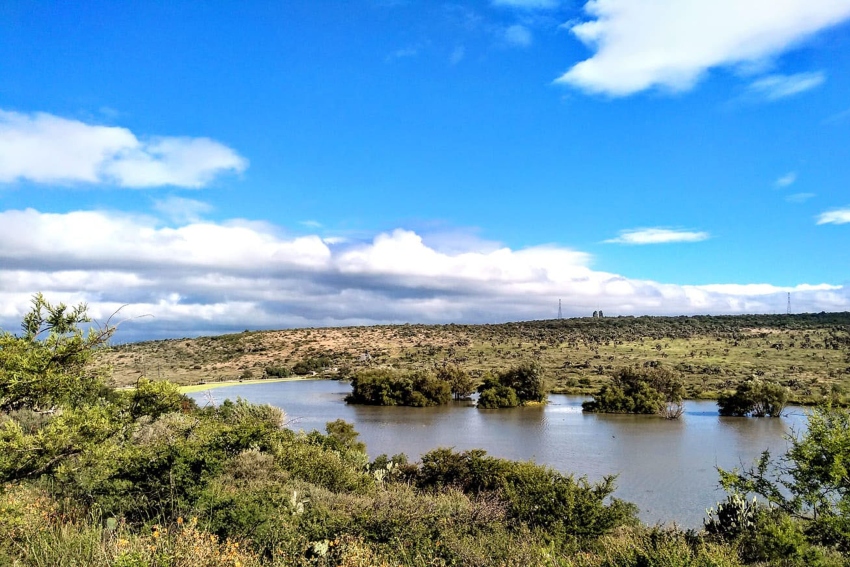
Last year, the Dalai Lama himself consecrated El Charco del Ingenio as a “Zone of Peace,” one of only five declared as such in all of Mexico. Along the regional plant trails, moments of quiet contemplation are abundant, with ample foot paths guiding your way to the western viewpoints where the Obraje Dam, the Laja River Valley, the Sierra de Guanajuato, and the city of San Miguel de Allende are all visible, framed by centuries-old mossy boulders and sculptures amidst the staggering diversity of Mexican wildlife. Through a “dam curtain,” the Northern Reserve Trails unveil an equally awe-inspiring view from around the ravine’s verdant edges.

If you’re not planning your trip around a guided tour (recommended for first-time visitors to get a true sense of the garden’s vast offerings) or one of their bimonthly birdwatching excursions, it’s wise to avoid the midday heat, especially during the hotter months. Cell service is spotty or nonexistent at El Charco, so reserve your transportation in advance. You can also request a return ride at the welcome reception desk, though taxis charge a higher fare when booked on-site.

Lovers’ lanes: Callejón del Chorro, “El Nigromante,” and Calle Alda

"El Nigromante" Centro Cultural in San Miguel de Allende
“El Nigromante” Centro Cultural in San Miguel de Allende is one of the city’s many scenic stops. (Instituto Nacional de Bellas Artes y Literatura)

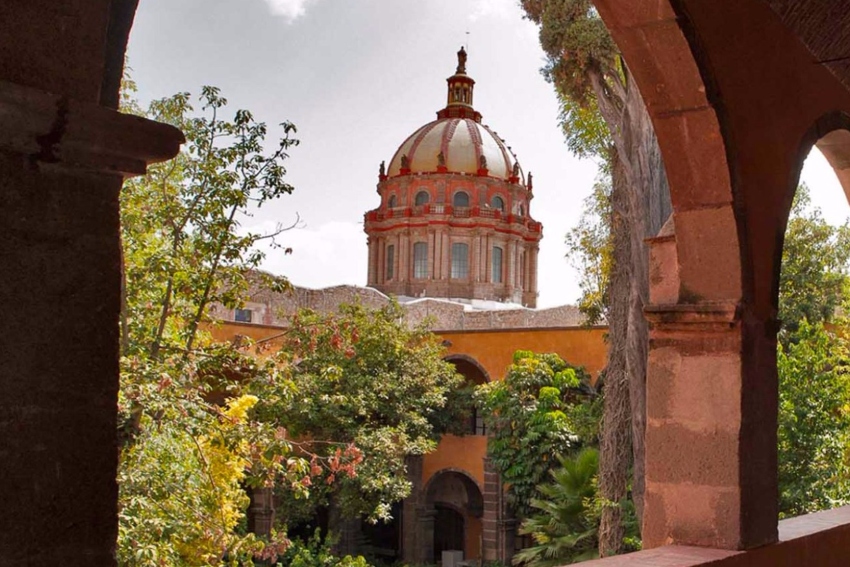
Views aside, the former convent turned popular art museum, El Centro Cultural Ignacio Ramírez “El Nigromante,” is an art lover’s paradise, filled with the floor-to-ceiling folkloric frescos of David Alfaro Siqueiros, Pedro Martínez and Eleanor Cohen. Even from the tunnel of trees giving way to the fountain-dotted courtyard at Bellas Artes (one of its other local nicknames), the vibrantly citrus-toned dome of the nearby Iglesia de la Concepción hovers in the periphery. On the second level, more peek-a-boo cityscapes emerge like tiny polaroids ready to frame.

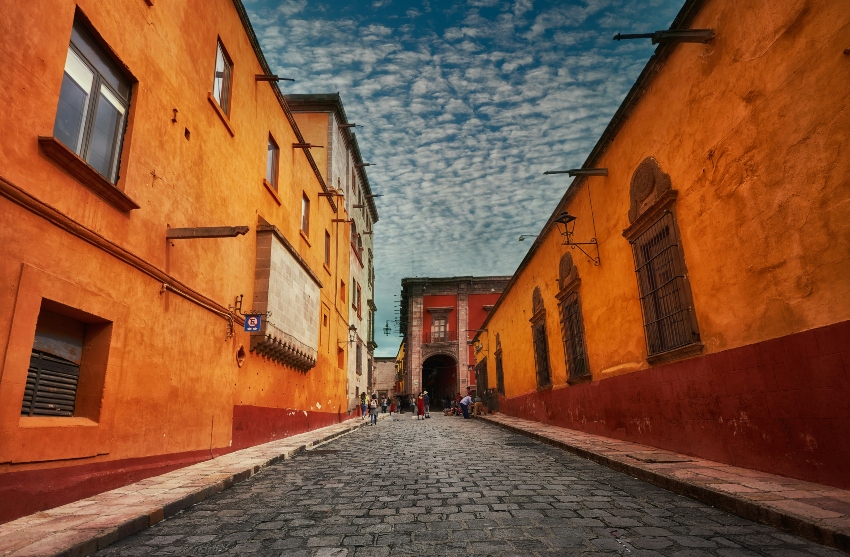
After strolling the corridors of “El Nigromante,” take a languid stroll five minutes south to Calle Aldama, ranked number 12 in the world for “most beautiful streets” in 2024 by Architectural Digest Mexico and Latin America. Though the cobblestoned walk is a relatively short and easy one – approximately seven kilometers – it is highly prized for being San Miguel’s most Instagrammable alleyway by a long shot. At the street’s culmination point is an incomparable view of the Parroquía, a path exploding with protective palms and the flowering histories of revolution, Mexican sage and Texas mountain laurel. The street gets its name from the Mexican rebel soldier and national hero, Juan Aldama, and provides an idyllic backdrop for the most praiseworthy shots of the town’s aesthetic essence.

A pause for ‘fuel’

Paseo del Chorro
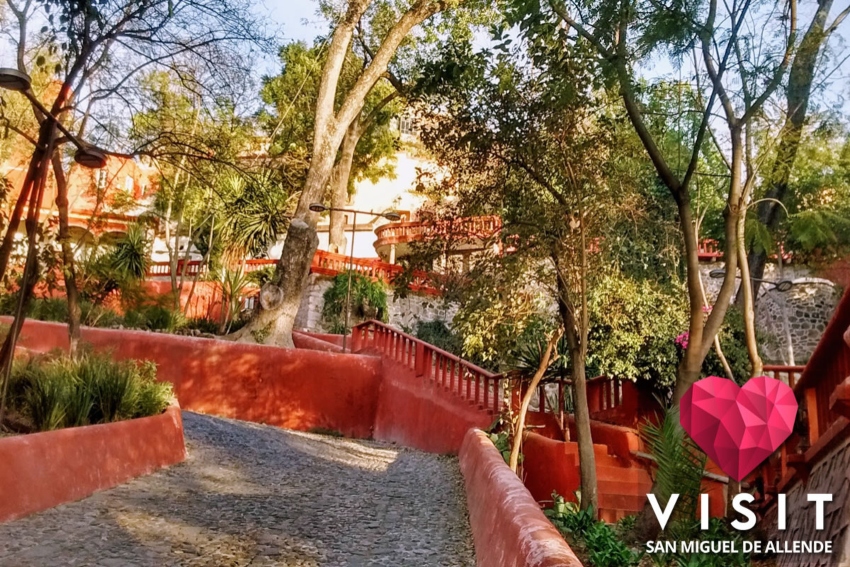
Paseo del Chorro is one of San Miguel de Allende’s prettiest walks. (Visit San Miguel de Allende)

If you haven’t already paused to fuel up at one of the dozens of cafés along your path by now, take a sip or a bite before heading downtown to make your way up the Paseo del Chorro y Lavaderos (Callejón del Chorro). Here, cascading terraces preserve local lore about the city’s founding place, carrying the echoes of its robust social and artistic gatherings. Nearly 20 exquisitely designed public washing stations dating back to the 18th century, painted with burgundy stains reminiscent of monks’ robes, pave your journey up to a small chapel at the top of the stairway.

Saunter at the pace of ‘ahorita’

Just steps from all the most-visited tourist landmarks near the town square in the Jardín Allende, “El Chorro” is also a flat 10-minute walk from Parque Benito Juárez. It provides shade, snacks and a newly revamped playground with fun-filled challenges for little explorers of all ages. If you’re lucky, you might catch a spirited pickup basketball game. Or an elegantly dressed wedding party clustered in a celebratory parade.

If only for this scenic saunter, move at the Mexican pace of “ahorita,” which could mean you’ll arrive at your final destination soon, later or at an unspecified time far into the future, depending on who you ask. Lovers of unhurried wandering will find this art is not lost. Nor shall they be if willing to throw plans to the wind for the chance at reclaiming childlike wonder. Few places on Earth are better when it comes to those seeking momentary rapture.

Simone Jacobson is a Burmese American cultural connector, toddler twin mama and writer based in San Miguel de Allende. By day, she is the Content Director for Well Spirit Collective. In all other moments, she strives to raise compassionate children who never lose their curiosity, tenderness and radiant light. Read more by Simone here.

The fascinating history of charrería in Mexico

6
Charrería in Mexico is long and storied. Speaking of stories, it's a stranger one than you might think. (File Photo)

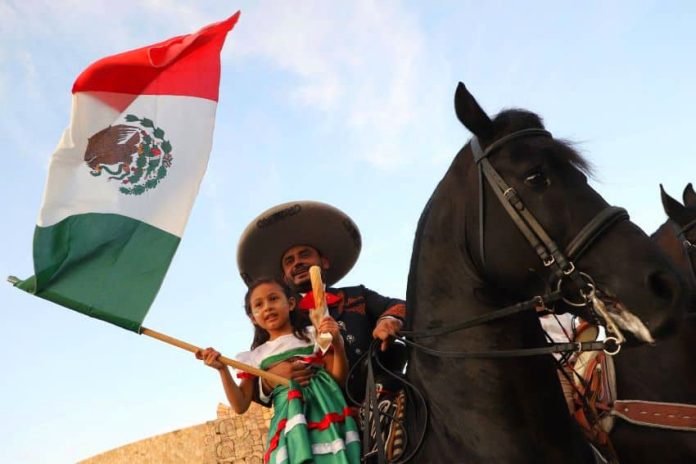
Charrería, Mexico’s national sport, is a unique competitive equestrian tradition deeply associated with Mexican identity. Mexico was home to the first cowboys, and the charro suit, since adopted by mariachis, remains one of the most iconic symbols by which Mexico is recognized around the globe. 

Unlike popular traditions like Day of the Dead, which have deep roots in Indigenous heritage, charrería is a product of cultural syncretism. It emerged from the combination of European influences and native traditions. However, it also blended European fashion, ranching practices and local ingenuity, creating something distinctly Mexican.

Charrería
Charrería is Mexico’s national sport. (Gobierno de Mexico)

Of all these influences, two stand out. The fashion preferences of Emperor Maximilian of Habsburg and the strong fibers of a plant known as henequén. While seemingly unrelated, these two elements shaped the ranching lifestyle of charrería and the competitive spirit that followed, producing a lasting legacy.

Let’s explore how a plant and an Emperor influenced one of Mexico’s most cherished traditions.  

Henequén in Yucatán

“Perhaps the most important single local contribution to charrería is the henequén rope,” Chuy Mora, a third-generation charro in Guadalajara and founder of Entre Charros cultural experiences, told me. “Without henequén ropes, we wouldn’t have charrería as we have it today.”

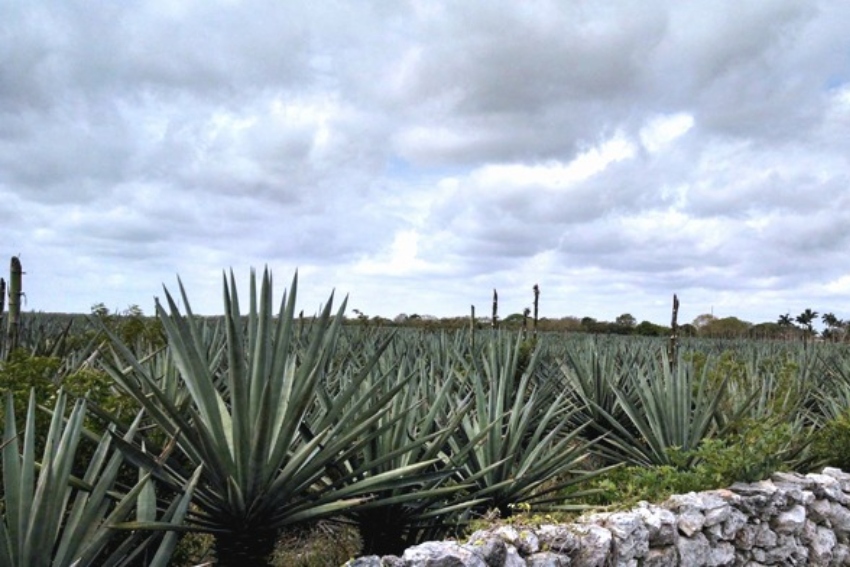
Henequén is a strong, natural fiber extracted from the leaves of an agave plant native to the Yucatán Peninsula. Known as “ki” in the Mayan language, the native communities used henequén fibers to produce ropes and twine, among other goods. 

The ropes used by the natives were stronger and lighter than those traditionally used in Europe, which were mostly made from local plant fibers like hemp and flax. While strong and flexible, they would break easily. 

“Although rope had always existed, the materials were very weak, and the result was a weak and thin rope which was very difficult to wield,” Mora said.  

Henequén in Mexico
Henequén had a profound influence on the charrería. (Gobierno de Mexico)

When the Spanish conquistadores arrived in Mexico and discovered the benefits of henequén, they established a large agro-industry around it. During the 19th and 20th centuries, it was exported in large quantities from Yucatán to the United States and Europe, to support commercial goods like sacks, bags and rugs — in addition to cords and ropes. 

The effect of henequén on cattle ranching

Just as henequén ropes held ships steady on the high seas and tied down crops in the fields, they also supported the evolution of charrería. The cattle sector, in particular, not only benefited from henequén ropes but changed dramatically because of them. 

“Henequén revolutionized cattle management because the rope wouldn’t break when roping an animal,” Mora pointed out. “It also revolutionized the saddle. From being made of straw or leather, they had to add a wooden frame that could withstand the rope tie. It revolutionized livestock farming worldwide.”

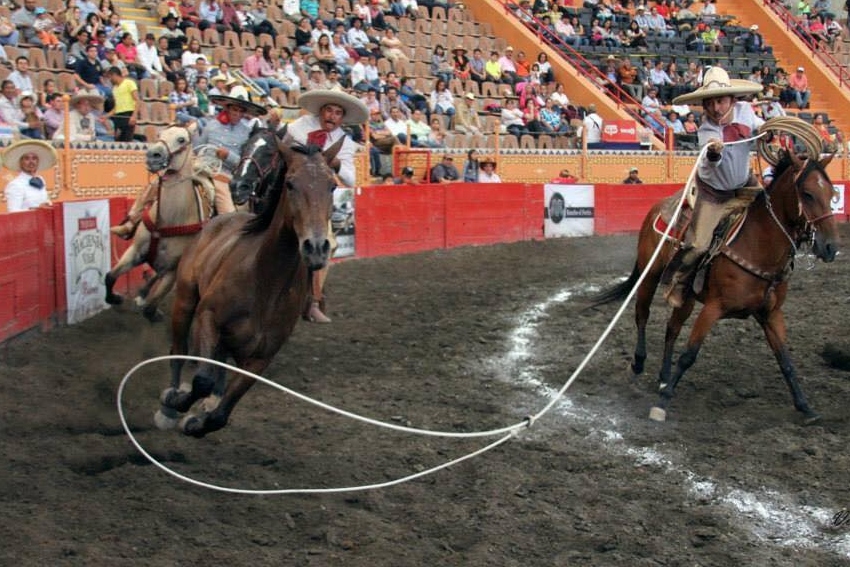
The suertes (“chances” or “luck”) charros perform in today’s charrería competitions, which replicate the techniques ranchers traditionally use to manage their cattle, were made possible by henequén. Without it, the skills charros use today to wield ropes wouldn’t exist. 

“Thanks to henequén, ranchers developed new skills in handling the rope that were not possible before,” Mora said. 

The popularity of henequén eventually decreased after synthetic fibers were invented in the 20th century. But its long-lasting impacts cannot be overstated.

Maximilian’s influence on the charro suit 

Maximilian
Maximilian, the short-lived Habsburg Emperor, helped to popularize the charro suit in Mexico. (Public Domain)

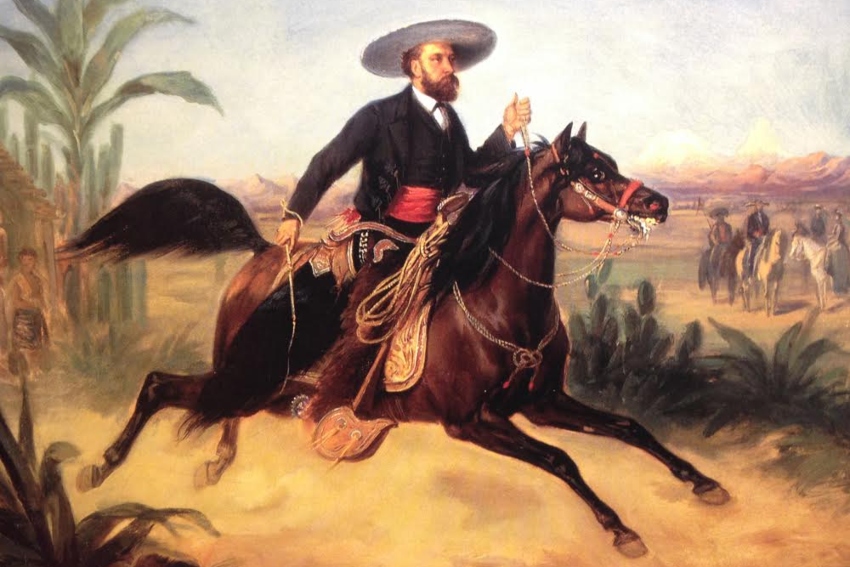
Over a century and a half ago, Mexico was ruled by Austrian Archduke Maximilian of Habsburg and his wife Carlota, during a period known as the Second Mexican Empire. Although they reigned for only a short period of time (1864-1867), Maximilian and Carlota left a lasting impact on Mexico’s culture. One of these influences was the charro outfit, significantly shaped by Maximilian’s fashion preferences. 

“Maximilian didn’t want to impose European fashion in Mexico,” Mora said. “Rather, he wanted to reach out to the people and project an image of a popular emperor.”

Instead of wearing rigid European uniforms when he toured the country, Maximilian adopted and promoted the dress of Mexican hacendados (landowners), which blended Spanish and local elements. 

Until then, the charro attire was practical and more closely tied to the countryside and ranch life. It was the dress workers would wear during fieldwork. Under Maximilian and Carlota, the suit became a prestigious fashion item. So much so that the upper classes began wearing it, too. Thus it soon acquired an air of aristocratic elegance at receptions, parties and parades. 

Nearly a century later, during Mexico’s Golden Age of Cinema, the image of the charro was deeply cemented in the collective imagination through legendary figures like Jorge Negrete and Pedro Infante. Their performances, often wearing the charro dress inspired by Maximilian, turned charros into a cultural icon. These movie stars embodied a proud, romantic, and distinctly masculine ideal of Mexican identity.

The cultural legacy of mariachis

This ideal traveled the world thanks to the mariachi, who adopted the charro suit early in the 20th century. 

Coplas (Remasterizado) - Jorge Negrete y Pedro Infante Full HD

“The mariachi of Justo Villa, made up of four musicians, was originally from Cocula, Jalisco. When Porfirio Díaz visited the hacienda of La Sauceda, he heard them play and took them with him to Mexico City,” Mora explained. “From there, they were sent to a fair in Chicago, and they sent them dressed in charro suits. This was the beginning of their international fame.”

The charro suit remains Mexico’s most emblematic dress. It is made up of a short jacket, fitted trousers with silver buttons, a white cotton shirt, a bow tie, a wide-brimmed sombrero and ankle boots. Depending on the occasion, a charro can choose from three versions. There’s the work suit, the half-gala suit, and the gala suit. However, mariachis always wear the gala suit. 

Gabriela Solis is a Mexican lawyer turned full-time writer. She was born and raised in Guadalajara and covers business, culture, lifestyle and travel for Mexico News Daily. You can follow her lifestyle blog Dunas y Palmeras.