Home Blog Page 673

López Obrador to meet with Biden and Xi at APEC summit

1
President López Obrador last met in person with President Biden in January when Mexico hosted the North American Leaders Summit. (Galo Cañas/Cuartoscuro)

Later this week, President López Obrador will find himself in a place he has seldom been since taking office almost five years ago: the world stage.

AMLO, as the septuagenarian president is best known, will travel to San Francisco for the Asia-Pacific Economic Cooperation (APEC) Leaders’ Summit, at which U.S. President Joe Biden and Chinese President Xi Jinping will be among the leaders in attendance.

President López Obrador with U.S. President Biden at a July meeting in Washington, D.C.
President López Obrador with U.S. President Biden at a July 2022 meeting in Washington, D.C. (Presidencia de la República)

López Obrador has one-on-on meetings lined up with both Biden and Xi.

Speaking in Culiacán, Sinaloa, on Tuesday a day after celebrating his 70th birthday, AMLO told reporters that he will depart for San Francisco on Wednesday.

After initially announcing that he would attend the APEC meeting, López Obrador changed his mind, saying in September that he wouldn’t be going because of Mexico’s strained, “on hold” relations with Peru due to the ouster of former president Pedro Castillo in December 2022.

However, AMLO – who has described the current Peruvian government as “spurious” – subsequently announced that he would in fact attend the summit that brings together officials from 21 member economies, including the U.S., China, Japan, Russia, Canada, Australia, Chile, Peru, Indonesia, South Korea, Vietnam and Chinese Taipei (Taiwan).

AMLO is expected to meet personally with President Xi of China, seen here with Marcelo Ebrard (left), the former foreign affairs minister. (Secretaría del Estado/Cuartoscuro)

The meeting with Biden

López Obrador is scheduled to meet with the U.S. president in San Francisco on Friday.

Speaking at AMLO’s Tuesday morning press conference in Culiacán, Foreign Affairs Minister Alicia Bárcena said that the Mexico-U.S. border, the fight against synthetic drugs, migration and the U.S. DACA (Deferred Action for Childhood Arrivals) policy will be among the issues the two leaders will discuss.

Their meeting will take place four weeks after López Obrador met with leaders and other officials from 10 Western Hemisphere countries at a regional migration summit in Palenque, Chiapas, at which the participants agreed on 14 points to “jointly confront the migration reality” they face.

Six older men in white shirts and a woman in a green suit pose for a picture
President López Obrador with the leaders of Colombia, Cuba, Venezuela, Haiti and Honduras in Palenque. (Presidencia de la República)

AMLO subsequently said that he would raise the issues discussed in Palenque with Biden during his meeting in San Francisco. His central goal is to obtain more funding from the U.S. for development programs aimed at providing well-being for would-be migrants and thus deterring them from leaving their homes and venturing north.

“The president wants to speak with the president of the United States about how the United States can collaborate on these development projects,” Bárcena said.

White House Press Secretary Karine Jean-Pierre said in a statement that Biden and López Obrador “will discuss ongoing efforts to strengthen the U.S.-Mexico bilateral relationship and address issues of shared concern.”

They “will also discuss how we can continue to work together as partners to manage migration at our shared border and mobilize a hemispheric-wide response to this challenge,” she added.

The talks will come six weeks after Mexican and U.S. officials discussed issues including the fentanyl problem, arms trafficking, migration and the United States’ plan to build a new section of border wall at high-level security talks in Mexico City.

The meeting with Xi

López Obrador will meet the Chinese president and general secretary of the Chinese Communist Party on Thursday.

Bárcena said Tuesday that the meeting between the two leaders is “extremely important” and noted that it will be the first time they have a face-to-face conversation.

Alicia Bárcena at press conference
Foreign Affairs Minister Alicia Bárcena will accompany the president to San Francisco. (Lopezobrador.org.mx)

The foreign minister, who will also travel to San Francisco, said that Chinese aid for Acapulco, which was devastated when Hurricane Otis made landfall on Oct. 25, trade and the supply chain for illicit fentanyl will be among the issues López Obrador and Xi will discuss.

AMLO wrote to Xi earlier this year to seek his support in the fight against fentanyl, as precursor chemicals used to make the synthetic opioid are shipped to Mexico from China, according to Mexican and U.S. authorities.

A Chinese Foreign Ministry spokesperson subsequently declared that “there is no such thing as illegal trafficking of fentanyl between China and Mexico.”

Mao Ning Chinese Spokesperson
A Chinese Foreign Ministry spokesperson denied that fentanyl precursors were being exported from China, and called the fentanyl crisis one “made in the USA”. (Ministry of Foreign Affairs of PRC)

Bárcena said that the fentanyl supply chain issue will be broached by López Obrador in his discussions with Xi, suggesting that his focus will be on “how to organize ourselves in order to have better control … of the exportation and importation in general of our products,” including precursor chemicals that are shipped from China to Mexico and subsequently used to make the synthetic opioid.

She acknowledged earlier in the press conference that fentanyl is manufactured legally in Mexico in some cases. Bárcena also said that precursors used to make fentanyl “mainly come from Asia.”

Following his meeting with Xi, AMLO is scheduled to meet with Canadian Prime Minister Justin Trudeau, the foreign minister said said.

APEC and the Leaders’ Summit 

APEC began in 1989 with 12 members and increased through the 1990s to reach 21.

The 21 member economies account for nearly 40% of the global population and almost half the world’s trade, according to the Associated Press.

Mexico hosted the annual APEC meeting in Los Cabos, Baja California Sur, in 2002, when Vicente Fox was president.

Putin Peña Nieto
Former President Enrique Peña Nieto (right) met with Vladimir Putin at the Da Nang, Vietnam APEC summit in 2017. (Presidencia/Cuartoscuro)

Citing White House aides, AP reported that the goal for the 2023 Leaders’ Summit is “to try to make APEC economies more resilient, particularly in the face of growing climate issues and following a global pandemic that killed millions of people and strained supply chains.”

A bilateral meeting between Biden and Xi on Wednesday is set to overshadow the Leaders’ Summit, although the traditional photo in which leaders dress in typical local attire will no doubt attract attention.

López Obrador has largely avoided international meetings and events during his presidency, with former foreign affairs minister Marcelo Ebrard representing him on numerous occasions until he resigned in June to seek the ruling Morena party’s nomination for the 2024 presidential election.

Economy Minister Raquel Buenrostro attended the 2023 G20 Summit in New Delhi, India, in September, while AMLO stayed at home to attend to domestic matters.

López Obrador frequently asserts that “the best foreign policy is domestic policy,” and has only traveled abroad to other Western Hemisphere nations during his presidency.

With reports from Milenio, El Economista, El Universal and AP

Airbnb regulation in Mexico City could be approved by December

5
Mexico City's government is looking to limit the effect of short-term rentals on the property market. (Maria Gala/X)

The Mexico City government has proposed new regulation for digital accommodation platforms including Airbnb to address concerns about gentrification and displacement of residents in the city.

Martí Batres, Mexico City’s mayor (head of government), said the proposal was based on reforms to the local Tourism Law that would require Airbnb rental hosts to register in a database of temporary accommodation properties.

Mayor Martí Batres has announced that the city government intends to create a database of short-term rental properties. (Ciudad de Mexico/Cuartoscuro)

Under the new rules, each host would be required to inform neighbors about their intention to rent the property and report biannually on the occupation of the property to Mexico City’s Tourism Ministry (Sectur). In order to prevent mass buying up of residential properties for temporary accommodation, no host would be allowed to register more than three houses, apartments or rooms.

While annual tax would remain at 3.5% for hotels and 5% for digital lodging platforms, hosts operating a maximum three rental properties would have to pay an additional royalty payment, yet to be defined.

Batres said that the regulation responds to concerns of residents in neighborhoods such as Roma, Condesa and Juárez, where Airbnb properties have proliferated rapidly in recent years, contributing to housing shortages and rising rent and house prices.

“We are very interested in the tranquility of the residents of the different neighborhoods; that the residents do not feel that there is a situation of displacement, gentrification, that they are being expelled from their homes by new economic dynamics,” Batres said.

The proliferation of short-term rental properties has priced many local residents out of city center living. (Andreas Davis/Unsplash)

He added on his X account that the regulation also seeks to address concerns about unequal competition with the hotel industry and a lack of safety guarantees for tourists who use digital accommodation platforms. “The proposal was agreed upon with residents, hoteliers’ associations and digital platforms themselves,” Batres wrote.

Though city residents have called to regulate Airbnb for several years, the first senior official in the Mexico City government to raise the question was former head of government and current Morena presidential candidate Claudia Sheinbaum. Sheinbaum’s remarks came in December 2022, two months after a planned partnership with Airbnb to promote the capital to digital nomads triggered protests.

While Sheinbaum said at the time that the city still aimed to attract more tourists, she acknowledged that certain areas were disproportionately affected by short-term rentals and could be at risk of becoming Airbnb-only neighborhoods without government action.

Since the start of this year, the number of short-term rentals in Mexico City has leapt by 17.5%, with the independent news portal Inside Airbnb counting 16,590 entire homes for rent in Mexico City via the platform in October.

Street in Mexico City
Roma Norte, a hotbed for digital nomads and long-term visitors from aboard, has seen housing costs spike. Rents in the area can now go for thousands of dollars per month. (Keisers)

In July, Batres said that regulation for Airbnb could be ready within six months, but further information was needed to assess its gentrifying effect. According to Eduardo García Clark, Director of Digital Governance at Mexico City’s Digital Agency for Public Innovation, the newly proposed registry will partly address this need, providing comprehensive information on the size of the sector and how it evolves over time.

The proposal will now be sent to the Mexico City Congress, and is hoped to be approved during this year’s legislative session before it ends on Dec. 15.

With reports from Forbes and El Financiero

Police say Jesús Ociel Baena case was murder-suicide

2
Vigil for Baena in Toluca
Police in Aguascalientes have said that Baena was killed by their partner in an apparent murder-suicide. (CRISANTA ESPINOSA AGUILAR /CUARTOSCURO.COM)

Jesús Ociel Baena Saucedo, the first nonbinary judge in Latin America, was killed in a murder-suicide committed by boyfriend Dorian Daniel Nieves, the Aguascalientes state prosecutor said Tuesday.

One of Mexico’s most prominent LGBTQ+ activists, Baena was found dead on Monday morning at their home in the capital city of Aguascalientes.

Ociel Baena
Baena (left) was a prominent LGBTQ+ activist, working to improve conditions throughout Mexico. (Ociel Baena/X)

According to prosecutor Jesús Figueroa, Nieves killed Baena with a razor blade, then took his own life with the same sharp instrument.

“The magistrate’s body has 20 wounds, one fatal in the jugular, and his partner has wounds on his fingers that are caused, according to experts, precisely by the use of the blade,” Figueroa said.

Footprints corresponding to Nieves were found near the judge’s body on the ground floor, the prosecutor added, noting that the killer also went upstairs, where traces of blood were found on a bed.

The home’s main access door was locked, Figueroa said, and security camera footage shows only Baena and Nieves in the home — entering together at 1:16 a.m., roughly eight hours before their bodies were discovered.

Vigil for Baena in Xalapa
Baena was a symbol to the Mexican LGBTQ+ community. Gatherings and protests have been held around the country since their death. (YERANIA ROLÓN/CUARTOSCURO.COM)

“The only two people who were on the property were the two of them,” Figueroa said. “We did not find any other evidence … to establish [that] a third person entered.”

Baena, 39, made history in October 2022 by being appointed to the Electoral Tribunal of the State of Aguascalientes, a division of the Mexican justice system that specializes in matters relating to elections.

As a nonbinary individual, they were an outspoken, respected and staunch advocate for LGBTQ+ rights, with a long career in constitutional law.

Baena pioneered initiatives on behalf of trans children, same-sex marriage and gender-identity recognition, and made news by getting Coahuila state officials to re-issue their 1984 birth certificate with a box added for “non-binary.” Shortly thereafter, Mexico issued its first non-binary passport, to Baena.

Police in Aguascalientes have said that Baena was killed by their partner in an apparent murder-suicide. (ADOLFO VLADIMIR /CUARTOSCURO.COM)

But Baena also faced criticism, hate speech and other obstacles. In July, the native of Saltillo, Coahuila announced on social media they had requested protection from the government due to attacks and death threats.

Nieves, 37, a lawyer according to social networks, reportedly was chosen Mr. Model Mexico for Aguascalientes in 2012, when he was 26 years old. Reports say he lived in Mexico  City.

Baena’s death sent shock waves through Mexico and beyond, sparking marches and gatherings in Mexico City, Chihuahua, Puebla, Guadalajara, Cancún, Morelia and Cuernavaca, among others.

Manuel Alonso García, Aguascalientes’ public security minister, caused controversy when he declared on Monday that the victims’ deaths were a crime of passion. 

At the marches, people shouted lines such as “crime of passion, national lie” and “dissidents are killed in plain sight.”

At a rally in Mexico City, one speaker said, “We are heirs to a struggle that Ociel has left for us. We must not let his death pass in vain. We must continue with the legacy he left us.” 

With reports from Milenio, El País, Reporte Índigo and Zócalo

Volkswagen to manufacture electric vehicles in Mexico

0
Volkswagen has announced that it intends to begin production of electric vehicles in Mexico, with a more than US $763 million investment in new facilities. (Volkswagen México)

German car manufacturer Volkswagen plans to start large-scale production of electric vehicles (EVs) in Mexico in the next three years, with an investment of several hundred million dollars.

Holger Nestler, the company’s Mexico director, told Forbes Mexico that Volkswagen is planning two investment packages to kickstart EV production at its flagship plant in Puebla. The first, a total of US $763.5 million, will focus on modernizing production processes and making them more environmentally friendly. The second will focus on the specific EV model it plans to produce, with details to be announced in 3-4 months’ time.

VW plant in Puebla
The electric vehicles will be manufactured at Volkswagen’s flagship Puebla facility, which has been a mainstay of the Mexican auto industry for decades. (Volkswagen México)

“You can count on it [large scale EV production within three years],” Nestler assured Forbes. “What we are doing today is preparing the facilities so that they have the necessary qualifications to be able to produce this type of vehicle.”

He added that Volkswagen plans to electrify not only the cars themselves but also the manufacturing process, to produce “a vehicle that eliminates fossil energy or even gas energy.” Part of the initial $763.5 million investment will go towards this goal, while $350 million will go to a new painting facility.

Volkswagen anticipates that the main markets for its Mexico-produced EVs will be Mexico, the United States and Canada, taking advantage of the free trade protections in the United States-Mexico-Canada Agreement and growing regional demand for EVs.

“In the coming years we will see how this type of option will take up more and more space in the market, resembling those in Asia and Europe,” he said. “It is the customer himself who is requesting this type of alternative.”

Volkswagen ID4
Volkswagen plans  to manufacture EVs for the North American market at its Mexican plant. (Volkswagen México)

Though currently low, Mexican EV sales are growing rapidly. During 2022, 5,631 fully electric vehicles were sold in the country, nearly four times more than in 2021, according to data from the Mexican Association of the Automotive Industry (AMIA). So far this year, 11,053 plug-in vehicles have been sold, including both fully electric and hybrid models. In August, EVs accounted for 1.22% of total car sales.

However, provision of EV charging points in Mexico has failed to keep pace with this growth. AMIA places the existing number at 1,189, while the National Autoparts Industry estimates that there are around 2,000 stations. These points are mostly clustered in Mexico City, Central Mexico, and the northern states. The ratio of cars per charging station has risen from three cars per charger last year to seven cars per charger today.

“Mexico falls far short of [meeting] the need for EV chargers that there will be in the coming years, and that is why it is very important to work on several aspects of charging infrastructure,” said AMIA director Odracir Barquera.

AMIA predicts that a government action plan involving manufacturers, charging stations and incentives for buyers could bring EVs up to 39% of total car sales by 2030. Without such a comprehensive approach, this figure would drop to 19%, the association says.

With reports from Forbes Mexico and Expansión

Nearshoring increases Chinese leasing of industrial real estate in Mexico

3
Chinese companies are renting or building new industrial spaces in Mexico to gain easier access to the U.S. market. (@autosenimagen/X)

The rise of nearshoring has significantly increased the number of Chinese companies renting industrial properties in Mexico, according to real estate market intelligence firm SiiLA Market Analytics.

SiiLA’s data shows that the number of industrial tenants from China has almost tripled while the number of occupied square meters in industrial warehouses increased by five times between 2019 and 2023, occupying over 1.8 million square meters in strategic locations across Mexico.

In the last four years, the number of industrial tenants from China has almost tripled in Mexico. (@ProLogis/X)

According to the Economy Ministry, there were 1,294 Chinese companies operating in Mexico by mid-2022. Earlier this month, the Mexican government announced that over 400 Chinese companies are interested in expanding their production in the country.

Some of the companies that have recently announced investment in Mexico are Chinese auto parts manufacturer Paramount New Materials, which declared last month that it would invest US $200 million to build a manufacturing plant in Saltillo, Coahuila.

Chinese manufacturer of motorcycles and all-terrain vehicles CFMoto, which already has 40 agencies in Mexico, will now build the country’s first all-terrain vehicle plant of Chinese origin. The project involves an investment of US $46 million in Nuevo León’s Vynmsa Industrial Park.

Another Nuevo León project was made public last month, when Chinese construction company Lingong Machinery Group revealed plans to invest US $5 billion in the development of a 10-hectare industrial park.

Chinese Lingong Machinery Group (LGMG) will invest in a 10-hectare industrial park to open in 2024 in Nuevo León. (LGMG/Facebook)

It is no surprise that these recent announcements all concern investments in northern Mexico. According to SiiLA, 62% of the total square meters of industrial space rented by Chinese companies is concentrated in three markets in the region: Monterrey in Nuevo León, Saltillo in Coahuila and Tijuana in Baja California.

These cities are also home to the four busiest border crossings in the country. As a result, Chinese investment in these markets is expected to continue growing in the coming years.

Since the last quarter of 2022, five out of every 10 Asian companies has been interested in establishing operations in Mexico according to Jorge Luis Baca, the Querétaro regional director of Querétaro for the real estate development company American Industries Group. In 2023 the developer has closed 10 projects with Asian companies, and it is in negotiations to carry out 15 more.

However, Baca told newspaper El Economista that there are challenges in consolidating investment from Asia.

“At this stage of relocation, one of the major challenges is the consolidation of infrastructure, meaning physical structure such as land, sea, or air ports of entry to facilitate the transfer of goods,” he said, adding that Mexico lags in the generation and distribution of electrical energy, natural gas, water and renewable energy sources.

With reports by El Economista and Expansión

From humble bellhop to managing one of Mexico’s top hotels

5
Eric González at Casa Sierra Nevada, SMA. (Courtesy Eric González)

When MND spoke to his colleagues, guests, and the man himself, it was clear that Eric González Tenorio lives and breathes his passion for working with people and the hospitality industry. No wonder he won the top award from the St. Regis’ Hotels Ambassador Program in Seattle for “going above and beyond” and has continued to receive international acclaim in his field. As the middle sibling of eight and raised with little means, Eric laughs, “All my siblings are married. I think I’ve been married to my job!”  He’s on his way from being General Manager of the classically beautiful and renowned hotel, Casa Sierra Nevada, San Miguel de Allende, to work his magic at Bowie House, Fort Worth, TX, after a trail of leadership positions over the last 20 years – spanning Houston, Anguilla, the Ritz Carlton Puerto Rico, and the JW Marriott, Cancun, Mexico City and San Salvador. Casa Sierra Nevada was awarded Travel & Leisure readers’ number one hotel in Mexico this past July. I had a burning question – what propelled Eric from his humble roots to such success?

Mexicans work hard and play hard!  

First job as a bellhop at Mexico City Airport Hotel. (Courtesy)

“My brother-in-law got me my first job in a hotel as a bellhop at the Marriott Mexico City Airport when I was 18. I loved the people, the environment, and, yes, the tips!  Before long, I was a concierge, meeting celebrities, getting invited to events, working as hard as I could and learning as much as possible about the trade.” 

Growing up in the working class neighborhood of Delegación Iztacalco, Eric’s father taught him the value of arriving to work an hour early and always staying a bit longer. He says where he’s from in Mexico City, ganas, or efforts, are part of your DNA – which essentially means keep going, don’t give up and you’ll succeed.  As a teenager, Eric won a football scholarship to high school in Van Nuys, CA, and would travel 2 hours each weekend to work as a bank teller at Bank of America. “I learned much about respecting different cultures and working with diverse people in California. When I had to return to Mexico to help my parents, the importance of genuinely connecting to people had become a part of me.  I thought I would work in a bank, but clearly, there was another plan for me!!” 

Why mentors matter

From all accounts, Eric’s leadership skills comprise a special knack for bringing the best out in his staff. “Happy employees mean happy guests, and business keeps coming!” he declares.  He refers to his primary mentor, Sam Basu, as “the guru,” a humble, kind Indian who climbed his way up to the role of Director of Operations at the Ritz Carlton.  “But this guy – who taught me so much about planning, motivating teams, being detail oriented – was a guy who was accustomed to being barefoot as a kid.”  Sam’s father gave him good shoes for a high school dance, and they were so uncomfortable that he threw them in the river by the end of the night. He told his Dad, who was dismayed as he planned to return the shoes to the store. Eric and Sam share that unique camaraderie, knowing what it’s like to grow up poor with big dreams.

The morning I spoke with Eric, he’d texted Sam about Casa Sierra Nevada winning Conde Nast Traveler’s number two hotel in Mexico. Sam replied right away, as usual, and said, “Eric, you do better than me with guests. I learn from you.”  

Eric tries to pay forward to his staff with that kind of motivation and confidence.  “A successful day at work comes from a collective mindset of dedication to the tasks at hand, founded on humility, good heartedness, and a belief in your particular talents,” he says.  Eric likes to acknowledge his team’s efforts like his other mentors, Manuel Leal and Tiago Sarmento. His employee of the year for 2021, Angela Martinez, won a 5-day trip to their sister hotel in Anguilla, which included taking her family. “There were some happy surprises”, he says.”This was her first trip on a plane!” 

What keeps the guests coming back? 

Some of Eric’s colleagues told MND his unique thoughtfulness has brought countless returning guests. When he worked at JW Marriott, he’d get koi fish in a bowl (naming them Pablo or Carlos, for fun) as companions for business people dining alone. “They’d laugh and take photos, telling me it made a regular business trip a little less dull!” he tells me gleefully. “And it often started a good conversation.”

With Naan Laws after her class with renowned artist Karla de Lara. (Courtesy)

Naan Laws, a well-traveled Canadian on the luxury circuit, came to San Miguel last winter and spent nearly 3 months at Casa Sierra Nevada. She departed feeling like family and having made long-term friends in the city, through Eric’s suggestions, with her Zumba teacher and hairdresser – who even threw her a going away party! “Eric got me a place at the first masterclass with renowned artist Karla de Lara. I was nervous to pick up a brush, so Eric found one of her books for me to study beforehand. I had a ball at that class.”  

Chef Eduardo would personally call her to find out what she wanted to eat – would she prefer room service or the dining room? Would she like anything heated or kept in the fridge?  Benjamin, the gardener, would appear with a bunch of fresh flowers for her at the start of each week because she loved the exotic gardens at the hotel.  “I’ve traveled to many high-end hotels around the world, but I’d never experienced such warmth and so many thoughtful touches,” Naan concludes.

Mexico has a certain magic

“Well, Naan changed our way of doing business,” Eric tells MND. Over her 3 month stay, the staff learned a new and highly efficient cooperation system. “I encourage my team to be creative, to connect with guests authentically; there’s an art to knowing when guests need personal space, when to be right there for them, or when to offer a gesture that appeals to them personally.”  Enrique Sanchez, Rooms Manager, who cites Eric as his mentor, offered to walk Naan’s dog Curly morning or night or help with her grocery shopping and transportation.   

“Eric raises the bar,” Naan continues. On her last night, the new restaurant at the hotel, Tunki Rooftop, hosted its opening party, for which she received a hand-delivered invite. Blindfolded, she was led to the location, entering the cheers of all the staff and the riotous music of a mariachi band, and then presented with a video montage of her happy days at the hotel. 

The boy from the rough neighborhood, the once bellhop who now directs operations at top-tier luxury hotels, always believed in being part of something much bigger. “I’ll try to take what I’ve learned about the importance of hard work and creating a family culture among colleagues and clients to my next spot. That’s a very Mexican trait! Working in hospitality in Mexico, you’re ultimately in the business of making friends. I can’t wait for the next adventure!”

Henrietta Weekes is a writer, editor, actor and narrator. She divides her time between San Miguel de Allende, New York and Oxford, UK. 

Whale watching in Los Cabos: Everything you need to know 

2
Whale watching season in Los Cabos officially runs from December 15 to April 15. (Photo: Cabo Adventures)

Whales, the most enormous creatures on the planet, are naturally migratory. During the summer months, they feed in cold northern waters, while in winter months they head south to warm weather breeding grounds, often traveling enormous distances to do so. The longest whale migration ever tracked was noted in 2011, when a gray whale dubbed Varvara traveled a round trip from Sakhalin Island in Russia to Cabo San Lucas, Mexico, covering more than 14,000 miles in total. Because Los Cabos, home to cape cities Cabo San Lucas and San José del Cabo, is more than just a resort destination: it’s a major wintertime destination for several species of whale. 

When is whale watching season in Los Cabos? 

Whale watching season in Los Cabos officially runs from December 15 to April 15; this is the timeframe during which tour operators can legally offer whale watching excursions. The whales arrive whenever they like, of course, and the first sightings often take place in early to mid-November. 

The absolute peak of the season, however, occurs from January to March. So, if you’re planning a trip and whale watching is a preferred activity, this is the optimal time to visit. Local tour operators can’t guarantee whale sightings, but this three-month period is when they are most likely to be frequent and spectacular. 

Which whale species are the most commonly sighted in Los Cabos? 

The Baja California peninsula generally and Los Cabos specifically are premier breeding destinations for many varieties of whales. Eight major whale species can be spotted in Los Cabos each winter, although not all breed within the municipality’s waters. Gray whales like Varvara, for instance, typically breed in Baja California Sur’s coastal areas like Magdalena Bay and the San Ignacio and Ojo de Liebre lagoons. But gray whales, just like blue, bryde, fin, humpback, minke, orca and sei whales, can still be seen enjoying the winter waters of Los Cabos, something they have in common with U.S. and Canadian snowbirds. 

Whales can be spotted from virtually every coastal vantage in Los Cabos. (Photo: Cabo Adventures)

Humpbacks in particular are the stars of whale watching season in Los Cabos. Not only are they the most commonly seen whale species in local waters, but these massive cetaceans – which can weigh up to 80,000 pounds – love to breach, lifting their bodies out of the water and splashing down with magnificent effect. Amazingly, this maneuver is just one of several photogenic behaviors for which humpbacks are famous. Spyhopping, for example, is another humpback specialty: The whales casually lift their heads out of the water to cast a curious eye on the surroundings, watching those who are watching them. There’s also tail slapping, also known as lob tailing, in which humpbacks smack their enormous flukes, 18 feet wide in some adults, against the ocean surface. 

Humpbacks are also noted for their haunting songs. No one knows why they “sing” these songs, which, in essence, are complex sound patterns that can be used to communicate within their pod – yes, a language. During the breeding season, for example, males sing an identical mating song to courted females. These songs, in fact, likely helped to save the species from extinction when a 1970 album produced by American bioacoustician Roger Payne, “Songs of the Humpback Whale,” became an unexpected hit. Humpback numbers have rebounded significantly since, but Mexico’s humpback population is still listed as “threatened” by the U.S. National Oceanic and Atmospheric Administration. 

What are the legal protections for whales in Mexico? 

One of the most commonly told jokes by local tour operators is that the whales born in Mexico are Mexican citizens. That’s not true, of course, but whales do enjoy legal protections while they’re within national waters. The proximity to whales with which boats can bring their passengers, for example, is regulated by law. Boats with a whale watching permit, a category that includes almost every commercial vessel in Los Cabos, are allowed – depending on their size – to get as close as 60 to 80 meters (approximately 200 to 250 feet). 

The safety of passengers is taken into account with these strictures. But so, too, is the safety of the whales. For this reason, tour operators are also cautioned against any activity that might negatively impact the whales. This includes accelerating too fast in their vicinity, breaking up large groups, or following them for too long. 

Are tours the only way to see whales? 

The smaller and faster the boat, the closer you’re likely to get to whales. (Photo: Cabo Adventures)

Whales can be spotted from virtually every coastal vantage in Los Cabos, including beaches, resorts, restaurants, and golf courses. These sightings are apt to be from a lengthy distance, however, and tend to be short-lived. Tours are recommended for those who want to see whales up close.

In most cases, the smaller and faster the boat, the closer you’re likely to get to whales and the longer you can stay within photo-taking distance. But visitors to Los Cabos can choose from a variety of boat types that offer whale watching excursions, from zippy Zodiacs and rigid inflatables to catamarans and even luxury yachts. Each tour type offers a different experience, and morning, afternoon and sunset tours are commonly available. Some boats focus on getting close to whales, while others prioritize comfort, food and drink options and a smooth ride. Most depart from the Cabo San Lucas Marina. 

Costs vary, naturally, depending on the type of tour selected. Small boat tours are typically less than $100 per person – often with lower rates for kids – although more amenity-laden outings can boast prices north of that mark. Sailboat and luxury yacht tours, by contrast, are more expensive, often prohibitively so in the latter instance. 

What tour types offer the best experience? 

The answer to this question depends on personal preference. There are only a few tours in Los Cabos, however, that are equipped with hydrophones, an absolute necessity for those who’d not only like to see the whales but hear their distinctive songs as well. 

Zodiac boats, which are small, maneuverable and suited to quick changes in direction, generally offer the best chance to get up close to whales. These 24-foot open-air inflatables can accommodate up to 15 guests per tour.

Chris Sands is the Cabo San Lucas local expert for the USA Today travel website 10 Best, writer of Fodor’s Los Cabos travel guidebook, and a contributor to numerous websites and publications, including Tasting Table, Marriott Bonvoy Traveler, Forbes Travel Guide, Porthole Cruise, Cabo Living and Mexico News Daily. His specialty is travel-related content and lifestyle features focused on food, wine and golf.

A deeper look: Morena and the 2024 Mexico City mayoral election

2
Current Mexico City Mayor Claudia Sheinbaum supported Brugada when she ran for Iztapalapa borough chief in 2018.
Former Mexico City Mayor Claudia Sheinbaum (right) supported Clara Brugada when she ran for Iztapalapa borough mayor in 2018. (Facebook/Claudia Sheinbaum)

In the wee hours of Saturday morning, Morena party president Mario Delgado announced that Clara Brugada, former two-time mayor of Iztapalapa borough, will represent the party in the 2024 Mexico City mayoral race. However, she came in second place in the party’s polling, with 26.7% support versus former CDMX security minister Omar García Harfuch (40.5%). How did Brugada secure the nomination?

Following weeks of political skirmishes that some observers saw (or perhaps wished to see) as evidence of an impending rift in the country’s ruling party, and last-minute gender quotas imposed by the INE (National Electoral Institute), Morena announced their candidates for gubernatorial state elections in 10 press conferences over 16 hours. They were required to select five women and four men for the nine races.

As Brugada said to the press: “It’s the time for women!”

The significance of the Mexico City election

The office of jefe(a) de gobierno (head of government) of Mexico City is among the most powerful in the country. The 16-borough city-state is the political, administrative and business center of the nation, second only to México state (Edomex) in population and the biggest single contributor to national GDP (14.22% in 2022). It is its own country.

Since 1997, politicians from Mexico’s leftist parties have run the city, including Andrés Manuel López Obrador (2000-2006) and Marcelo Ebrard (2006-2012) as representatives of the PRD (Democratic Revolution Party), and of course, most recently, Claudia Sheinbaum (2018-2023) representing Morena. While only one of these mayors has become president so far, the fact that two of them were in competition for Morena’s 2024 presidential candidacy speaks to the significance of the position as a springboard to higher office.

Young López Obrador waves from a podium in his days as Mexico City mayor (aka chief of government)
The Mexico City mayorship was a key step in President López Obrador’s path to becoming president of Mexico. (Cuartoscuro)

Why the stakes are high for Morena

Morena has led the opposition parties in opinion polls in Mexico City: according to a Mitofsky poll published on Nov. 5, Morena would get 46.7% of the vote if the election was held today, followed by the PAN-PRI-PRD coalition at 41.3%. In two scenarios pitting Clara Brugada against potential PAN candidates, she would win with 46% of the vote. García Harfuch extended this advantage, polling at 54%-56% of the vote.

However, in 2021, midterm mayoral elections were held in the city’s 16 boroughs and Morena did lose four to the opposition, a blow to any complacency the morenistas may have felt. But it is reasonable to predict today that Morena’s nominee will win the race, and will therefore be a possible candidate for president in 2030.

The two contrasting lead candidates came to represent two visions for the future of the party, based on pragmatism (García Harfuch) or principle (Brugada). This is a familiar dilemma for political parties — how to select a candidate who inspires the party’s “base”, while also showing viability in a general election?

A man in a black coat smiles on a TV news set
Omar García Harfuch, former Mexico City security minister, at a recent television interview. (Facebook @OGHarfuch)

The leaders of Morena think they’ve found an answer. They assert that their polling method for nominating candidates is the most transparent and effective process: “polls represent…the conviction that we must respect what the people decide” in the words of Mario Delgado. And in fact, the opposition parties followed their lead in how they chose Xóchitl Gálvez to represent the Broad Front for Mexico (FAM) in 2024.

The advantage (and disadvantage) of using polls is that they passively measure preferences in the general population, rather than reflect decisions made by citizens at a voting booth. In other words, polls are not the most democratic method, but they do allow for more political acrobatics — which in this case were required to meet the gender parity quotas.

Women candidates only outperformed their male rivals in the polls in two states, Veracruz and Morelos. The consolation prize for men who won in the polls but were discarded to meet the gender quota was a position in the Senate. For his part, García Harfuch said in a post on X that “we will always respect gender parity and our party’s decision. Wishing my colleague Clara Brugada success.”

A courtroom with Mexican flags and 5 magistrates seated at the bench.
The judicial branch’s electoral tribunal (TEJPF) affirmed the electoral institute’s gender quota just last week. (X/TEJPF)

García Harfuch: The pragmatic choice?

The attractive, well-spoken García Harfuch had a good hand to play, coming off of significant declines in crime in the city on his watch, earning him the nickname of “Batman”.

He was also known to be Sheinbaum’s favorite in this race. So, what’s his baggage?

He came up in the ranks of law enforcement under Calderón and Peña Nieto; his father, Javier García Paniagua, was head of the notorious Directorate of Federal Security (DFS) during the “Dirty War” and his grandfather was Defense Minister during the Tlatelolco student massacre of 1968. García Harfuch himself was also assigned to Guerrero as a director of federal police in 2014, when the Ayotzinapa student massacre and disappearance occurred. He is also a relative latecomer to Morena, and is viewed with skepticism by some party loyalists.

Brugada: The principled choice?

Clara Brugada is a very different species of politician: she has been in the trenches of Mexico’s left for decades, and also rides a wave of recent success during her two terms governing Iztapalapa, the city’s most populous borough.

Brugada presents the president with a "I love Iztapalapa" sweatshirt at an event celebrating her Utopias program.
Brugada presents the president with a “I love you, Iztapalapa” sweatshirt at an event celebrating her Utopia program. (Facebook @ClaraBrugadaM)

She is best-known for her 12 ambitious “utopia” community center projects, which provide free recreation and education in low-income areas. She also opened addiction support centers that focus on a harm-reduction approach to drug abuse. Another innovative Brugada program: providing 25,000 egg-laying hens to households in Iztapalapa to improve food security. In a recent interview, Brugada said she sees Mexico City as a “progressive city”, and celebrated Sheinbaum’s achievements in the capital.

But what about security? While crime levels across the city have declined, Iztapalapa remains the borough with the most citizens who say they feel unsafe — 75% of adults according to INEGI data from September.

What happens next?

Will Morena be able to maintain unity after this tempestuous nomination process? And can the party hold on to its Mexico City stronghold in 2024?

On Sunday, García Harfuch was invited to join Claudia Sheinbaum’s team and so far, the other losing candidates have accepted the party’s decisions. The opposition coalition’s candidate selection process is still unclear, which gives Morena an advantage (for now) in the national conversation.

Mexico’s young democracy still has many weaknesses, but we shouldn’t forget as we assess its progress that democracy is messy; outcomes are unpredictable, there is conflict and dissent, compromise and confusion. We are sure to see more of the above in the campaigns to come.

Kate Bohné is chief news editor at Mexico News Daily. You can find her writing on The Mexpatriate.

When is Mexico’s ‘Black Friday’ sales event?

1
Shoppers in Mexico can grab big discounts during El Buen Fin, from November 17-20. (Crisanta Espinosa Aguilar/Cuartoscuro)

Mexico is gearing up for its equivalent to the Black Friday sales event this week: El Buen Fin.

El Buen Fin, is Mexico’s biggest annual sales event, and in its 13th year, expects a revenue of $195 million pesos (US $11 million). 

Buen fin sales
Buen Fin offers consumers the chance to grab great deals – in store and online, as retailers across the country sign up to the government scheme. (Mario Jasso/Cuartoscuro)

According to the Mexican Sales Association, up to 80% of national consumers will participate in this year’s Buen Fin. 

What is El Buen Fin?

El Buen Fin is an initiative from the Economy Ministry designed to encourage consumer spending. Participating businesses and companies offer special discounts and promotions on a wide range of products and services. 

El Buen Fin’s objective is to boost the local economy and encourage the transition of small, and medium-sized businesses to the digital world so that they can sell their products online. 

While offers vary between retailers, one thing is for certain – El Buen Fin offers a great chance to hunt for bargains. (Graciela López/Cuartoscuro)

When is it?

This year’s shopping event will take place from Nov. 17 to Nov. 20, coinciding with the Mexican Revolution bank holiday.

Which stores participate?

Major retailers taking part in sales events include: 

Department stores

  • Liverpool
  • Palacio de Hierro
  • Sanborns
  • Sears 
  • Coppel

Online retailers

  • Amazon
  • Mercado Libre
  • Shein

Supermarkets

  • Chedraui
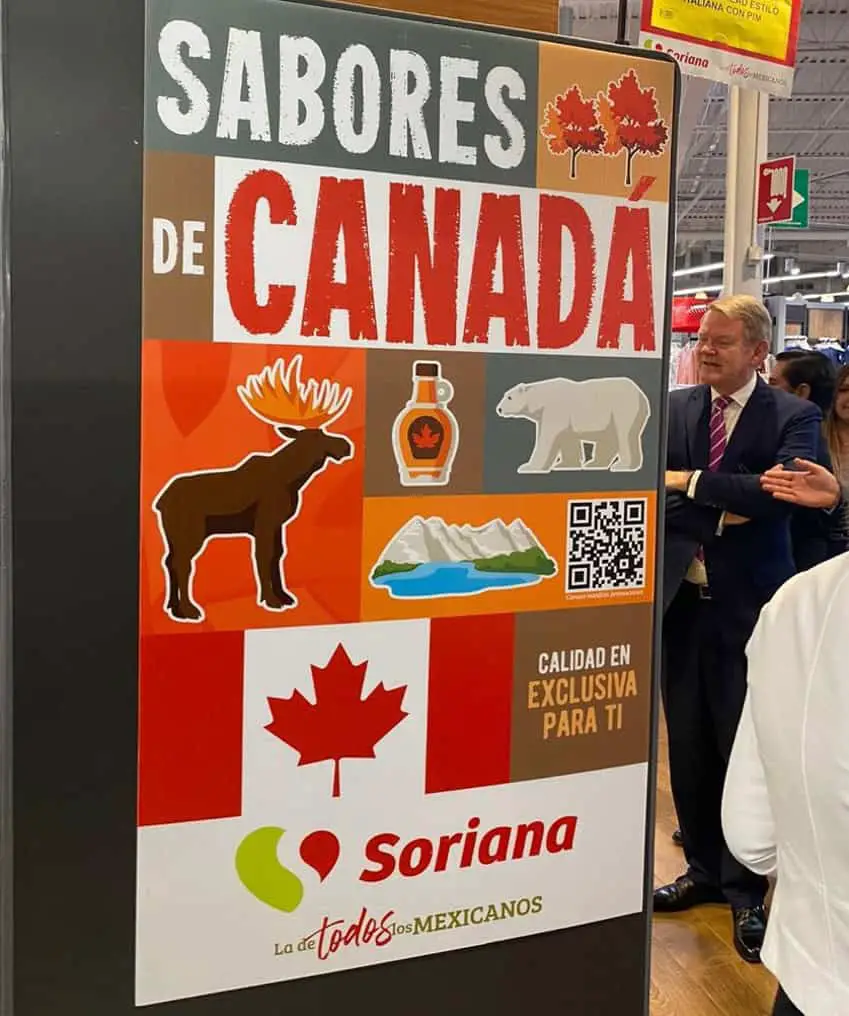
  • Soriana
  • Waldos

Other smaller and mid-size retailers will also be offering discounts during the event, so be sure to check your local stores.

With reports from AD Magazine, El Economista and Punto MX.

Ruling party Morena picks candidates for 2024 gubernatorial elections

1
A group of politicians at a podium
The Morena party national director, Mario Delgado, announced the selected candidates on Saturday in Mexico City. (Rogelio Morales/Cuartoscuro.com)

After weeks of tensions over the polling process and gender parity requirements, Mexico’s ruling Morena party has announced its candidates for the nine governorships in contention in the 2024 elections.

Results of the internal party polls were expected to be announced on Oct. 30 but were delayed until Nov. 10, during tense internal negotiations. New gender parity requirements approved by the National Electoral Institute (INE) in October require five out of nine of the candidates to be women, meaning several men who won the polls in their respective states had to be displaced by female candidates.

A close up of Clara Brugada outdoors wearing a hat
Morena selected Itzapalapa borough chief Clara Brugada as its candidate for Mexico City mayor, though she came second in party polls. (Facebook @ClaraBrugadaM)

The most high-profile upset was in Mexico City, where the former mayor of Iztapalapa, Clara Brugada, was eventually selected as the candidate, despite trailing 14 points behind Omar García Harfuch, the capital’s former security minister.

Harfuch achieved 40.5% in poll support compared to Brugada’s 26.7%, with respondents scoring him higher on voting intentions, honesty, knowledge of the city, closeness to the people and identification with the party’s values. But despite waging a fiercely-fought campaign, Harfuch’s team have stated that he will respect the party’s eventual decision and support Brugada, who has also served as a congresswoman and senator.

It is expected that if Morena’s presidential candidate — Mexico City’s former head of government, Claudia Sheinbaum — wins the election, Harfuch will be given a leading security role in her cabinet.

The gender parity rules meant that women were also prioritized over higher-scoring men as gubernatorial candidates in the states of Guanajuato and Jalisco. In an effort to preserve unity, these men will be guaranteed a seat in Congress, according to an agreement released by the Morena leadership on Thursday.

Morena selected poll leaders as gubernatorial candidates in seven states, while the runners-up were selected to represent Mexico City and Jalisco. (X @PartidoMorenaMx)

Female candidates won the polling in Veracruz and Morelos, and were thus automatically selected as candidates.

The final list of Morena’s candidates for the eight contested governorships is as follows:

  • Chiapas: Eduardo Ramírez, current coordinator of the Morena caucus in the Senate, and formerly a local and federal deputy and mayor of Comitán
  • Guanajuato: Alma Alcaraz, a Morena deputy and former local party leader
  • Jalisco: Claudia Delgadillo, a federal deputy for the Green Party (PVEM), a Morena ally. She has also been a local deputy and councilwoman in Jalisco’s capital, Guadalajara.
  • Morelos: Margarita González, former general director of the National Lottery
  • Puebla: Alejandro Armenta, former president of the Senate
  • Tabasco: Javier May, former Welfare Minister and head of the National Fund for Tourism Promotion (Fonatur)
  • Veracruz: Rocío Nahle, former Energy Minister
  • Yucatán: Joaquín Díaz Mena, a former federal and local deputy for the opposition National Action Party (PAN)

Mexico’s other political parties have yet to finalize their internal selection processes for the contested governorships. Morena and its allies currently govern in 23 of the country’s 32 states, and are hoping to expand that number.

Pre-campaigns for the 2024 elections open this month, with specific dates dependent on the state. The pre-campaign period in Mexico City officially started on Nov. 5 — before any of Mexico’s political parties had announced a candidate.

With reports from CNN and El País