Home Blog Page 48

After flying coach to Barcelona, Sheinbaum reminds Mexico she is a ‘normal’ person: Monday’s mañanera recapped

2
Cuauhtémoc, Ciudad de México. 20 de abril 2026. La presidenta constitucional de los Estados Unidos Mexicanos, la Doctora Claudia Sheinbaum Pardo en conferencia de prensa matutina en el salón de la Tesorería de Palacio Nacional. La acompañan: Mario Delgado Carrillo, secretario de Educación Pública; Tania Rodríguez Mora; Subsecretaria de Educación Media Superior; Iván Escalante, Procurador Federal del Consumidor (Profeco); Alfonso Suárez del Real, asesor político de la Coordinación de Comunicación Social. Foto:
"We're normal people," Sheinbaum said on Monday, referring to herself and other officials. (Gabriel Monroy/Presidencia)

Sheinbaum’s mañanera in 60 seconds

  • 🚨 Chihuahua security row: Sheinbaum said her government had no knowledge of a joint operation between Chihuahua state and U.S. authorities that left two U.S. Embassy staffers and two senior Chihuahua officials dead in a car accident Sunday. She stressed that security cooperation is a federal matter and that states cannot independently enter into agreements with the U.S. Sheinbaum said her administration is reviewing whether national security law was broken.
  • ✈️ Sheinbaum says she is a “normal person.” Asked about flying economy to Barcelona for a summit with the leaders of various countries, Sheinbaum said holding the presidency doesn’t entitle her to special privileges, adding that she doesn’t share the outlook of past presidents who failed to “connect with the people.”

  • 🇪🇺 EU trade deal imminent: Sheinbaum said that Foreign Affairs Minister Roberto Velasco is in Brussels arranging a May visit by European officials to Mexico City to formally sign the modernized Mexico-EU trade agreement.


Why today’s mañanera matters

The most significant revelation at President Sheinbaum’s Monday morning press conference was that the federal government wasn’t aware that the Chihuahua government was collaborating with U.S. officials on security matters on the ground in the northern border state.

Given Sheinbaum’s steadfast opposition to U.S. involvement in security operations in Mexican territory, it is embarrassing for her to have to concede that Chihuahua and U.S. authorities were working together without her knowledge. If the accident that claimed the lives of two Chihuahua officials and two U.S. officials on Sunday hadn’t occurred, the federal government could have conceivably remained in the dark about the collaboration.

Also of note at Monday’s mañanera was Sheinbaum’s defense of her decision to fly economy class to and from Spain in recent days.

After fatal accident, Sheinbaum says federal government was unaware of security collaboration between US and Chihuahua

Sheinbaum told reporters that her administration was unaware that the government of the northern state of Chihuahua had been collaborating with U.S. authorities on security tasks.

Her remarks came after two U.S. Embassy personnel and two high-ranking security officials in the Chihuahua government were killed in a car accident in Chihuahua early Sunday. The Mexican and U.S. officials were returning from an operation in which clandestine drug labs were shut down, according to the Chihuahua attorney general.

Sheinbaum said that the decision to involve U.S. personnel in the operation was made by the government of Chihuahua.

“We’re asking for more information from the government of Chihuahua,” she added.

After expressing sorrow over the deaths of the officials, Sheinbaum said that her administration is also seeking information from the U.S. government about the security collaboration in Chihuahua.

“[We’re] reviewing whether there was any violation of the National Security law,” she added.

Sheinbaum subsequently reiterated that her government cooperates with U.S. authorities on security issues, but stressed that “there are no joint operations” in Mexico — at least not ones that have been authorized by the Mexican government.

She emphasized that the state of Chihuahua — which is governed by the opposition National Action Party — cannot legally enter into its own security agreements with the United States.

“The [security] relationship [with the U.S.] is federal, not state level,” Sheinbaum said.

Mexico’s states “have to have authorization from the federal government for this [kind of] collaboration,” she said, adding that “the constitution establishes that.”

Sheinbaum describes herself as a ‘normal person’ after flying coach to Spain 

A reporter noted that Sheinbaum flew to Spain on a commercial airline to attend a meeting in Barcelona with the leaders of countries including Spain, Brazil, Colombia and Uruguay. The president also returned to Mexico in economy class.

“I was on the same flight,” the reporter said before asking Sheinbaum about her experience taking photos and engaging with other passengers on a commercial aircraft.

Sheinbaum responded by describing herself as a “normal person.”
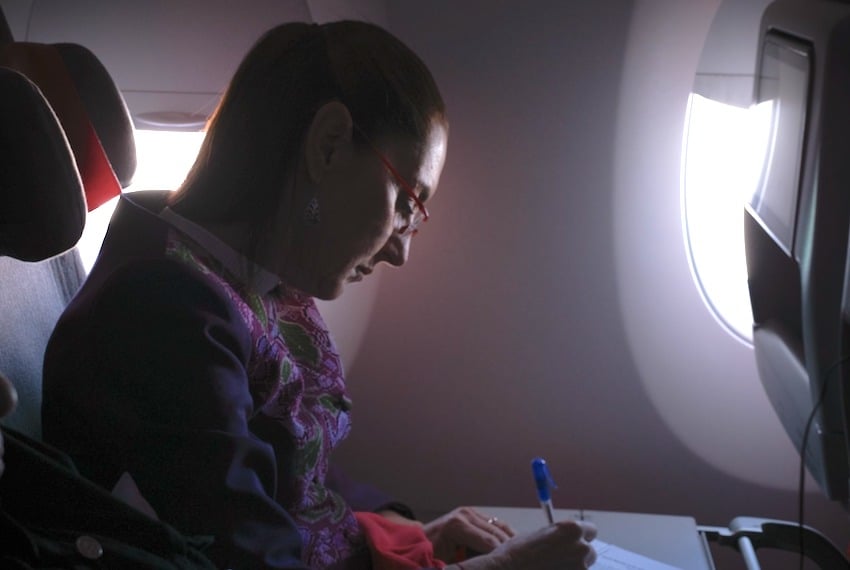
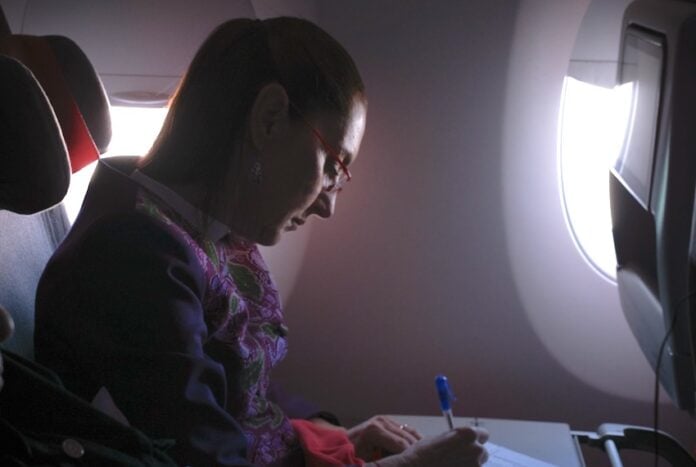
On Friday, President Sheinbaum once again traveled internationally in an economy seat, this time to Barcelona, Spain.
On Friday, President Sheinbaum once again traveled internationally in an economy seat, this time to Barcelona, Spain. (Claudia Sheinbaum/Facebook)

“Even though I’m president, that doesn’t mean I stop being a common human being,” she said.

“I have a responsibility, I was elected by the people and I assume my responsibility, but that doesn’t mean [I should have] special privileges,” Sheinbaum said.

She went on to say that she takes appropriate “security measures” when traveling, but asserted that she doesn’t share “the vision” of past presidents of Mexico who didn’t “connect with the people.”

Sheinbaum highlighted that she earns a good salary compared to most Mexicans, and asserted that her wage is “sufficient recognition” for her work as president — i.e., she doesn’t need or deserve privileges such as traveling on private planes, or in first or business class.

“We’re normal people,” she said, referring to herself and other officials.

Sheinbaum acknowledged that she has used military planes when traveling in Mexico so that she can visit various parts of the country in a single day.

“But in general, we try to go on commercial flights or in vehicles,” she said.

EU representatives to come to Mexico in May to sign new trade agreement 

Sheinbaum told reporters that Foreign Affairs Minister Roberto Velasco is in Brussels to “organize the visit of the European Union in May.”

European officials are coming to Mexico to sign the updated trade agreement between Mexico and the European Union, she said.

Sheinbaum said last October that “tariffs on various products” will be removed once the modernized pact enters into force.

“It greatly benefits Mexico in terms of exporting products to Europe, both agricultural and manufactured goods. So it’s very beneficial for Mexico,” she said Oct. 17.

By Mexico News Daily chief staff writer Peter Davies (peter.davies@mexiconewsdaily.com)

Spaniards conquer LIV Golf Mexico City tournament, with Jon Rahm winning at 21 under par

0
Rahm, 31, had finished in fourth place in last year's tournament.
Rahm, 31, had finished in fourth place in last year's tournament. (@livgolfleague/Instagram)

Spaniard Jon Rahm triumphed at the LIV Golf Mexico City event, shooting a 7-under par 64 on Sunday to secure a 6-shot victory — and a US $4 million payday — in the 72-hole, four-day tournament.

The 31-year-old two-time major winner wasn’t the only Spaniard to conquer the 7,443-yard Club de Golf Chapultepec course: David Puig, a 24-year-old Barcelona native, finished second on the leaderboard, while 22-year-old Valencian Josele Ballester took third place.


View this post on Instagram


A post shared by LIV Golf (@livgolfleague)

With rounds of 65,67,67 and 64, Rahm, a Basque Country native, finished the sixth event of the 2026 LIV season at 21 under par, six shots ahead of Puig and seven ahead of Ballester.

Zimbabwean Scott Vincent finished in fourth place at -12, while five golfers tied for fifth at -11.

In a press conference after his victory, Rahm said he was “very happy to finally win here at [Club de Golf] Chapultepec,” which over the past four days hosted a LIV event for a second consecutive year. He finished in fourth place in last year’s tournament in the Mexican capital.

The team Rahm captains, Legion XIII, won the teams event, earning the Spaniard and his three teammates — Tyrell Hatton, Tom McKibbin and Caleb Surrat — $750,000 each.

Ortiz and Ancer finish strong 

Two Mexicans played the LIV Mexico City event — and both had solid final rounds to finish in the top 25 in the 57-man field.

Guadalajara-born Carlos Ortiz shot a three under par 68 on Sunday to tie for 17th place at -7. He provided one of the highlights of the day on Sunday when he chipped in for birdie on the par 3 18th.

Abraham Ancer, a Texas-born Mexican national, tied for 22nd after shooting a two under par 69 on Sunday.

Another Mexican, Luis Carrera, got the chance to play a single round at the LIV event, replacing Bryson DeChambeau in the field on Sunday after the California native and two-time major winner withdrew due to a wrist injury. Carrera, a 25-year-old native of Naucalpan — the Mexico City suburb where Club de Golf Chapultepec is located — shot a one over par 72.

LIV says it will return to CDMX in 2027 

The 2026 Mexico City LIV event began shortly after various media outlets, including The New York Times and Financial Times, reported that Saudi Arabia’s sovereign wealth fund would cease to fund the LIV golf tour after the current season. LIV CEO Scott O’Neil subsequently confirmed that the tour is only funded through 2026, but pledged to “work like crazy” to keep it going.

Despite the uncertainty, LIV Golf announced on Sunday that it will “return to Club de Golf Chapultepec for LIV Golf Mexico City 2027.”

“… LIV Golf Mexico City 2027 will mark the fifth straight year the League has played in Mexico and the third in a row at the historic venue, which has welcomed tens of thousands of fans this week for world-class competition, music, food and culture,” LIV said in a statement.

LIV also said that this week’s event was “more than just a golf tournament.”

It was “a four-day festival of music, gastronomy, art and entertainment inspired by Mexican culture,” LIV said, noting that legendary Mexican musical group Los Ángeles Azules performed and there were “live cooking and mixology demonstrations” within the grounds of the jacaranda-tree adorned course.

Mexico News Daily 

MND Local: San Miguel de Allende community roundup

2
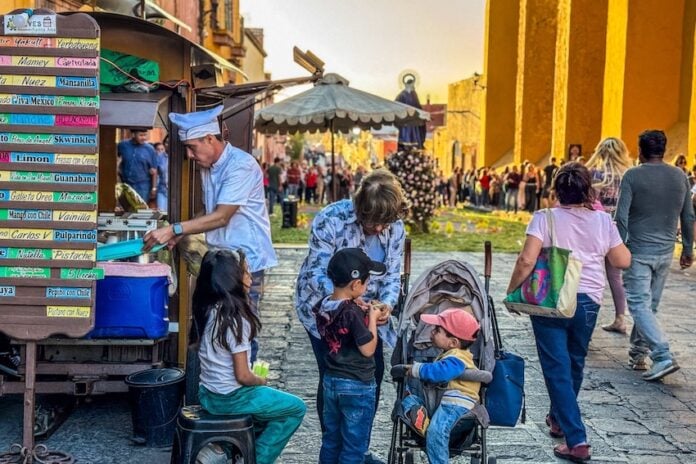
Children and adults at an ice cream stand in San Miguel de Allende
The weather is picking up, and that means San Miguel's world famous community is coming back out to play. Here's some of April's most notable happenings. (Ria Talken)

For more great local events, check out our MND Local events page!

Spring brings purple jacaranda blossoms and occasional evening showers to San Miguel, and community activities start to pick up, too.

A volunteer group is planning a special fundraiser to benefit projects for kids, a major mural project is in the works and a long-time San Antonio restaurant is closing. Read on for the details.

Making sure local orphans and school kids aren’t forgotten 

A group of volunteers handing out gifts to children
Nechelle and Tony Vanias (left) with a group of children from the “Wrapped in Love” gift drive. (Miritha Montoya)

A group of San Miguel volunteers organized by Nechelle and Tony Vanias wanted to make sure children in local schools and orphanages receive gifts on their birthdays and for Christmas. Project Remembered was the result.

Alongside other volunteers, they have spent the past few years raising funds, buying what the children request and delivering gifts for their “Cakes and Candles” monthly birthday events and their “Wrapped in Love” holiday celebrations, Nechelle Vanias said.

“This is our third holiday in San Miguel,” she told Mexico News Daily. “We did Casa Hogar for 32 girls ages 4-18, we added Mexiquito and Santa Julia, which are run by the Don Bosco nuns, and, in 2025, we added La Palmita Escuela Primaria, a public elementary school with 60 children, for a total of 110 kids in 2025.”

For Christmas, Wrapped in Love volunteers give the children new sneakers, toys, clothing, a pillow and blanket and chocolate, Vanias said. For the birthday celebrations, Cakes and Candles volunteers bring cakes, gifts, decorations and piñatas for children having their special day.

Additional volunteers are welcome to donate time and/or money to these two projects, Vanias said.

“There are so many people in need, and it’s a great thing to be able to do for others,” she said, adding, “These kids are so grateful for what we give them. The schools have received donations before, but they told us that nobody has ever given them new stuff.”

A fundraiser for Project Remembered will be held on May 14, 5-8 p.m., at the Ilo Rojo Boutique Hotel, Salida Real a Querétaro 136-A. More information is available here and here.

Murals are coming to the Las Cachinches Arroyo

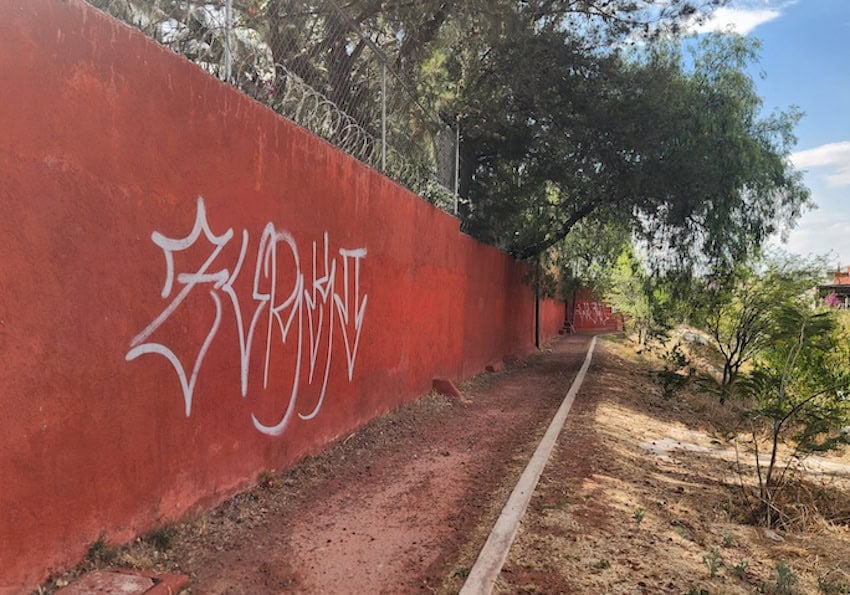
A red wall with white graffiti
The project hopes to improve the area around the Las Cachinches arroyo. (April Gaydos)

Artists will soon be painting 12 large-scale murals along 90 meters of the Puente Viejo Residential wall next to Las Cachinches Creek and just west of Calzada de la Aurora. The goal is to transform the previously neglected area into an open-air gallery celebrating the arroyo’s history, ecology and enduring presence, according to Audubon de México, manager of the project.

“A lot of people don’t even know it’s there,” said April Gaydos, president of the organization. “It will be a lovely green place for people to walk. It’s important to mention that it’s an area that’s been repeatedly tagged, and murals are a deterrent for tagging. There have been studies done on this. It’s educational as much as creating a place people want to visit.”

The murals will be painted between June 12-14, and people can come and see the artists in action during that time, she said. An inauguration of the murals is planned for June 17.

The completed project will feature an illustrated map showing the arroyo’s journey from Parque Landeta through the city to the Presa, as well as a mural painted by local schoolchildren. The other 10 murals will focus on water, birds, insects, mammals, reptiles and amphibians, plants, trees, moments of wonder, hands for the Earth and cycles of life.

Legacy sponsors include Engel & Völkers, Fundación 11:59:59 and Namuh. Mural sponsors are 100x; Jose Pascual Higueros; Panio; Quince Rooftop; Stephanie and R. Alan Rudy; Cheri Schwarcz, Amy Rothlin and Tiffany Paige of The Agency; and Charlie Volmer. Gaydos said Rosewood San Miguel donated print materials and Comex, a major sponsor, donated acrylic paint for the murals.

San Antonio restaurant to close its doors next month

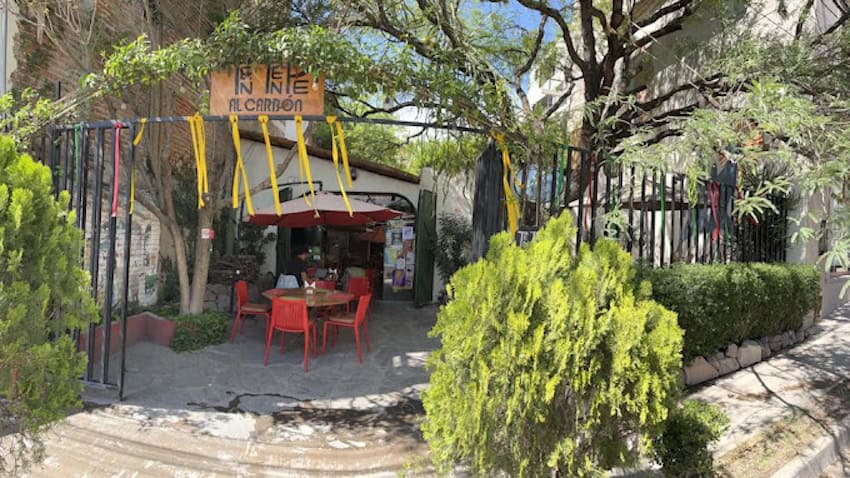
An outdoor restaurant surrounded by trees and shrubs
San Miguel institution Ten Ten Pie al Carbón is set to close its doors in May, after more than three decades of service to the community. (Ten Ten Pie/Facebook)

The Ten Ten Pie al Carbón restaurant at Stirling Dickinson 5 in the San Antonio neighborhood will close up shop next month after 18 years in that location and 33 years in San Miguel.

Juan Villaseñor launched the restaurant as El Ten Ten Pie at Cuna de Allende 21 back in 1993 and moved to the current location in 2008. The restaurant is known for grilled meats, stews, hamburgers, shrimp tacos, salsas and its own Ginger Bell beverage.

A three-day celebration last weekend provided a festive send-off with an elegant dinner to honor the founder; a second night of music, food and drink; and a Family Sunday with games, music and dance, pozole and beer.

Stirling Dickinson has attracted several new eateries lately, plus Restaurant Row is just around the corner on the Ancha de San Antonio. Ten Ten Pie has long been a fixture in that neighborhood and will no doubt be missed by its many fans.

Cathy Siegner is an independent journalist based in San Miguel and Montana. She has journalism degrees from the University of Oregon and Northwestern University.

El Jalapeño: Tourist travels 2000 miles to try record Guacamole; upset by lack of chips

0
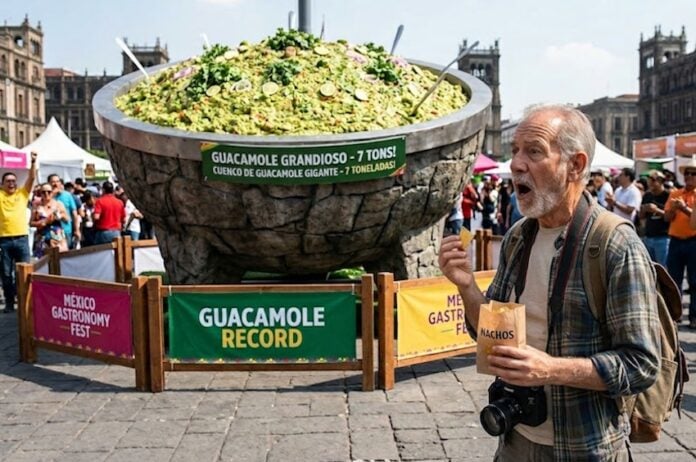
Don't you think we're missing something here? (Image generated by AI)

All stories in El Jalapeño are satire and not real news. Check out the original article here.

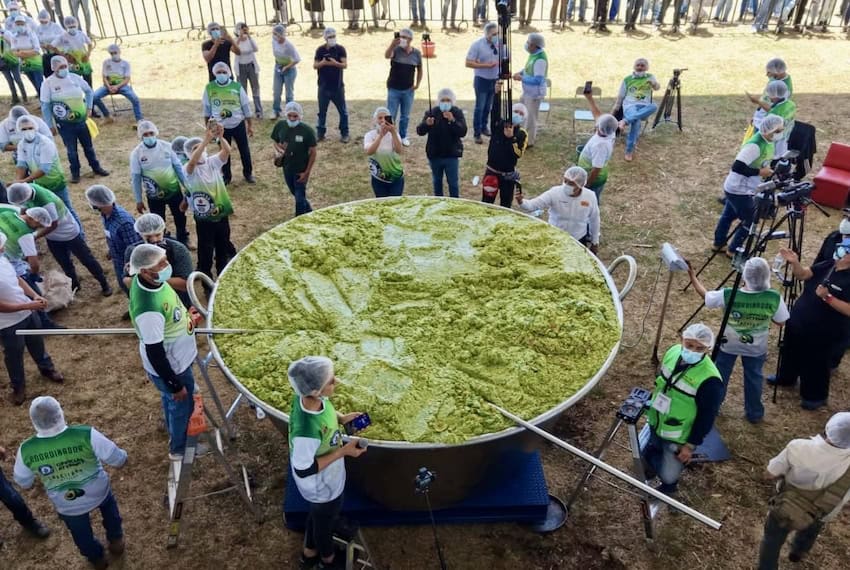
PERIBÁN, MICHOACÁN — Expressing what he called a “fundamental betrayal of the dip-chip social contract,” American tourist Brad Kowalski, 43, confirmed Tuesday that he had flown to the Mexican state of Michoacán specifically to witness 800 people make nearly seven metric tonnes of guacamole, only to discover that no tortilla chips would be provided.

“I just assumed,” said Kowalski, staring blankly at approximately 6,800 kilograms of the world’s largest certified serving of guacamole, certified by Guinness World Records on November 20, 2022. “Like, logically. You make guacamole, you serve chips. That’s not a cultural thing. That’s physics.”

A giant vat of guacamole weighing 7.2 tonnes with volunteers scattered around it
The guacamole weighed over 7 tonnes. The (Michoacán Tourism Ministry)

Kowalski, who had booked a connecting flight through Mexico City after reading about Peribán’s inaugural Avocado Expo, said he was “fully supportive” of the endeavor in principle, calling the three-and-a-half-hour production effort by local residents “genuinely impressive, the guacamole objectively exceptional and the overall experience delicious.”

He ate four portions. He ate them off a tostada. He did not make eye contact with anyone while doing so.

Locals were unfazed by the critcism. “This is avocado country,” explained one vendor, with the calm of a man who has never once considered a Tostito.

“I’m not saying they did anything wrong,” he said carefully, boarding his return shuttle with the thousand-yard stare of a man rethinking several life choices. “I’m saying there was a communication gap. Between me and reality. About chips.”

Kowalski has since posted a four-star review of the event. He took one star off for the chips.

Check out our Jalapeño archive here.

Got an idea for a Jalapeño article? Email us with your suggestions!

The resplendent quetzal is a gem of Mexican birds

1
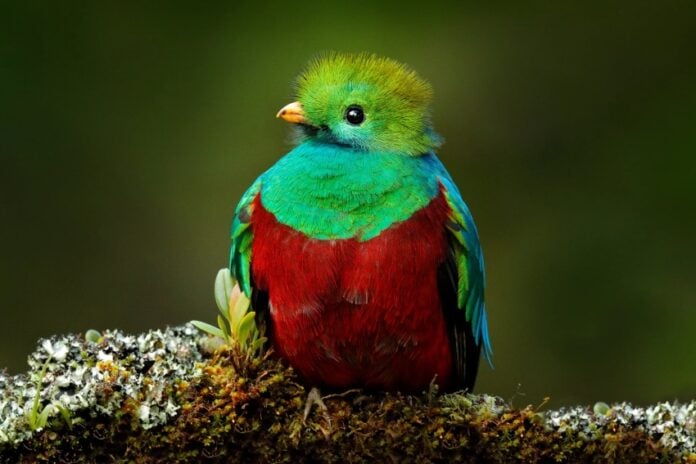
The resplendent quetzal
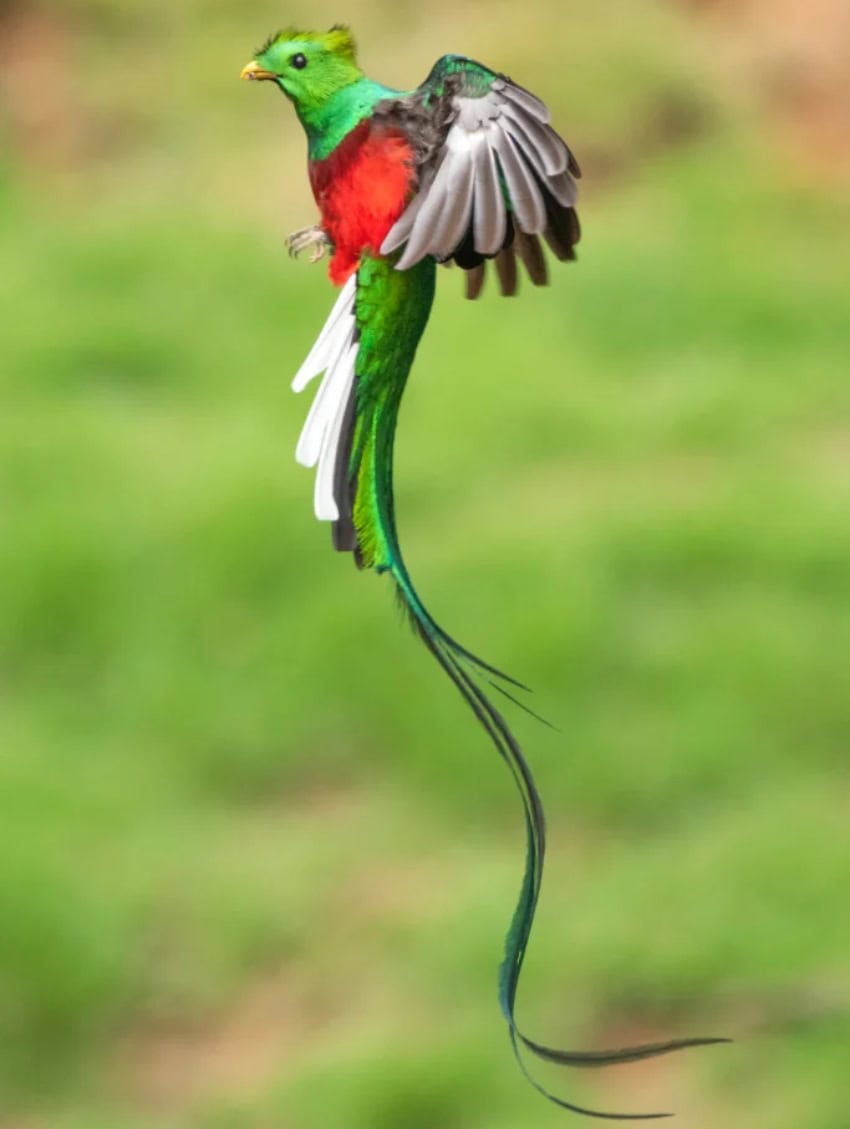
The resplendent quetzal has a long history in Mexico and can still be found in the forests of Chiapas. (American Bird Conservancy)

Quetzals, the godlike birds of pre-Columbian lore, are lovely small, colorful forest dwellers that “twitchers” — as bird spotters like to call themselves — will travel a long way to see. There are five recognized species, plus the eared quetzal, a slightly more distant relation, despite the name. 

While their range stretches from the Amazon to Central America, only one species — the resplendent quetzal (Pharomachrus mocinno) — is found as far north as Mexico. This bird has interacted with humans for many centuries. Pre-Hispanic civilizations associated the bird with Quetzalcóatl, the feathered-serpent god of life, light, knowledge and the winds. 

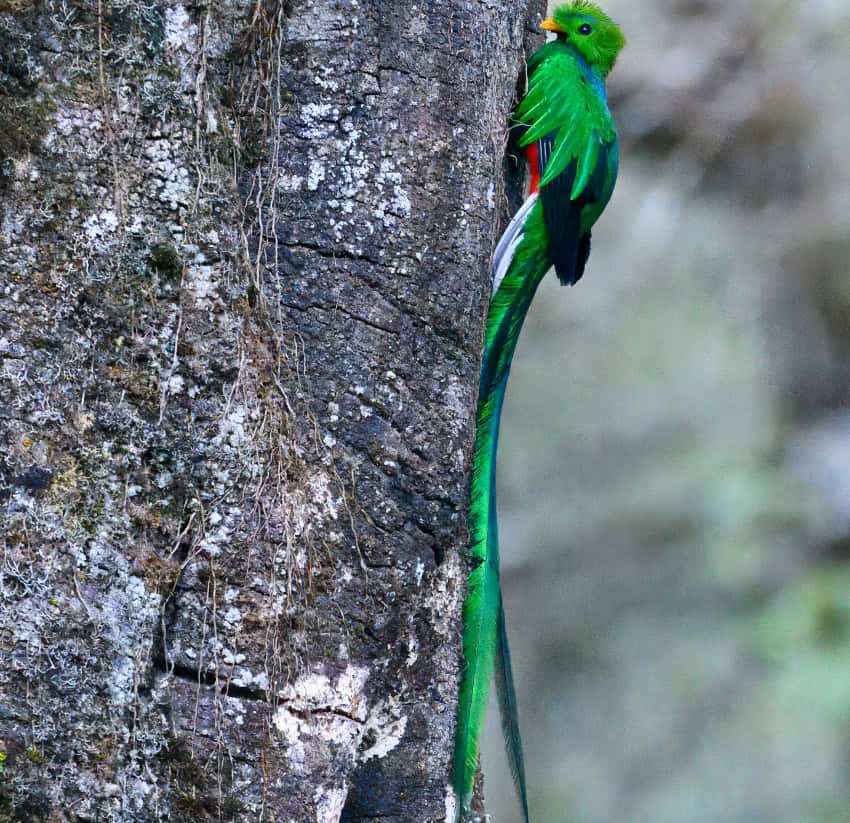
Resplendent quetzal
The Maya and Mexica coveted the quetzal’s long green tail feathers. (lwolfartist/Wikimedia Commons)

A majestic bird of Mayan legend

One Mayan legend tells how the resplendent quetzal is said to have gained its color: It had been an all-green bird until one accompanied the Maya K’iche prince Tecún Umán into battle against the Spanish conquistador Pedro de Alvarado. When the faithful bird landed on the body of the injured Tecún, the legend says, the prince’s blood gave the resplendent quetzal its characteristic red chest feathers. 

The elite societies of both the Mexica and the Maya coveted the bird’s long green tail feathers. Amy A. Peterson and A. Townsend Peterson of the Center for Latin American Studies at Tulane University concluded in a 1992 study that at the height of the Mexica Empire, between 6,20 and 31,000 resplendent quetzals were harvested every year. 

The fact that the birds survived such losses suggests that they were far more abundant in pre-Hispanic times than they are today. These estimates are clouded by the question of whether the long tail feathers might have been plucked and the birds then released. We have no idea what the fatality rate from such treatment might have been.

Centuries later, science finally names it ‘resplendent’

Although long familiar to locals, the bird was not officially recognized by science until 1832, with the work of distinguished naturalist  Pablo de la Llave, who had been involved in the first study of Michoacán’s orchids. 

In 1831, he was appointed director of Mexico’s National Museum of Natural History. De la Llave used this role to publish a small journal in which he described and named several birds, including the resplendent quetzal, as well as the equally colorful rufous-tailed hummingbird.

Where to see the resplendent quetzal

The best spot to see the birds in Mexico is the El Triunfo Biosphere Reserve, located in the central portion of the Chiapas Sierra Madre and known as the “Galapagos of the Cloud Forests.” Designated a state park in 1990 and a UNESCO international biosphere reserve in 1993, the park’s amazing biodiversity includes 997 different plants, 112 mammals and nearly 100 amphibian and reptile species. 

The bird count hovers around 147 species, of which 79 are year-round residents. In addition to the resplendent quetzal, the star attractions here are the highland guan, spotted nightingale-thrushes, the wine-throated hummingbird, the green-throated mountain-gem, the rufous sabrewing and the sparkling-tailed hummingbird. 

If you are a “twitcher,” then you are now in rapture from reading that list and already planning your first visit to this forest biosphere. If you are not a bird-watcher, let me just say that El Triunfo is one of the greatest places in the world to see rare and beautiful birds.

El Triunfo is considered safe to visit, but finding the rarer animals requires both considerable effort and local knowledge, and usually requires joining a tour. A typical trip might include a two-night stay in a mountain cabin, or perhaps a farm around the park’s edge. The resplendent quetzal tends to stay within a set range but, within its home, migrates up and down the slopes. The best time to see this bird is when it’s most active, during the March–April breeding season. At this point,  they gather at higher altitudes.

The bird that eats an avocado whole

The relatively easy access to the forest — both here in Mexico and across the bird’s central American range — has led to several studies over the years, giving us a good understanding of the bird’s life cycle. Its diet consists mainly of fruits, but it might prey on insects, lizards, frogs and snails. It is not a fussy eater and has been seen dining on over 40 different plant species. 

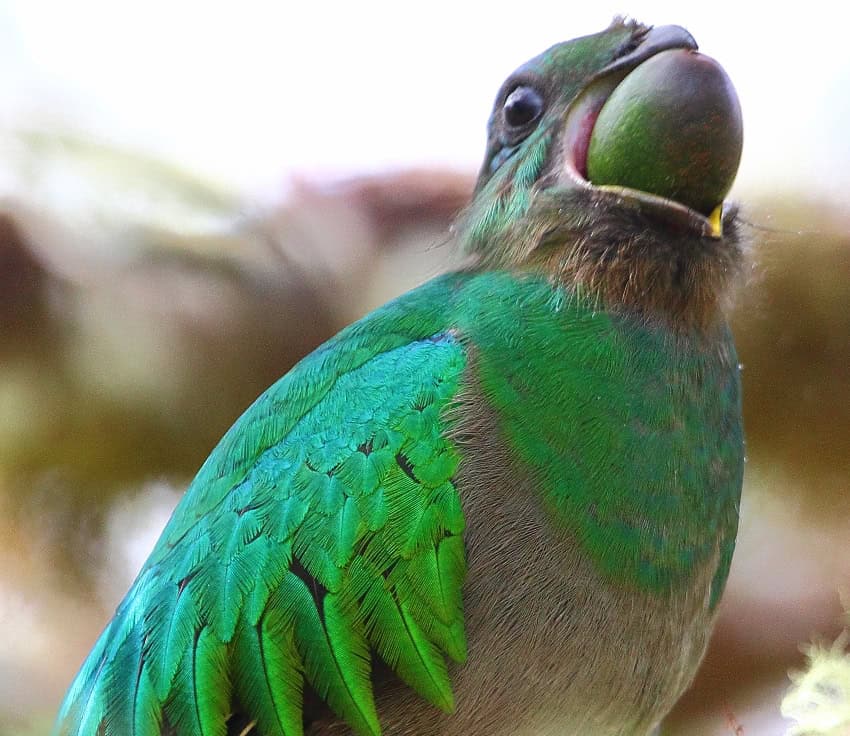
Most dramatically, it has a taste for wild avocados, helping wild avocado trees disperse through the forests. The birds swallow the avocados whole, often to the horror of tourists, convinced that the bird must choke on its giant meal! But having consumed the avocado flesh, the bird will regurgitate the pits. 

The birds like to build their nests in the holes of decaying hollow trees, as far off the ground as possible. The female usually lays one to three eggs, and they are good parents, sharing the task of caring for eggs and young. It is while feeding their chicks that the birds are most likely to add insects and other small animals to their diet.

Resplendent quetzal eating an entire avocado
Yes, quetzals can eat an entire avocado whole. (ryanacandee/Wikimedia Commons)

While the birds have been studied, there have not been regular counts, so any population quote has an element of estimation. The most commonly given figure is between 20,000 and 50,000 birds worldwide, with some estimates more optimistic, but numbers are generally presumed to be declining, although in some well-protected areas, populations might be holding steady. 

Are resplendent quetzals endangered?

Overall, the birds are classified as “near threatened” on the International Union for Conservation of Nature and Natural Resources (IUCN) Red List, a designation that might be cynically seen as “hedging your bets.”

The main concern is ongoing deforestation. This not only destroys the bird’s habitat but leaves populations increasingly fragmented. Three hundred birds in one forest is a very different prospect for survival than 300 birds spread over six small and isolated populations. 

There are also concerns that climate change might have an impact, perhaps allowing birds such as the keel-billed toucans (Ramphastos sulfuratus) to migrate further up the mountain slopes, where they might compete with the resplendent quetzal for nest holes. 

Mexico-Texas program offers hope for breeding in captivity

There is a need for regular bird counts, which would help direct conservation projects. We need to confirm, for example, if the birds are still being hunted, which would highlight the need for local education programs. Or perhaps a greater concern should be to establish safe migration corridors between the higher and lower forests, through which the birds pass during the year. 

One interesting challenge has been to get the birds to breed in captivity, something that until quite recently was thought impossible. 

Resplendent quetzal in flight
For birdwatchers, it’s worth traveling to the El Triunfo Biosphere Reserve in Chiapas, Mexico, to see the resplendent quetzal in flight. (American Bird Conservancy)

ZooMAT, in Chiapas, with help from the Dallas World Aquarium, has started to solve this problem. By removing the eggs and placing them in an incubator, they have been able to raise a small number of birds in captivity. 

Future captive-bred birds might be released into the wild, increasing numbers and mixing up the DNA and with that hopefully improving the health, adaptability and robustness of the population. For now, however, there is still hope that the wild populations can be protected and will slowly increase in number.

Bob Pateman lived in Mexico for six years. He is a librarian and teacher with a Master’s Degree in History.

An archaeologist’s guide to the ancient Maya city of Calakmul

7
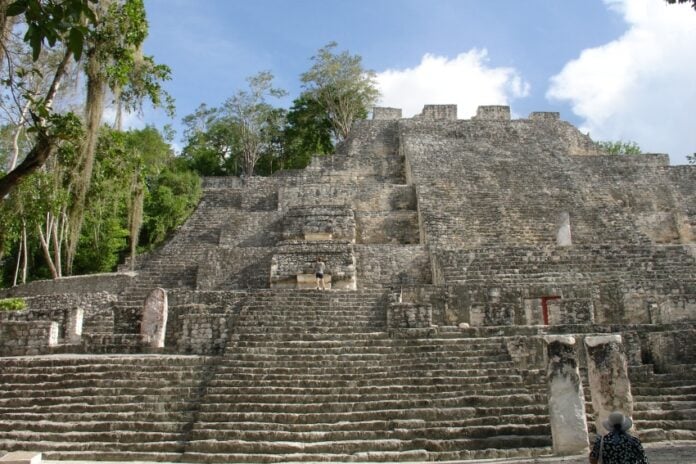
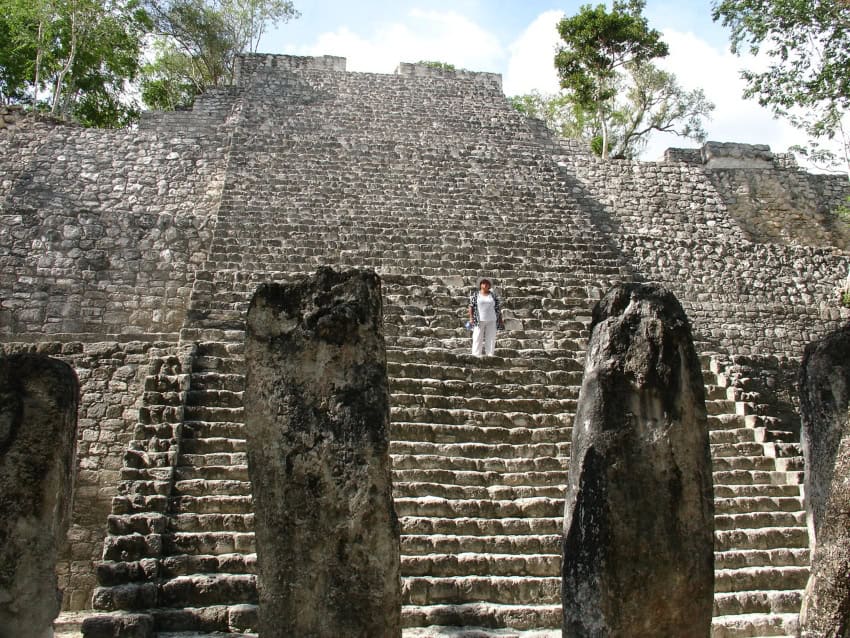
Structure II at Calakmul
Structure II at Calakmul is a monumental ancient Maya pyramid. (ant_mela/WIkimedia Commons)

As part of an exploration into Mexico’s long and rich history, Mexico News Daily has teamed up with one of the country’s top Maya experts to examine the ancient world that flourished across Mesoamerica. Follow the links to read Part 1, Part 2Part 3Part 4, Part 5 and Part 6.

As a professor of Mayan history and an archaeologist, people often ask me where in the Yucatán I would recommend visiting the most. My answer is always Calakmul. The ancient Maya city still exists, although it’s now in the state of Campeche. Situated within Calakmul Biosphere Reserve, its ruins have become a UNESCO site that’s well worth visiting, not just because of the archaeological attractions but also because of the area’s incredible biodiversity.

From discovery to obscurity

Calakmul was discovered in 1931 by botanist Cyrus Lundell, then working for the Mexican Exploitation of Chicle Company. Actually, it was his workers who were extracting resin from sapodilla trees to make chewing gum who discovered the ruins hidden beneath jungle vegetation. But Lundell got the credit.

The presence of two large ancient structures over 40 meters high convinced Lundell to “baptize” the city as Calakmul, which means “two adjacent mounds” in Mayan. Lundell then explored Structure III (often called Lundell Palace), produced the first drawings and maps of the city, and alerted the Carnegie Institution of Washington of what he had found.

The Carnegie was then the most important institution dedicated to Maya area studies, and it soon dispatched renowned archaeologist Sylvanus Morley on an expedition in April 1932, accompanied by distinguished specialists such as Karl Ruppert. 

Calakmul aroused great academic curiosity at the time due to the identification of 103 large stone pillars bearing hieroglyphic texts. Both Morley’s expedition and the one organized shortly thereafter — led by researchers Karl Ruppert and John Denison — focused on these monuments. But despite their efforts, Calakmul fell into academic obscurity until the 1980s.

The rediscovery

William Folan of the Autonomous University of Campeche began work at the site after its rediscovery, with his work continued in the 1990s by Mexico’s National Institute of Anthropology and History (INAH), led by archaeologist Ramón Carrasco. It was during these more recent explorations that major archaeological discoveries took place, revealing the true importance of this ancient Maya city.

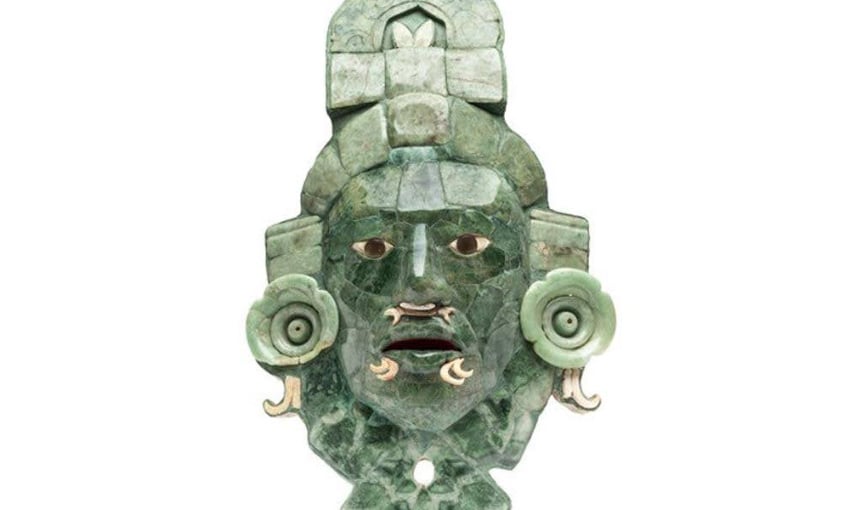
A mask made of jade found at the Calakmul archeological site. It has stones representing its eyes and carved circular embellishments near the figure on the mask's ears.
A jade mask found in Structure VII of Calakmul, likely belonging to one of the late Kanu’l rulers. (INAH)

Today, thanks to the archaeological work carried out at the site, Calakmul stands out as one of the most important Maya cities. Occupied over a long timespan — from the Preclassic through the Postclassic periods — Calakmul was the dynastic capital of some of the most important ruling houses of the Classic period, including the dynasty bearing the Serpent Head Emblem Glyph: the Kanu’l. 

Also, advances in hieroglyphic records have made it possible to determine that the ancient name of the city was actually Uxte’tuun, meaning “the place of the 3 stones,” and to identify the names of different architectural areas, such as Chiku Nahb, where part of the local elite likely lived.

The Serpent Head Emblem Glyph: The Kanu’l Dynasty

Calakmul became the capital of the Kanu’l dynasty at the beginning of the AD 7th century, when ruler Yuhkno’m Ch’e’n II — bearer of the Serpent Head Emblem Glyph — established himself in the city. With his arrival, Calakmul experienced significant population growth and urban expansion, weaving a network of alliances with other political entities that ultimately led to a confrontation with its great rival, Tikal, for control of key trade routes. 

For nearly 100 years, the Kanu’l of Calakmul dominated the Lowlands and prevailed over Tikal, until the death of Yuhkno’m Yihch’aak K’ahk’ — or “Fiery Claw” — after which circumstances took a turn for the worse and Tikal inflicted severe defeats on the Kanu’l, triggering their dynastic decline.

Getting there

The nearest airport to Calakmul is Chetumal International Airport, about 90 kilometers distant, and there is a Maya Train stop at Calakmul. That said, you’ll still have to drive or arrange transportation to reach the ruins. From the town of Campeche, drive to Conhuas via Federal Highway 186, which runs from Escárcega to Chetumal, then take the turnoff at Conhuas toward the Calakmul archaeological zone. However, be aware that this involves an adventurous 60-kilometer drive through dense jungle along a narrow road where extreme caution is required due to numerous wildlife in the Biosphere Reserve. 

Three fees must be paid along the way: one to the National Commission of Natural Protected Areas (CONANP), one to the local ejidal community, and the final at the entrance fee to the archaeological site, which is charged by INAH The site is open from 8 a.m. to 5 p.m.

The Northern Area: Chiku Nahb

The sector known as Chiku Nahb stands out, as it is where some of the most beautiful painted murals in the Maya world were found — depicting scenes of everyday life among different social groups in what may have been a marketplace. Unfortunately, however, this area is not available to visit.

The Grand Plaza

So continue to the Grand Plaza, the city’s political and administrative center, where the most important monuments and tallest structures are found. The most notable Structure VII — one of the tallest buildings in the city and still climbable — which offers a panoramic view of the entire area and an amazing frontal view of Calakmul’s great pyramid. 

It was within Structure VII that the famous Calakmul jade mask was found, along with its large ceramic relics. Now housed in the Baluarte de la Soledad Museum in the city of Campeche, the jade mask likely belonged to one of the Kanu’l dynasty rulers of the AD 8th century.

Structure II: The Great Pyramid

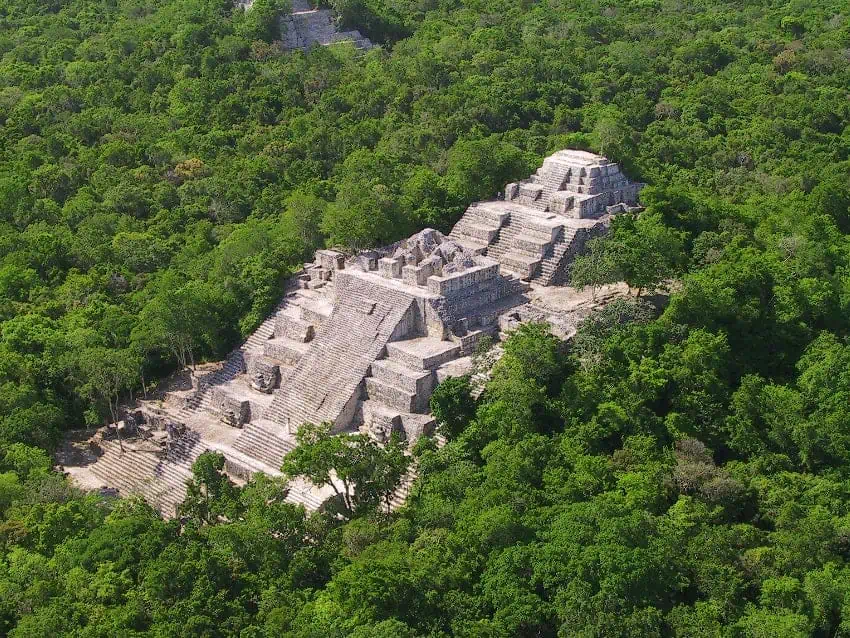
Calakmul
The ancient city of Calakmul, Campeche, and its lush surrounding forests are a prime example of Mexico’s incredible cultural and natural heritage. (INAH)

To the south of the Grand Plaza stands Structure II of Calakmul — the great pyramid, which rises over 50 meters high and which can still be climbed. This is highly recommended, as you can see above the jungle canopy all the way to Guatemala. With seven distinct construction phases, the pyramid served as the principal structure of the site, and contains within friezes and modeled, painted masks. It’s considered a “sacred mountain,” where ancestors and principal deities reside. 

Within its walls, archaeologists discovered funerary chambers with jade grave goods and human remains belonging — in the case of Tomb 4 — to Yuhkno’m Yihch’aak K’ahk’, or “Fiery Claw,” one of the Kanu’l dynasty rulers who died at the end of the AD 7th century.

Structure I

Structure I at Calakmul
It’s over 40 meters to the top of Structure I at Calakmul, but well worth the climb. (ant_mela/Wikimedia Commons).

To the southwest stands another notable structure with a highly original name: Structure I. It’s also pyramid-like and worth climbing, despite its 40-meter height. In front of Structure I’s central stairway stand a series of stelae and altars — silent witnesses to the damage caused by looting, with only partial fragments remaining of the monuments that were cut and removed from Calakmul in modern times.

Lundell Palace

To the west, outside the Grand Plaza space, sits Lundell Palace — Structure III of Calakmul — where the botanist resided during his time at the archaeological site and where you can find the graffiti he left for posterity. 

In this building, you will observe the large number of vaulted rooms that make up the construction, the reason it was chosen as a residence both in pre-Hispanic times and by Lundell. In addition, one of the city’s most important tombs was found here: the burial of an individual from the Early Classic period, accompanied by a large ceramic assemblage and jade objects.

The Grand Acropolis

After leaving behind the majesty of the Grand Plaza, head to the Grand Acropolis. This area represented the most valuable part of the city — where part of the site’s elite likely resided — and as such, its architecture is more enclosed, with a notable number of rooms featuring interior benches where these important people rested. These spaces were organized around small courtyards where the daily activities of elites took place.

This area also contains Calakmul’s Ball Court, where ritual and political activities were carried out among the sacred lords of different cities. 

Practical Tips

It is essential to bring water and food, as there are no vendors inside the site. Given the extent of the zone, the humidity and the physical effort required to climb the structures, fatigue can be a factor. Shaded parking, for example, is available, but it is more than 2.4 kilometers from the archaeological sites. The nearest hotels are more than an hour’s drive away.

Please also remember to respect the local flora and fauna, as you are within a biosphere reserve. Lucky visitors may spot howler monkeys, ocellated turkeys, toucans, peccaries and more. 

Pablo Mumary holds a doctorate in Mesoamerican studies from UNAM and currently works at the Center for Maya Studies at IIFL-UNAM as a full-time associate researcher. He specializes in the study of the lordships of the Maya Lowlands of the Classic period.

Safe to visit or not? The truth about traveling to Guerrero

8
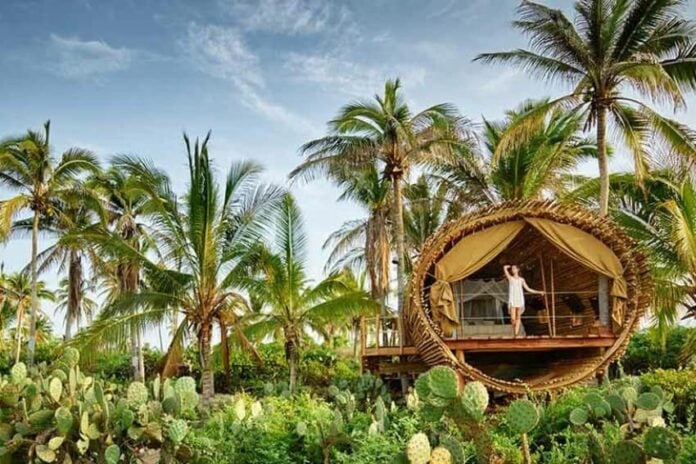
Playa Viva treehouse
Is it safe to Guerrero? If you're staying in a treehouse at Playa Viva, the answer is yes. (Playa Viva)

I land in Ixtapa-Zihuatanejo and, as expected at a tiny airport like this, walk right off the plane onto the tarmac. A wave of toasty humidity envelopes me like a steam room. The sun is high and heavy, everything I’d hoped for from Guerrero’s coast on a bright Thursday in March. Exiting toward the taxi stand with me are throngs of tourists from the U.S., Canada and Mexico, cheerfully dressed in linen tops and straw hats. It’s hard to believe we’d all just landed in a state the U.S. classifies under a Level 4 “Do Not Travel” advisory, citing crime and kidnapping.

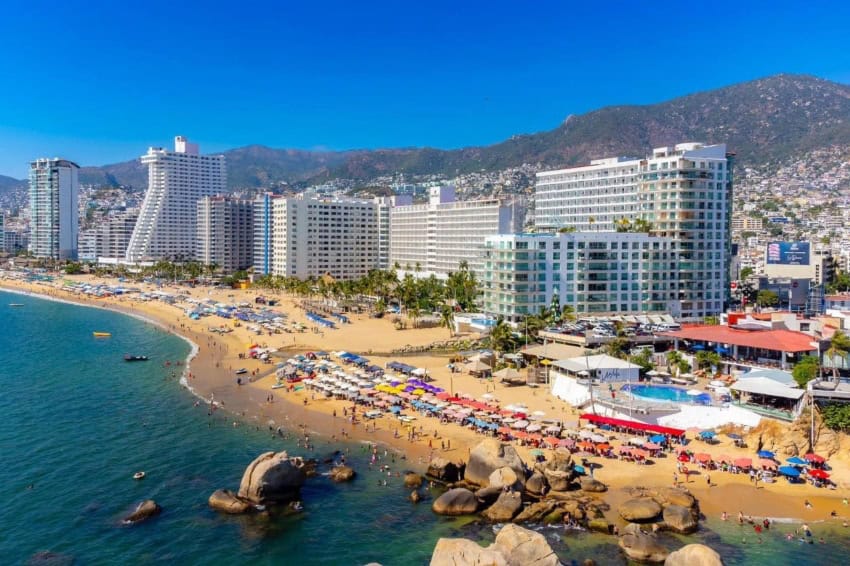
Not that the U.S. government is entirely wrong for labeling it as such. In 2023, Guerrero recorded close to 1,900 homicides, and in April 2025, authorities were hit with yet another mass killing in Tecoanapa, one of several that rank the state among Mexico’s most lethal. Acapulco, Guerrero’s biggest city, still posts a homicide rate around 70 per 100,000 residents — it’s regularly considered one of Mexico’s most dangerous cities.

Acapulco
Acapulco is ranked as one of Mexico’s most statistically violent cities. (Visit Mexico)

Traveling through Guerrero

I settle into my hotel-arranged transfer, and we begin our drive along the coast. The scenery is what you’d expect from such a low-income state: clusters of small-town life where stray dogs, coconut candy stalls and the occasional tire repair shop with a peeling yellow facade and shoddily handpainted sign line the roadside. A string of mopeds — imported from China — zip past us, holding one, two or even three riders.

After about 45 minutes, the landscape turns markedly more verdant — low forest with coconut palms jutting out, mango orchards and the occasional glimpse of a shimmering Pacific Ocean. We pull up to a nondescript gate with a wooden sign that reads Playa Viva Hotel; a blue arrow points the way. The driver hops out to slide the rusted gate open, and we rumble down a dirt road toward one of the wildest, most untouched beaches I’ve seen since dedicating my free time to chasing coasts after moving to a landlocked city for the first time in my life.

Upon check-in, I’m taken to my room — a luxury treehouse, really, with one wall missing so that the ocean remains in full view, and no doors or keys to speak of. If Guerrero is this dangerous on paper, how has Playa Viva flourished for nearly two decades with nary a lock in sight?

Guerrero’s Pacific Coast: What the travel advisory doesn’t tell you

Guerrero’s 500-kilometer Pacific shoreline breaks into three loose regions — the wilder Costa Grande in the north, Acapulco’s urban bay in the center, and the quieter Costa Chica heading south toward Oaxaca — and they are not equally dangerous.

While U.S. government employees are prohibited from traveling to any of these, the Secretaría de Seguridad Pública de Guerrero simultaneously insists safety is a priority — during the 2025–2026 winter season, the state government posted messaging insisting that “Guerrero is a destination ready to be enjoyed; here, safety is part of the experience.” In a classic example of two things being true at once, Guerrero can be a genuinely violent state, without that violence infiltrating the tourist experience. It simply depends on which parts you visit.

Costa Grande, where most of this story takes place, sits well below the state average in reported crime, with most incidents concentrated in urban Zihuatanejo rather than the small coastal villages. Hoteliers and tight-knit communities here are trying to build a different kind of Guerrero — one that trades on ecology, culture and a slower pace.

Three Guerrero beach towns worth knowing

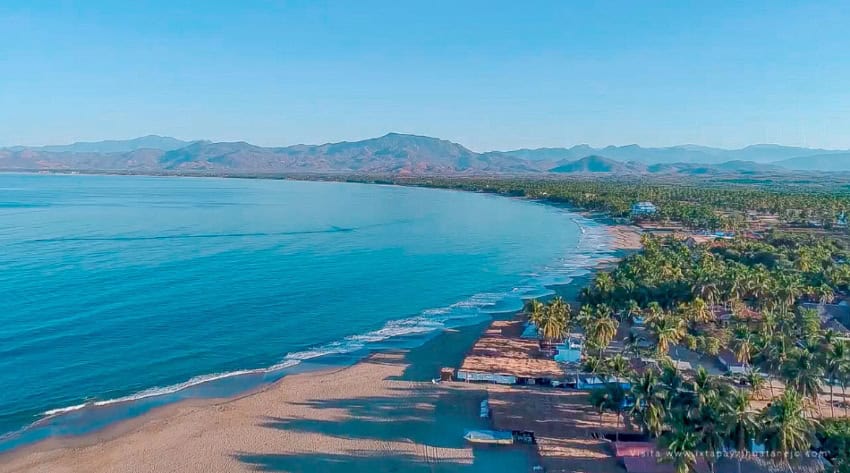
Home to only about 500 residents, Barra de Potosí is a beautiful beach destination and safe to visit. (Ixtapa y Zihuatanejo)

Juluchuca

This is where Playa Viva has operated since 2008 — a village of roughly 700 residents with outsized ambitions for changing outsiders’ perceptions. The hotel has incubated ReSiMar (Regenerando Sierra y Mar — regenerating from the mountains to the sea), a nonprofit working across five interconnected areas: water, fisheries, permaculture, ecosystem restoration and education throughout the Juluchuca micro-watershed. It’s an attempt to restore what Playa Viva founder David Leventhal calls “the abundance that used to exist” — dense forest, lagoons full of fish and communities with real economic alternatives to resource extraction.

Barra de Potosí

South of Juluchuca, Barra de Potosí is a fishing village of around 500 residents at the mouth of a protected 800-hectare mangrove lagoon. The ecosystem hosts over 200 bird species, nesting sea turtles and, in winter, humpback whales. Local cooperatives run boat tours through the channels and operate a turtle camp on Playa Blanca — the long sweep of beach connecting Barra to Zihuatanejo — where visitors can join hatchling releases at dawn.

Troncones

Perhaps the most recognizable Costa Grande town outside Zihua and Ixtapa, Troncones is known for its long surf beach and low-rise casitas. It draws surfers, wellness travelers and anyone looking for a less-developed Pacific alternative — the kind of place often described as what Tulum was 20 years ago.

Regenerative tourism in Guerrero: Betting on abundance

Two forces may just save Guerrero’s coast from being swallowed by its own reputation: genuine community-rooted regeneration and state-run seasonal security operations. Together, they’re building something worth watching.

Playa Viva is the clearest local example of regeneration in practice, both environmental and reputational. The Juluchuca-based eco-resort is dedicated to restoring the local watershed, improving education and protecting wildlife — and it backs those commitments financially. A share of guest spending supports local jobs: turtle patrol wages, purchases of local produce and guides for lagoon tours and horseback rides. 

ReSiMar grew out of that same ethos — a nonprofit founded in 2021 to restore the Juluchuca watershed and keep locals from relocating for work through community-led work in farming, fisheries, education and conservation. The ambition is larger than one beach: a model proven here that could be replicated along other stretches of Mexico’s Pacific coast.

Guerrero’s tourist security operation: What it looks like on the ground

Governor Evelyn Salgado of Guerrero
Guerrero Governor Evelyn Salgado deployed more than 6,800 security personnel during the winter of 2025 to help enhance the state’s security.  (EneasMx/Wikimedia Commons)

In winter 2025, Governor Evelyn Salgado launched Operativo Temporada Vacacional Invierno 2025, deploying more than 6,800 security personnel and 727 patrol units — drawn from state police, the army, the navy and the National Guard — across Guerrero’s tourist corridors. Mobile surveillance towers and panic buttons were installed along beach zones and highways, backed by drones, helicopters, Black Mamba armored units, canines, ambulances and sea-rescue craft. Separately, COFEPRIS sampled water quality at nearly 300 Mexican beaches, declaring the vast majority of Guerrero’s tourist strands safe for swimming while flagging a handful of Acapulco beaches as temporarily unsuitable due to elevated bacteria levels.

On the ground, the operation is hard to miss.

Security was heavily armed — something I noticed and perhaps scoped out subconsciously, as the country was still processing a wave of violence following El Mencho’s death. The level of visible weaponry wasn’t out of the ordinary for Mexico, but I found myself wondering whether a tourist from Ottawa or the American Midwest would feel reassured or unsettled by it.

Leventhal, who has frequented Juluchuca for nearly two decades, offers a different frame of reference. “The media narrative around Mexico and security is very loud. The reality, especially in a small coastal community, can feel quite different.” Playa Viva’s remoteness — not on a border, not a transit corridor, but on a beach where boats can’t easily land — has been both its tourist draw and its quiet protective shield.

Should you visit Guerrero? 

There’s no simple yes or no. Guerrero is dangerous in parts, and largely between people with specific reasons to be in conflict. Follow the standard Mexico travel logic: Drive during daylight, stay in reputable lodging, book tours with local cooperatives and don’t buy anything illegal. Do that, and you may find the Guerrero coast more rewarding than the overcrowded beaches of Los Cabos or Cancún.

This is where you wake before sunrise to the sound of crashing waves, pull on a sweater, and walk to the local sanctuary to watch a daily release of baby turtles. Where beach walks take you past lush lagoons, home to roseate spoonbills and white herons. Where an afternoon on a regenerative farm connects your meal to the soil it came from and the people who tend it.

A practical guide for travelers

Then there’s the longer excursion: Slide onto an ATV and climb into the Sierra Nevada Mountains to the Gutiérrez family’s off-grid home for a home-cooked lunch and a tour of the cacao and coffee farm that’s been supplying Playa Viva’s kitchen since the hotel opened. Without a cruise terminal in sight, humpbacks come close to shore in winter — sightings on a morning beach walk are common between December and March.

Guerrero will not be for everyone — a grand part of its appeal. The travelers who come tend to be self-selecting: curious, flexible, unbothered by a dirt road or a lack of Michelin Guide-rated restaurants. Here, it seems the biggest threat is the occasional mosquito or one too many Guerrero mezcals. The wild coast makes the journey south more than vale la pena.  

For current travel safety information, consult the U.S. State Department at travel.state.gov and Mexico’s official tourism resource at visitmexico.com.

Bethany Platanella is a travel planner and lifestyle writer based in Mexico City. She lives for the dopamine hit that comes directly after booking a plane ticket, exploring local markets, practicing yoga and munching on fresh tortillas. Sign up to receive her Sunday Love Letters to your inbox, peruse her blog or follow her on Instagram.

Why it’s news that Sheinbaum flew coach class to Spain: A perspective from our CEO

32
On Friday, President Sheinbaum once again traveled internationally in an economy seat, this time to Barcelona, Spain.
On Friday, President Sheinbaum once again traveled internationally in an economy seat, this time to Barcelona, Spain. (Claudia Sheinbaum/Facebook)

I remember the first time that the newly elected President Sheinbaum had her first foreign trip.

It was late 2024, she had only been in office for a few weeks and accepted an invitation to attend the G20 Summit in Rio de Janeiro, Brazil. Most of Mexico was surprised that she accepted, given that her predecessor, AMLO, rarely left the country during his six years as president. His embrace of austerity and aversion to foreign trips was so infamous that AMLO actually sold off the Mexican presidential airplane to Tajikistan after an embarrassing attempt to sell raffle tickets to give it away.

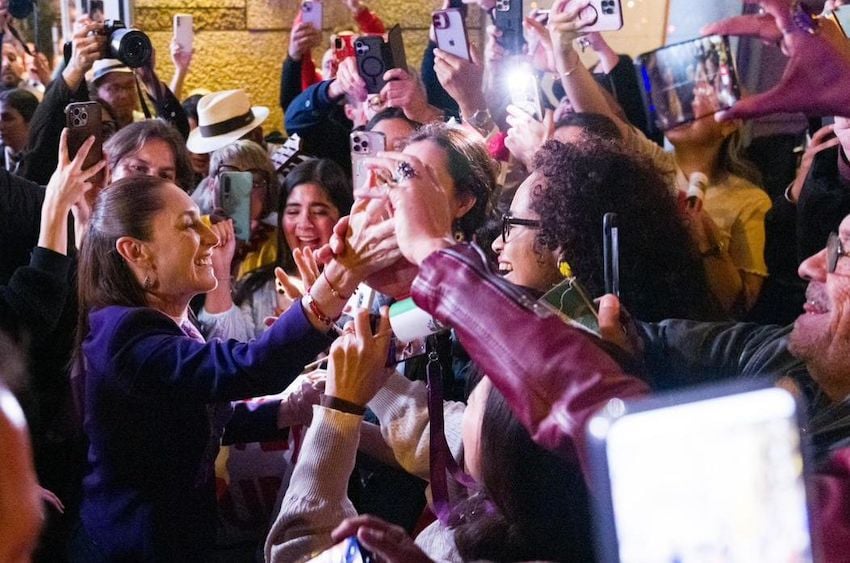
President Sheinbaum greets fans in Barcelona, Spain.
President Sheinbaum greets fans in Barcelona, Spain. (Presidencia/Cuartoscuro)

So how was Sheinbaum going to get from Mexico City to Rio on that 10-hour flight? Charter a private plane? Take a military plane? Nope, she actually flew commercial — in economy class!

The trip was well documented, with President Sheinbaum boarding at the airport along with everyone else, working on her laptop on the flight and chatting it up with flight attendants.  People couldn’t believe it. An observant and humorous MND reader noted that she was in an exit aisle, which had extra leg room, and asked aloud who paid for that upgrade!

Most people chalked it up as a publicity stunt: the perfect opportunity for her Morena political party to show the country that they truly were “the party of the people.” No one imagined that she would actually do it again. But she did.

After accepting an invitation from the newly elected Mark Carney, she took another flight to Canada to attend a G7 meeting last year. That once again was impressive, but as it was not that long of a flight, it didn’t really make news. But just this week she did it again, this time on a flight to Spain.

The trip made headlines for several reasons. Tensions between Mexico and Spain have been high in recent years as AMLO demanded (and never got) an apology from Spain for the conquest of Mexico. Sheinbaum instead has focused on normalizing relations and has been courting Spanish investment and tourism into the country.

The trip also highlighted yet another issue on which Sheinbaum was not following the lead of AMLO (despite unfounded fears from many that she would be his puppet) and that Mexico, in fact, was once again engaging with the foreign community. And finally, the trip made headlines due to Sheinbaum once again flying commercial, in economy class.

The video put out by the president’s team is worth watching. Once again, she boards with everyone else, chats it up with flight attendants and works on the flight.

Upon arrival, she is greeted by Mexicans who are in Spain. They wave Mexican flags, chant “Presidenta! Presidenta!” as well as “Viva Mexico,” and there is a group playing music.  Sheinbaum stops to hug the musicians and you can hear one of them telling her that she is from San Miguel de Allende. It was a pretty touching moment — even for the cynical.

And yet 30% of Mexicans still don’t approve of the job she is doing as president. I meet many of these people and try to understand what it is that she needs to do to win over their approval, and quite honestly, I don’t get very clear answers. It’s undeniable that she continues to make progress on poverty rates and the middle class, crime rates are declining by double digits and she has managed relations with President Trump incredibly skillfully.

She has made sound decisions regarding the cartels, cooperating with U.S. intelligence agencies and managing the U.S./China trade war. She has re-engaged the international community, launched Plan México in coordination with the business community and is attracting record amounts of Foreign Direct Investment. The peso has remained stable and strong, inflation is well under control and analysts have recently been making upward revisions on GDP growth rates.

Of course, her record is not perfect. Everyone would like to see the economy grow faster. Most would like to see significant and meaningful reform in the power and energy sectors. Both CFE and PEMEX are bloated, inefficient and act as a drag on economic growth. The judicial reform has not helped her case with the business community and she arguably has not cracked down on corruption quickly enough for many people.

But with all of that said, I ask those still not approving of the work President Sheinbaum is doing: What more do you expect?

For a country that has come to accept decades of corruption and nepotism, how can she not be seen as a breath of fresh air? How can we not be inspired by the fact that her children are not involved in politics (or real estate or construction) and instead quietly go about their own lives? For those who tell me that “corruption is worse than ever,” I offer two comments. First, as with any organization, change starts with the top; and second, she has only been in office for 19 months. It would be unreasonable to think that she could clean up systemic corruption, nationwide, in just a few months. It is difficult to deny that the tone she sets from the top is impressive.

Across the globe, we have become too accustomed to politicians whose actions do not align with their words. Politicians who say one thing and then, when it comes to themselves, do something completely different. That hypocrisy has made us all cynical about politics, politicians, and even the ability to bring about change. But I think President Sheinbaum continues to demonstrate, day in and day out, that her words and actions are aligned. In my opinion, she has earned the benefit of the doubt from anyone willing to honestly put themselves in her shoes.

To those of you still unconvinced by her leadership, I would ask you to think about what other world leader would you point to that is doing a better job leading their country? And for those of you who still don’t approve of her work, I challenge you to speak up, be clear and make heard what you think she needs to do better. If you keep an open mind, you never know, she might just surprise you!

Travis Bembenek is the CEO of Mexico News Daily and has been living, working or playing in Mexico for nearly 30 years.

Mexico’s week in review: USMCA talks advance as Pemex admits to Gulf oil spill cover-up

0
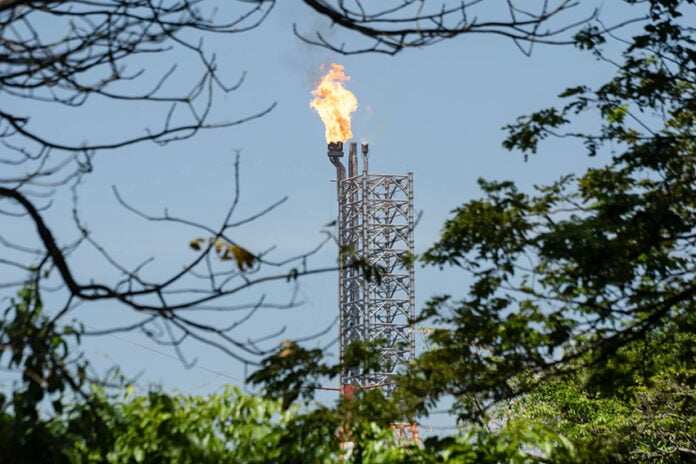
A large gas flare visible through trees at Olmeca Refinery in Dos Bocas, Tabasco.
Oil and gas production took center stage this week, as Pemex admitted responsibility for a oil spill it had previously denied and President Sheinbaum addressed concerns over Mexico's planned foray into fracking. Pictured: A gas flare at Olmeca Refinery, as seen from Abías Domínguez Primary School in Dos Bocas, Tabasco. (Isabel Mateos Hinojosa / Cuartoscuro.com)

This week in Mexico, bilateral trade talks with the United States continued to ramp up ahead of the formal review of the USMCA free trade pact. Mexico’s newly appointed Foreign Minister Juan Ramón de la Fuente sat down with U.S. Ambassador Ronald Johnson early in the week for their first formal meeting, signaling a reset in the bilateral relationship. De la Fuente and Johnson discussed migration, security cooperation, and trade, with the foreign minister making clear that Mexico would engage the United States as an equal partner on all fronts. That framing was quickly tested by developments on the border and in U.S. detention facilities.

On Tuesday, President Claudia Sheinbaum used her daily press conference to demand consular access to ICE detention centers after the 15th Mexican national died in U.S. immigration custody. Sheinbaum said Mexico has the right — and the obligation — to monitor the conditions in which its citizens are held, and that her government would pursue the matter through diplomatic channels. The same week, U.S. Customs and Border Protection construction on a border wall segment damaged Cuchumá Hill near Tecate, Baja California — a site considered sacred by the Kumeyaay people on both sides of the border. Indigenous leaders and Mexican officials protested the work, calling it a violation of Indigenous rights and binational cultural heritage.

Also on Tuesday, Mexico and the United States moved closer to a critical minerals agreement that both governments want folded into the USMCA framework, covering lithium, copper, and other resources central to the clean-energy supply chain. Shortly after, officials announced that U.S. Trade Representative would visit Mexico City early next week for a second round of talks ahead of the USMCA’s mandatory joint review, which officially launches July 1. Not all the trade news was forward-looking: A Canadian court reopened a US $270 million NAFTA-era arbitration case against Pemex, a legacy dispute that had appeared settled. Late in the week, more troubling news emerged for Pemex: A panel of government experts determined that the state-owned oil company was responsible for a February oil spill that affected 700 kilometers of Mexico’s Gulf Coast — and that groups within the company had deliberately covered it up. 

Didn’t have time to catch this week’s top stories? Here’s what you missed.


Sheinbaum on the world stage

Time magazine named President Sheinbaum to its list of the 100 most influential people in the world for the second consecutive year, placing her alongside a small group of sitting heads of state. The recognition came as Sheinbaum was fielding a broad range of international topics at her daily press conferences — from Donald Trump’s remarks about Pope Francis to the future of energy policy and the bilateral trade agenda. On Monday, she defended the late pope’s legacy and Christianity after Trump suggested the pontiff had been a communist, calling the characterization unfounded. She also addressed questions about the World Cup, which Mexico is co-hosting with the U.S. and Canada this year.

Taxco mayor, father freed in mass security operation

In one of the week’s most dramatic domestic stories, Guerrero state security forces and federal agents rescued the mayor of Taxco and his father from kidnappers in an operation involving more than 500 personnel. Mayor Eduardo Lino Carmona and his father had been abducted days earlier. Officials confirmed both were unharmed. The operation involved coordination between state police, the National Guard and federal prosecutors — a level of response that reflected both the profile of the victims and ongoing pressure on the government to demonstrate control in Guerrero, a state with persistent security challenges.

Taxco mayor and father rescued from kidnappers in 500-agent security operation

IMF raises Mexico’s growth forecast, but modestly

The International Monetary Fund revised Mexico’s 2026 GDP growth forecast upward to 1.6%, a slight improvement from its previous estimate, even as the IMF reduced its global outlook due to trade uncertainty. The adjustment reflects cautious optimism about nearshoring investment and domestic demand, though the IMF flagged U.S. tariff policy as the primary external risk to Mexican growth. The forecast puts Mexico below the Latin American regional average but ahead of several major economies facing steeper headwinds.

Pemex admits cover-up as two separate incidents draw scrutiny

Pemex this week admitted what environmental groups had been saying for months: that a leak in a pipeline near the Abkatún-Cantarell complex in Campeche Bay, first detected on February 6, was responsible for an oil spill that spread across 700 kilometers of Gulf coastline across Veracruz and Tabasco, affecting seven protected natural reserves. CEO Víctor Rodríguez said an internal review found the leak had gone unreported within the company; three high-ranking officials were fired and a criminal complaint was filed with the Attorney General’s Office. For weeks, senior officials — including Sheinbaum and Veracruz Governor Rocío Nahle — had publicly attributed the spill to passing tankers and dismissed NGO evidence of Pemex involvement; the admission reverses that position entirely.

In a separate incident, Pemex’s jointly operated Deer Park refinery in Texas activated emergency protocols after a diesel spill at the facility, with cleanup operations underway on the U.S. side of the border.

Fracking debate reaches the mañanera

Sheinbaum addressed questions Wednesday about whether the government is moving toward allowing hydraulic fracturing — fracking — in the Gulf of Mexico. She did not rule it out, saying studies are underway and that any decision would be based on technical and environmental assessments. The comments generated pushback from environmental groups, who noted that fracking was effectively prohibited under the previous administration. The issue is unresolved, and Sheinbaum did not provide a timeline for a final determination.

Mexico and Brazil build health partnership

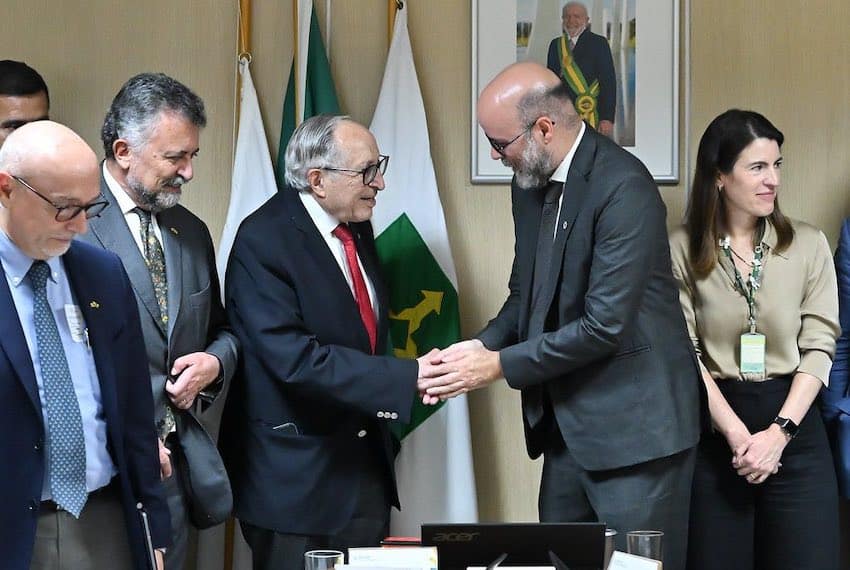
Mexico's Health Minister David Kershenobich shakes hands with colleagues during a work trip to Brazil
Health Minister David Kershenobich signed the deal during a trip to Brazil this week, within the framework of a wider healthcare cooperation plan that the countries agreed at last year’s World Health Assembly. (Health Ministry)

Health ministers from Mexico and Brazil signed a bilateral cooperation agreement this week aimed at sharing expertise and resources as both countries advance toward universal healthcare systems. Mexico’s IMSS-Bienestar program, which is expanding access to public health services in underserved communities, will be one focus of the exchange. The alliance is framed as a model for South-South cooperation ahead of Mexico’s planned 2027 launch of a universal health service.

Looking ahead

The week’s final mañanera press conference on Friday carried two significant forward-looking signals. Interior Minister Rosa Icela Rodríguez announced the inauguration of a passenger train service connecting Mexico City’s AIFA airport with the capital’s urban rail network, a project that aims to address one of the airport’s persistent weaknesses since its 2022 opening. She also confirmed that Mexico is in conversations about a possible visit by Pope Leo — suggesting the government is laying diplomatic groundwork for a pastoral visit should one be announced. On trade, the USMCA talks will continue in the coming weeks with critical minerals and rules of origin among the thorniest unresolved issues.


Also in the news this week

Mexico News Daily


This story contains summaries of original Mexico News Daily articles. The summaries were generated by Claude, then revised and fact-checked by a Mexico News Daily staff editor.

The MND News Quiz of the Week: April 18

0
News quiz
(Mexico News Daily)

What's been going on in the news this week? Our weekly quiz is here to keep you on top of what’s happening in Mexico.

Get informed, stay smart.

Are you ready?  Let’s see where you rank vs. our expert community!

A recent newspaper poll conducted for El Economista newspaper revealed Mexico's most popular governor leads which state?

In its building of a section of its border wall with Mexico, the U.S. government recently angered Indigenous locals in Baja California. Why?

A Canadian court has reopened a NAFTA-era lawsuit case against which Mexican company?

What species is Juji, an abandoned baby animal currently stealing hearts at the Guadalajara Zoo?

Which Mexican airline has confirmed it'll be the first in Latin America to fly out of JFK's massive New Terminal One?

What exciting natural discovery was recently made in the Mexican state of Coahuila?

Claudia Sheinbaum launched the first of 15 promised "economic well-being hubs" in which Mexican state on Sunday?

Who did President Sheinbaum praise at her daily press conference this week after he was maligned by US President Donald Trump?

After a 15th Mexican national died in ICE custody on April 11, which ISN'T a step Mexico's taking in response, according to President Sheinbaum?

What archeological find did INAH recently make in Hidalgo?