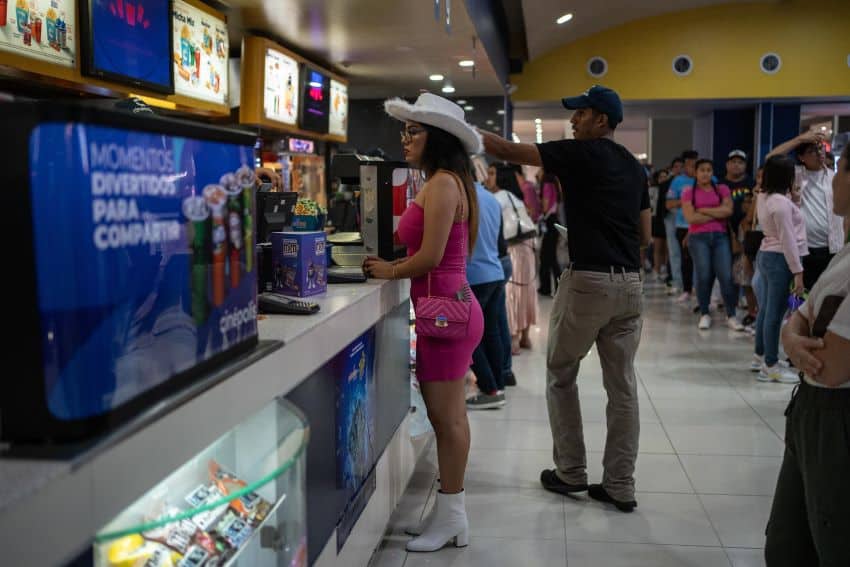
Mexicans love going to the movies! In 2023, cinemas in Mexico saw a 33% increase in attendance over 2022. (Crisanta Espinosa Aguilar/Cuartoscuro)
Mexico had the fourth-highest movie theater attendance in the world in 2022, according to figures from the Global Entertainment & Media Outlook (GEMO) 2023-2027 by consulting firm PricewaterhouseCoopers (PwC).
With nearly 181 million annual moviegoers, Mexico came in fourth after India (986 million), China (710 million) and the United States (655 million).
Box office hits in Mexico this year included The Super Mario Bros. Movie, Barbie and Guardians of the Galaxy Vol. 3. (Victoria Razo/Cuartoscuro)
Mexico is consistently a top-performing country for commercial movie theaters, but the COVID-19 lockdowns dealt a significant blow to the industry. Starting in 2022, however, people have increasingly returned to cinemas – and this year’s attendance numbers have already surpassed those of 2022.
As of Nov. 27, cinemas in Mexico had sold 218 million tickets – a 33% increase over 2022, according to figures from the National Chamber of the Film Industry (Canacine).
The Canacine added that the industry’s profits have increased by 36% compared to last year, reaching 14.63 billion pesos (US $852 million).
As the year comes to an end, the most-watched movie of 2023 was The Super Mario Bros. Movie with 22.7 million viewers and 1.5 billion pesos in box office revenue (US $90 million).
As for Mexican cinema, Radical led the top 10, with 3.1 million viewers and $199 million pesos in box office revenue (US $11.5 million).
Mexican cinema contributed 4.8% of global box office earnings, and the annual number of commercially released films from Mexico increased 13% – to 92 movies, according to data from media and marketing agency Comscore.
Overall, the entertainment and media sector in Mexico has grown 65% in the past 10 years and is expected to grow at an average rate of 4.6% over the next five years, according to this edition of the GEMO. Mexico’s productivity in this sector is surpassed only by two countries: Brazil and Spain.
PwC’s GEMO is an annual study that comprehensively analyzes the entertainment and media industry around the world. It covers the business of internet, television, radio, newspapers and magazines, music, and video and audio streaming services across 53 countries.
State Power Investment Corporation's acquisition of Zuma Energía de México has confirmed the Chinese company as the second-largest private renewable energy producer in Mexico. (Jaguar Solar)
Chinese energy company State Power Investment Corporation (SPIC) – the parent company of Zuma Energía de México – has acquired three solar power plants in northern Mexico. The acquisition makes SPIC the second-largest private renewable energy producer in Mexico.
The plants were purchased from an InfraRed and Invex investment portfolio in Chihuahua named “Jaguar Solar.” The remaining stake is managed by the Mexican private equity fund AINDA.
SPIC now has wind and solar generation options in a number of Mexican states. (Jaguar Solar)
The acquisition increased Zuma Energía de México’s installed capacity by 216 MW (megawatts), bringing the total to 1.3 gigawatts (GW).
According to a statement by Zuma Energía, the recent acquisition of “Jaguar Solar” is a testament to the company’s “trust in and commitment to Mexico’s renewable energy transition.” This move underscores Zuma’s investment in renewable energy production “for the benefit of society and the economy,” the statement said.
SPIC-Zuma Energía operates solar plants in the states of Sonora, Chihuahua and Jalisco, as well as wind farms in Tamaulipas and Oaxaca. The company is seeking investment opportunities for clean energy projects in Puebla, Querétaro, Yucatán and Monterrey, including storage solutions, electric vehicles, solar panels and smart cities.
In China, SPIC is a leading power company that invests in and produces clean energy around the world. It has an installed capacity of nearly 250 GW globally and operates in 47 countries and regions. Its services include renewable energy, intelligent energy, electric vehicle solutions, battery energy storage systems and solar panel production. In 2020, SPIC acquired Zuma Energía in Mexico through its wholly-owned subsidiary, China Power International Holding Limited (CPIH).
CPIH owns around 54 GW of assets globally, spanning various forms of power generation, including wind, solar, gas, coal, waste-to-energy, hydropower and co-generation.
Migrants ride above a freight train in northern Mexico. (Pedro Anza/Cuartoscuro.com)
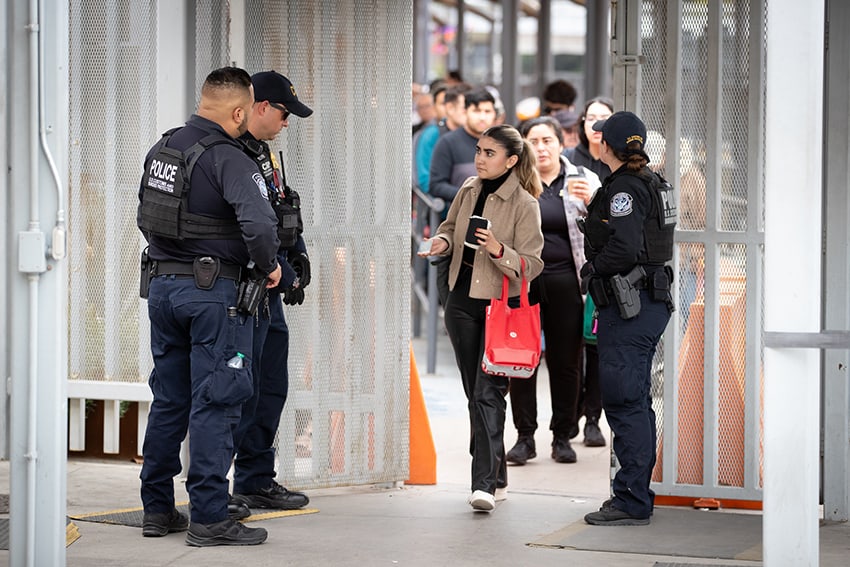
United States authorities have suspended operations at two railway crossing bridges between Texas and Mexico in order to redeploy personnel to assist the detention of migrants.
U.S. Customs and Border Protection (CBP) said in a statement on Sunday that its Office of Field Operations would “temporarily suspend operations at the international railway crossing bridges in Eagle Pass and El Paso, Texas,” at 8 a.m. Monday “in order to redirect personnel to assist the U.S. Border Patrol with taking migrants into custody.”
The railway to Eagle Pass, Texas as seen from Piedras Negras, Coahuila. (Maneul Velez/Wikimedia Commons)
The agency said it had observed “a recent resurgence of smuggling organizations moving migrants through Mexico via freight trains” and that it was “taking additional actions to surge personnel and address this concerning development, including in partnership with Mexican authorities.”
“CBP will continue to prioritize our border security mission as necessary in response to this evolving situation,” it said.
Migrants frequently board freight trains collectively known as “La Bestia” (The Beast) to expedite their journeys through Mexico to the northern border. Hundreds if not thousands of migrants have sustained serious injuries while riding freight trains in Mexico.
The decision to suspend operations at the rail crossings in Eagle Pass and El Paso comes three months after railroad operator Ferromex halted the operations of 60 freight trains that run on routes to northern Mexico after a string of accidents, including fatal ones, involving migrants riding the rails.
Volunteers toss food and clothing to migrants traveling on “La Bestia” in Zacatecas. (Adolfo Vladimir /Cuartoscuro.com)
The El Paso Times reported that “the potential binational economic impact of the border railway closures was not immediately clear.”
Freight destined for Texas on trains could conceivably be put onto trucks, but it is still likely there will be some economic fallout from the rail crossing suspension, especially if it continues for a prolonged period.
The CBP said it was continuing to “adjust” its operational plans to “maximize enforcement efforts against those noncitizens who do not use lawful pathways or processes such as [the mobile app] CBP One [to enter the U.S.] and those without a legal basis to remain in the United States.”
“Over the past several weeks, CBP has made a number of operational adjustments in order to maximize our ability to respond, process, and enforce consequences,” the agency added.
As of Monday, the Eagle Pass and El Paso railway crossings remained closed, as well as the Lukeville, Arizona, port of entry and one of the San Ysidro West pedestrian crossing in San Diego, California. (U.S. Customs and Border Patrol/Flickr)
“In Eagle Pass, vehicular processing remains suspended at Eagle Pass International Bridge 1. In San Diego, California, San Ysidro’s Pedestrian West operations remain suspended. In Lukeville, Arizona, the Lukeville Port of Entry remains closed.”
NewsNation reported Monday that it was informed by a CBP source that the agency had about 167,000 encounters with migrants in the first 17 days of December, a 28% increase compared to the first 17 days of November.
Most migrants who attempt to cross illegally into the United States via its southern border are nationals of Central American, South American and Caribbean countries, but growing numbers of people from further afield, including Asian and African nations, have also recently sought to enter the U.S. between official points of entry after making perilous journeys through Mexico.
The officials agreed to draw up “an action plan for development … to attend to the structural causes of irregular migration in the region,” while López Obrador and U.S. President Joe Biden subsequently “discussed their joint commitment to address the root causes of migration across the Western Hemisphere and to expand lawful pathways for migration,” according to a White House statement issued after the two leaders met in San Francisco last month.
Is Mexico's opportunity in the semiconductor market about to open up? (Shutterstock)
This article was originally published by The Mexico Institute at the The Wilson Center.
Andrés Manuel López Obrador’s (AMLO) presidency will end on October 1st, 2024. His successor will inherit a country that is more financially constrained than when he assumed office. More interestingly, however, the country will face a series of enviable opportunities amid Washington’s ongoing “decoupling” from Beijing. Primarily, AMLO’s successor should take advantage of “de-risking” policy efforts by the U.S. government to try to insert Mexico into semiconductor manufacturing supply chains. Cooperation on this issue would revitalize North American integration while empowering Mexico’s geostrategic relevance.
Unlike other areas of untapped opportunity in the Americas, semiconductor development enjoys political backing and expanding partnerships. An aligned North American bloc holds the potential to advance hemispheric efforts in two areas: assembly, testing, and packaging (ATP) and research and development (R&D). Mexico can make a real difference in the foundational segments of this complex supply chain. Yet AMLO’s sexenio has illustrated a painful lack of progress on energy matters. Consequently, efforts such as the North American Semiconductor Corridor (NASC) remain undervalued. Without the adoption of a more inclusive approach to balancing Mexico’s energy sector, “ally-shoring” potential will be lackluster. To be precise, without the key integration of natural gas to feed forward-looking manufacturing, the country will find itself at a loss.
At the heart of growing great-power competition, semiconductor chips are one of the most critical elements of the global economy. This industry is central to the “new economic security state” proposed by the Biden administration. U.S.-China economic confrontation—and the risk of the People’s Republic of China (PRC) weaponizing its dominance over raw material inputs of chip production — has prompted countries to expand technological resilience. This phenomenon is captured by recent U.S. landmark legislation such as the US $52 billion CHIPS and Science Act, which, according to the Semiconductor Industry Association (SIA) galvanized new investments worth more than $200 billion. Still, it is unclear how planned investment will be allocated across foreign markets.
Chip foundations have been built in East Asia for over 30 years, and will prove difficult to change. The substantial fixed investments that are needed for these projects, as demonstrated by the PRC’s industrial efforts, underscore that there is no guarantee of success in this high-cost industry. At the same time, U.S. officials are likely to augment already stringent export controls to try to harness their own position. That being said, if North America fails to design a geoeconomic strategy that enhances international links for both minerals sourcing and supply chain cultivation, the region could suffer from the harmful effects of economic nationalism.
A broader Mexico-U.S. strategy can preserve and even expand supply chain networks in the United States. Tens of billions of dollars of investment have already been directed into contiguous states, chiefly Arizona and Texas. Capitalizing “nearshoring momentum” and cementing chip projects in Mexico could enhance these initiatives. Success, however, will depend on the next administration’s ability to address growing energy insecurity. Until then, Mexican diplomats will struggle to sway U.S. officials and companies to allocate new funds for designated projects. A robust strategy will require facilitating the production of more sustainable and reliable energy sources—which will entail a smart capitalization of abundant natural gas supplies.
As emphasized during the 2023 North American Leaders Summit (NALS), a shared strategy to develop this vital realm is possible. Yet Mexico’s despotic attitudes and near-absence on the global stage, as demonstrated under AMLO, will not be easy to dethrone. Worse still, long before AMLO’s rise, Mexican authorities proved inadequate at elaborating a concise development strategy; this time, this could be enabled by tectonic, geopolitical changes. As previously argued, it is on Mexico if it fails to act on these once-in-a-generation nearshoring opportunities.
The reallocation of semiconductor supply chains closer to the U.S. market is not only about extricating away from China. It also represents a major opportunity for regional integration. Technological resilience and value-added manufacturing should be the focus of U.S. foreign policy in the Americas. All in all, a strategic approach to supply chain integration could be a powerful antidote for crude nationalism and isolationism, which, in the context of near-simultaneous elections in both countries next year, will be triggered by political actors both in Washington and Mexico City.
Gerardo is a policy analyst. He is currently working as an intern at the Center for Strategic International Studies (CSIS) in Washington, DC, and will begin work with Albright Stonebridge Group in January of 2024.
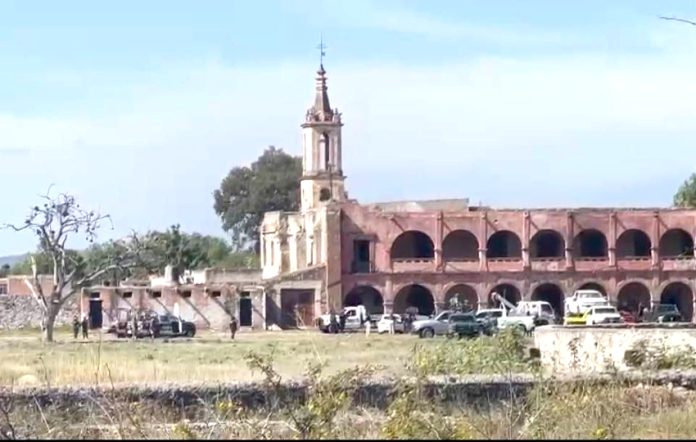
The massacre occurred in the early hours of Sunday morning at an ex hacienda in Salvatierra. ( ESPECIAL /CUARTOSCURO.COM)
Gunmen killed 12 people and wounded 11 others in an attack at a Christmas party in the state of Guanajuato early Sunday.
The attack occurred at about 3:30 a.m. at the Ex Hacienda San José del Carmen, a property in the municipality of Salvatierra that is both a tourist attraction and event venue.
A photo posted to social media taken not long before the attack at the Christmas party in Salvatierra, Guanajuato on Sunday morning. (Social media screen capture)
A group of some 50 young people gathered at the property on Saturday night for a Christmas party known as a posada.
Citing survivors of the attack, the Reforma newspaper reported that a group of armed men entered the property via a side entrance and opened fire in the central courtyard.
Eleven people aged 17 to 35 were killed at the scene of the crime, while a 12th person died as he was being driven to a hospital in a private vehicle, Reforma said. That person was reportedly 17 years old.
The municipal government of Salvatierra – a municipality in southern Guanajuato that borders Michoacán – said in a statement that 11 people were killed and 12 people were wounded, but it was apparently counting the aforesaid victim among the injured.
No one has been arrested yet in connection with the massacre that killed 12 and injured 11. (Cuartoscuro)
The wounded were taken to nearby hospitals and two were reported to be in serious condition.
Both men and women were among the victims, with one identified as a young woman who was crowned “queen” of a local fair in 2017.
The newspaper AM reported that the attack was the 22nd and worst “massacre” of the year in Guanajuato. It considers the murder of four or more people in a single criminal event to be a massacre.
In addition to perpetrating the mass shooting, the gunmen set two cars and two motorcycles on fire at the property, the Salvatierra government said.
The Guanajuato Attorney General’s Office condemned the attack and said that a “multidisciplinary” team would carry out an investigation aimed at detaining the culprits. No arrests were immediately reported.
Citing unnamed federal sources, Reforma reported that the attack may have been perpetrated by the Santa Rosa de Lima Cartel, a crime group formerly led by José Antonio “El Marro” Yépez Ortiz, who was arrested in August 2020 and sentenced to 60 years imprisonment in January 2022.
The federal sources told Reforma that investigations indicate that one of the posada attendees had links to the Jalisco New Generation Cartel, which in recent years has been fighting the Santa Rosa de Lima Cartel for dominance in Guanajuato, currently Mexico’s most violent state.
In a separate attack in Guanajuato on Saturday night, gunmen killed four people and injured two others when they opened fire at a barber shop in Salamanca, a city about 70 kilometers south of Guanajuato city.
The Guanajuato Attorney General’s Office also condemned that attack and said an investigation would be immediately launched.
Dec. 9: Celebrations were held across the country in honor of the Virgin of Guadalupe this week, including here in San Cristóbal de las Casas, Chiapas. (ISABEL MATEOS /CUARTOSCURO.COM)
Take a visual tour of Mexico – from the Basilica of Our Lady of Guadalupe in Mexico City to the Diamond Zone in Acapulco – with this selection of pictures from the week.
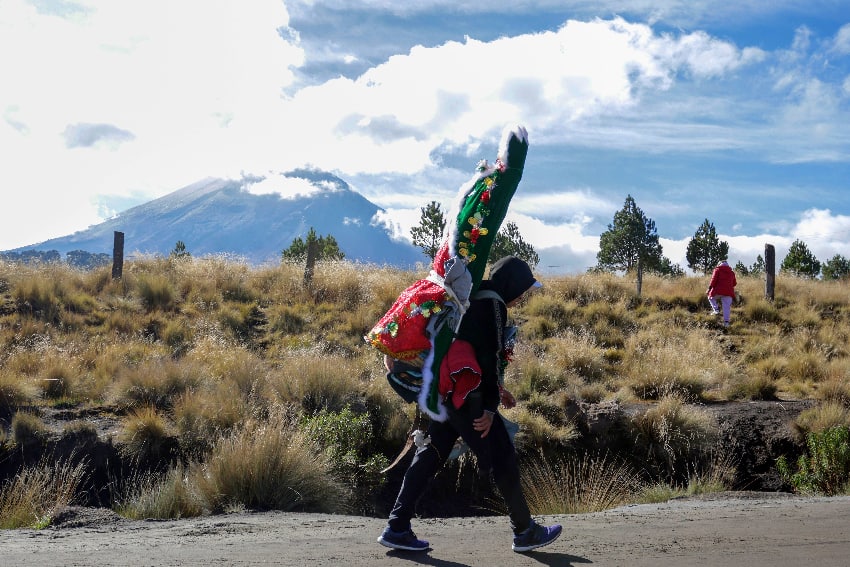
Paso de Cortés, Puebla
Dec. 9: Hundreds of pilgrims came from across Mexico to visit the Basilica of Our Lady of Guadalupe in Mexico City on Dec. 12. (MIREYA NOVO/CUARTOSCURO.COM)
Acapulco, Guerrero
Dec. 10: Forty-six days after Hurricane Otis made landfall in Acapulco, the damage is still visible in the Diamond Zone of hotels and luxury residences. (CARLOS ALBERTO CARBAJAL/CUARTOSCURO.COM)
Mexico City
Dec. 12: On the Day of the Virgin of Guadalupe, millions of pilgrims congregated in the Basilica of Our Lady of Guadalupe in Mexico City. (GOBIERNO DE LA CIUDAD DE MÉXICO/CUARTOSCURO.COM)
Xonacatlán, México state
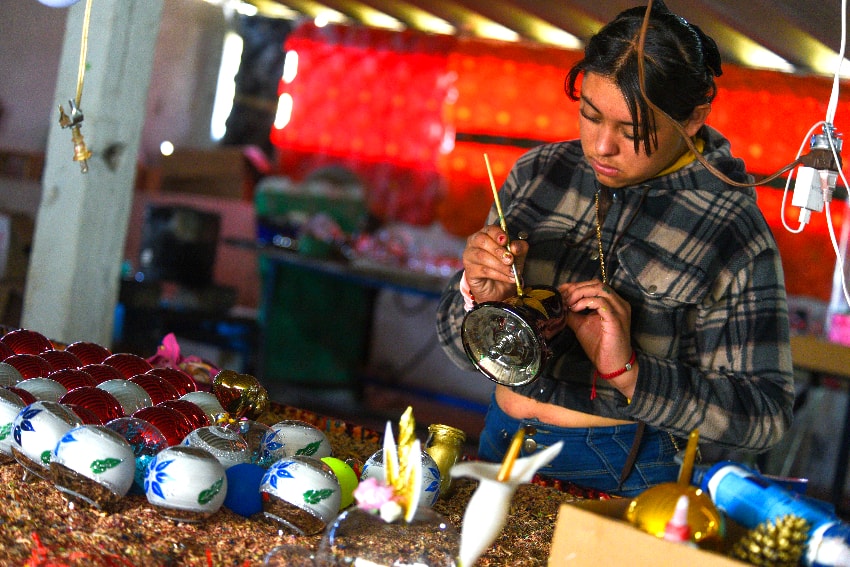
Dec. 14: A young artisan works on decorating glass Christmas ornaments. (CRISANTA ESPINOSA AGUILAR /CUARTOSCURO.COM)
Mérida, Yucatán
Dec. 14: The immersive art project called “La Peni” at the Parque de la Paz in Mérida was inaugurated. It includes projections and video mapping on the former penitentiary building. (MARTÍN ZETINA/CUARTOSCURO.COM)
Mexico City
Dec. 15: The 20th season of The Nutcracker ballet is underway at the National Auditorium in Mexico City. (MARIO JASSO/CUARTOSCURO.COM)
San Francisco, Campeche
Dec. 15: Ticket in hand, Presidet Andrés Manuel López Obrador gets ready to board the Maya Train after inaugurating its first three sections. (PRESIDENCIA/CUARTOSCURO.COM)
Parishioners at the San Antonio Abad church in Cholula, Puebla, watch their feathered friend get a blessing in early 2023, part of a celebration of the patron saint of animals. (Photo: Graciela López Herrera/Cuartoscuro)
While we’ve covered plenty of “hard news” and “bad news” at Mexico News Daily this year, we’ve also reported numerous stories that made us laugh, brought a smile to our faces, warmed our hearts, and even left us scratching our heads in bewilderment.
We hope that you, our readers, have not only been well informed about events in Mexico in 2023, but amused and entertained at times as well.
To bring you this second 2023 “year in review” article (read the first on the year’s biggest business stories here) we got out our virtual fine-tooth comb and looked back at all the stories we’ve published this year to find the amusing ones, the uplifting ones, the inspirational ones, the heartening ones, the gratifying ones, the strange ones, the surreal ones, the “only in Mexico” ones.
That job, as you might imagine, was quite time-consuming so naturally we got hungry, and as a result more than a few food articles caught our attention. For good measure, we threw a couple of those into this quarter-by-quarter compilation, whose most apt description might simply be México mágico.
Q1: A surreal identity crisis, ‘cocaine hippos’ and enamored elephants
Feral hippos, descended from those owned by drug lord Pablo Escobar, were relocated from Columbia to a new home in Mexico early this year. (UC San Diego)
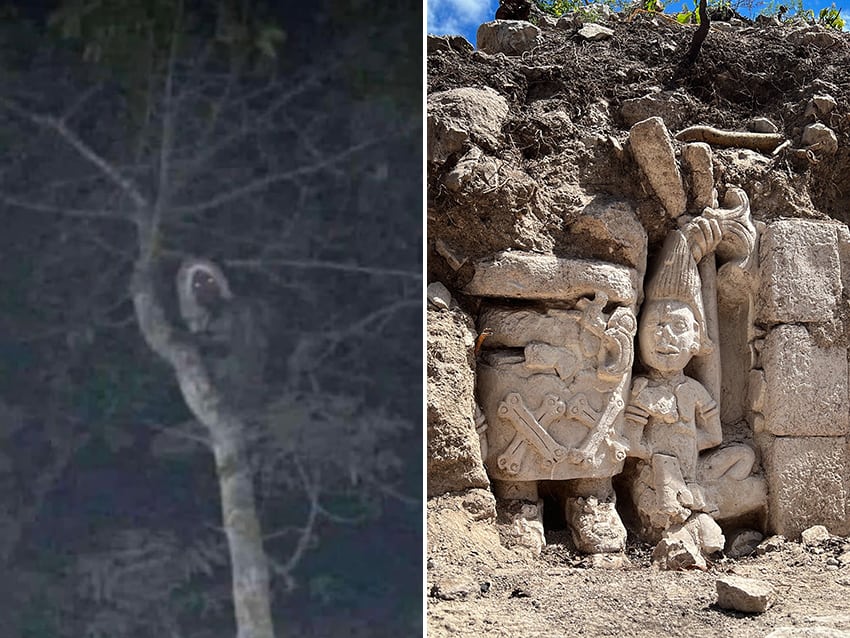
The president shared the photo of a supposed alux (left) along with an ancient carving depicting the mythical creature. (Andrés Manuel López Obrador/X)
The second quarter of the year also gave us some curious drug-related stories: liquid methamphetamine disguised as tequila (now that would make a dangerous margarita!), and more meth hidden among a shipment of a licit — and infinitely healthier — product: Brussels sprouts.
Other criminals attempted — but ultimately failed — to get away with making and distributing counterfeit Coca-Cola. The Real Thing? “Possibly cloned,” said Mexico City authorities.
In May, photojournalist Anna Bruce gave us a peek into the world of lucha libre. (Anna Bruce)
Q3: The (really) big cheese, alien corpses and a delinquent Chucky doll
Mexico News Daily has a proud history of covering the setting of new Guinness World Records in Mexico, and 2023 was no different. On Sept. 1, we reported that a 558-kilogram ball of quesillo, or Oaxaca cheese, had been made in Pijijiapan, Chiapas, setting a new record in that niche Guinness category.
If your mind has wandered to quesadillas, you’ll need some tortillas! Haven’t got any? Paula Michelle De Jesús Marcos could get them to you fast — the 12-year-old won the annual Carrera de la Tortilla (Tortilla Race) in Tehuacán, Puebla, in August, carrying three kilograms of tortillas on her back as she ran the five-kilometer course.
Andy Altman-Ohr continued his third-quarter coverage of Mexican uniqueness (¡como México no hay dos!) with a report on the presentation in Congress of what a journalist and self-described ufologist claimed to be 1,000-year-old corpses of extraterrestrials. We’re still scratching our heads about that one.
Q4: A compassionate cop, a surfing dog and Mexican memes
“What a generous and compassionate act” and “So glad they recognized this super MOM!” were among readers’ comments on a heart-warming story we published in November about a police officer who was promoted after breastfeeding a hungry baby in Acapulco in the aftermath of Hurricane Otis.
Earlier in November, we reported on a giant Day of the Dead altar that was set up in Michoacán to honor the life of a deceased centenarian who was apparently the inspiration for the Mamá Coco character in the 2017 animated film “Coco.”
Continuing on the subject of honoring Mexican grandmothers (and great-grandmothers at that!), Gabriela Solís this month passed on three recipes and secret tips from her 99-year-old abuelita. The article — featuring recipes for frijoles refritos, enchiladas and chilaquiles — became one of the most popular pieces we’ve published this year.
It’s hardly Mexican, but if you’re too busy to cook, you could just grab a doughnut — or even several dozen, as federal officers did in Puebla, last month. While the police may or may not have been hungry, their visit to three doughnut stores in San Martín Texmelucan was strictly for law enforcement purposes — allegedly counterfeit Krispy Kremes were on sale.
Selling fake doughnuts is one way to fall foul of the law, and singing Mexico’s national anthem incorrectly, believe it or not, is another. But existing (rarely enforced) penalties are too lenient, according to a Morena lawmaker who proposed harsher ones. One of our readers described her proposal as “absolutely loco,” which sounds about right.
MND writer Gabriela Solís abuela’s enchiladas (and frijoles refritos, and chilaquiles) were a hit with readers earlier this month. (Unsplash)
Any instrumental accompaniment to Mexico’s himno nacional would no doubt be error-free if it were provided by a group of young musicians from a small village in Oaxaca who had the trip of a lifetime touring France this year. Gordon Cole-Schmidt told us their inspiring story in an article headlined “From violence to virtuosos in Oaxaca.”
Equally talented, albeit in a very different way, is Covid the surfing dog, who was given her memorable name after she was abandoned on a Veracruz beach during the pandemic.
We hope you enjoyed reading our quirkier stories this year, and perhaps found a few here that you missed. We’re already looking forward to another year of weird, wonderful and distinctively Mexican stories in 2024!
By Mexico News Daily chief staff writer Peter Davies (peter.davies@mexiconewsdaily.com)
Looking for something to watch over the holidays? Check out the recommendations from the Mexico News Daily team. (Shutterstock)
Looking for something to watch over the holiday season? We’ve got you covered with this list of favorite films and series about Mexico, or by Mexican filmmakers, curated by the Mexico News Daily team.
Tell Me When (Dime cuándo tú)
Available on Netflix, “Tell Me When” is a by-the-book rom-com, but it’s a cut above because it’s sort of sweet and semi-funny – and Mexico City plays a starring role! It’s about a nerdy L.A. workaholic who travels to Mexico to retrace his grandfather’s footsteps and perhaps find love along the way. The lovelorn 20-something is played by Jesús Zavala, who also portrayed the nerdy Hugo Chavez on Netflix’s “Club de Cuervos.” The 2021 film features dialogue in both English and Spanish, with subtitles as needed.
Recommended by Andy Altman-Ohr, staff writer
Northern skies over empty space (El norte sobre el vacío)
This film, directed by Alejandra Márquez, won best picture at the Ariel Awards this year. It is a slow-burning family saga set on a ranch in northern Mexico that creates an atmospheric tension so taut, it lingers long after you’ve finished watching.
Recommended by Kate Bohné, chief news editor
Chicuarotes
Anxiety-ridden story about life in Mexico City for two teenagers looking for a better life. Shocking, brutal but honest.
Recommended by Gordon Cole-Schmidt, contributing writer
Totem
Mexico’s entry to the 2024 Oscars, Totem is a minimalist narrative that gives deep emotional space to a single event – a birthday party for a dying father. I love the direction and screenplay. Totem is perfectly Mexican in its depiction of family, friends and loss.
Recommended by Caitlin Cooper, editor
La Huesera
La Huesera is a perfect example of Mexican filmmakers’ flair for a good horror story. In this case, the fear-factor comes from the supernatural “huesera” but also from the nightmare the protagonist becomes trapped in after shaping her life to fit other people’s preferences.
Recommended by Rose Egelhoff, editor
A Million Miles Away
Directed by Alejandra Márquez, this film tells the true story of how the son of grape-pickers succeeded in becoming an astronaut.
Recommended by John Pint, contributing writer
La Casa de las Flores
I watched this series prior to moving to Mexico City and I watched it again a year into my new life here. It was great the first time, but it was excellent the second. There are loads of funny, cultural quirks that I hadn’t picked up on before living in CDMX, from family dynamics to colloquial language to Mexico’s love/hate relationship with Spain. I LOL’ed often. I hope you will too.
Recommended by Bethany Platanella, contributing writer
Like Water for Chocolate (Como agua para chocolate)
This film, based on a book of the same name, tells the story of Tita, the youngest daughter of the De la Garza family. At the time of the Mexican Revolution, family tradition required the youngest daughter to stay at home and take care of her mother (until her mother’s death) instead of marrying. Tita falls in love and expresses her feelings through cooking. This movie has it all: great photography, excellent story and a touch of magical realism. You can’t miss it.
Recommended by Rosario Ruiz, editor
Everybody Loves Somebody
I love how the bilingual dialogues, charming scenery, and amazing cast refresh the typical rom-com plot in this movie. Set between Los Angeles and Baja, the story follows a young doctor who finds herself torn between an ex-boyfriend and her new Australian co-worker at a time when her parents (who have been together for 40 years) decide to get married.
Recommended by Gabriela Solís, staff writer
Roma
This Oscar-nominated film depicts the complex class system in Mexico during the 1970s from the viewpoint of a live-in Indigenous (Mixtec) housekeeper of an upper-middle-class Mexican family. The fallout from Cuarón’s controversial multi-award-winning masterpiece galvanized many to challenge class differences that remain prevalent today.
Recommended by Mark Viales, contributing writer
Deseo
Set in San Miguel de Allende, Mexico and directed by native Antonio Zavala Kugler, this 2013 film has some big Mexican movie stars and epic cinematography, music, acting and direction. The director’s Latin twist on Arthur Schnitzler’s play “Reigen”- a satirical, seductive romp through aristocratic decadence – is provocative, humorous and beautiful to look at. A Mexican gem!
Recommended by Henrietta Weekes, contributing writer
Don’t miss our first MND Staff Picks 2023 listing favorite books, and stay tuned for favorite foods and cultural experiences in the coming weeks.
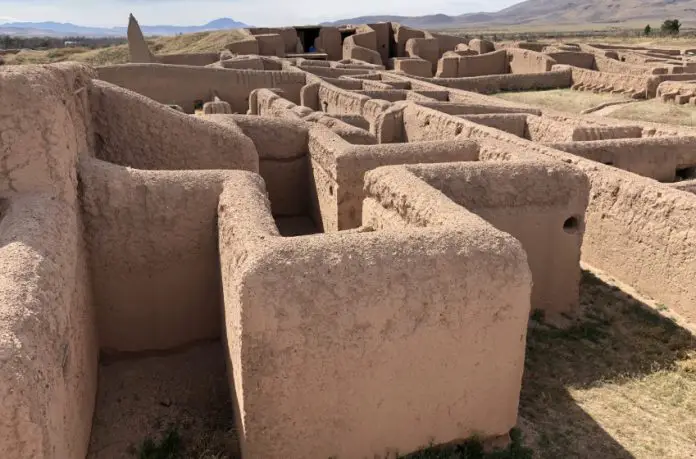
The destruction of Paquimé occurred long before the arrival of the Spanish. (INAH)
The Paquimé archeological site is a testament that the north-south flow of goods and people has been crossing the “border” for millennia.
Though the site is hidden away in northwest Chihuahua state, the valley surrounding Paquimé once nurtured northern Mexico’s most important pre-Columbian culture.
Paquimé is referred to as “Casas Grandes” in English, but since that name also refers to the ancient culture and modern Pueblo Mágico next door, “Paquimé” distinguishes the site better. Either way, the translation to English is the same: “big houses.”
Northern and southern influences in the architecture
Those “big houses” are what strike you first when you enter Paquimé, distinguishing it from every other archeological site in Mexico. The living structures are large, interconnected rooms for the culture’s elite that arose and changed as the Casas Grandes culture developed from 700-1475.
They are the strongest architectural evidence for classifying Casas Grandes as a Mogollon culture, one of several that shaped parts of the present-day states of Chihuahua, Sonora, New Mexico and Arizona.
Exhibit at the Casa Chihuahua regional museum in the state capital meant to give some idea of what life was like inside one of the “big houses” of Paquimé (credit Leigh Thelmadatter)
These kinds of adobe constructions can be seen farther north, but not to this sophistication. The adobe “bricks” were made by pouring water and earth into molds set to dry on top of walls, allowing for up to four stories. The very dry climate and overhanging roofs made the firing of bricks unnecessary.
Upon closer inspection of the site, important similarities with Mesoamerica appear. The most indisputable evidence of such influence is the Mesoamerican ball court. Plazas, columned patios and environmentally-situated mounds/pyramids also demonstrate links. But perhaps the most surprising example is the Macaw House. Far from their southern habitats, macaws were raised and sacrificed here despite the harsh climate.
An evolving understanding of Casas Grandes history
This evidence initially led archeologists to see Paquimé as a Mesoamerican outpost, but Casas Grandes was an independent society with important cultural and economic connections, from northwestern Mesoamerica to Old Pueblo territory in New Mexico.
Its status as a Mogollon site is based on the agreement that the valley was settled by migrations of people from the north, mostly likely escaping drought. Casas Grandes pottery has striking similarities with ancient and modern pottery from what is now the southwest US.
For simplicity, the culture’s history can be divided into three periods. The Viejo (old) period (700-1060) covers the transition from hunter-gatherer to agricultural subsistence and the appearance of the first villages along rivers and streams, fed by waters from the Sierra Madre Occidental.
The Medio (middle) period (1060-1340) is marked by the rise of Paquimé imposing a centralized command over the valley’s villages and a population of over 10,000. The big houses and pottery reach their height at this time.
Evidence of instability appears as early as 1150, but a sacking in 1340 marks a period of slow decline called the Tardío (late) period, which likely ended in 1475. Trade activity, the development of fine pottery and the construction of “big houses” continues, but the elite’s hold on power is eroding.
Mata Ortiz pottery, while clearly inspired by ancient Paquimé, takes liberties with the geometric designs and vessel shapes. (credit Alejandro Linares García)
Paquimé suffers complete destruction in 1475, with everything in sight destroyed in fire. Why is strongly debated. Internal strife caused by drought is a good possibility, but Paquimé’s great trade wealth also made it a target.
Registered tour guide Azucena Durán offers another explanation that has limited prominence in academic sources. The ball court and evidence of human sacrifice, she says, may indicate that Mesoamerica was pushing their hegemony to a point that the locals could no longer permit, choosing to destroy their city rather than submit – perhaps it’s an allegory of northern Mexico’s ambivalence to Mexico City.
The destruction of Paquimé occurred long before the arrival of the Spanish, who discovered its ruins. Some archeologists believe that survivors from its demise fled to the mountains and that their descendants fought the Spanish before they disappeared.
Trade links north and south – then and now
The lack of written records hinders our understanding of Paquimé, but artifacts leave no doubt that it was a rich city with far-flung connections.
The market of the main plaza reveals a wealth of local and “foreign” items, but three are of the greatest interest: turquoise, copper and seashells.
By far, the most common are shells from the Pacific, both worked and raw, which served as a currency and store of wealth. The turquoise and copper prove Paquimé’s north-south reach, sourced from “New Mexico” and western Mesoamerican respectively. Paquimé yields only small quantities of both, likely because Paquimé was a conduit for the jewelry trade – an assertion supported by the fact that turquoise was very rare and extremely valued in Mesoamerica, as was copper in the far north.
Paquimé and modern northern Mexico identity
Example of a Paquimé-inspired tattoo from the Omuro Tatuajes.(Facebook page – artist El Samuko)
Though Paquimé fell long ago, north-south trade remains as important as ever, as evidenced by the trucks and freight trains that traverse central Chihuahua today.
In recent decades, Paquimé and the Casas Grandes culture have experienced a resurgence in importance, especially for regional identity. Northern Mexico has always been a shifting cultural and demographic landscape. Influence still flows in from the north and the south, but today, those influences stem from modern Mexico City and the mostly Anglo culture of the United States.
But pride in being a chihuahuense has prompted modern inhabitants to appropriate the iconography of Casas Grandes.
The first manifestation of this was Mata Ortiz’s pottery, a recreation and modernization of Paquimé work which first achieved commercial success north of the border and today receives more respect within Mexico. Even more recent is the rise of Casas Grandes-style tattoos among the youth of Chihuahua city.
Still, the Paquimé site has not garnered the same attention that Teotihuacan and other Mesoamerican sites do, despite being named a World Heritage Site in 1998. Only in 2022 did state and federal authorities finally build a site museum well worth a visit.
But there are some distinct advantages to this. The lack of walls and other protections means you can enter the site anytime, appreciate the structures as they relate to their surroundings and be blessedly free from vendors and other tourists.
Leigh Thelmadatter arrived in Mexico over 20 years ago and fell in love with the land and the culture in particular its handcrafts and art. She is the author of Mexican Cartonería: Paper, Paste and Fiesta (Schiffer 2019). Her culture column appears regularly on Mexico News Daily.
An irresistible sweet-nutty-crunchy snack everyone will love! (Simply Recipes)
You know how it is: you’re invited to someone’s home for a dinner or get-together. You’d like to bring something to show your appreciation, and while a bottle of wine will do, you wonder if you could make a food gift instead.
Homemade food gifts are unique, delicious and unexpected – and delicious! – surprises that everyone loves to receive. They’re labors of love that are sure to elicit oohs and ahhs from both the assembled guests and your appreciative host.
Savory or sweet, some of the best holiday food gifts are simple classics. Dressed up with a bit of colorful ribbon, a decorative jar or cellophane bag, or a pretty box and some tissue paper, they don’t have to be complicated or difficult. Think delicious and edible! You’ll have fun making them and maybe even start a tradition. The recipes below are inexpensive to make, with easily available ingredients.
Do consider carefully whether the recipient has any food allergies or dietary sensitivities. If you don’t know, attach a small label or tag to the gift listing the ingredients, just in case.
Hibiscus-Ginger Cocktail Syrup
For the margarita lover on your list.
4 cups sugar
About 24 whole cloves (about 1 tsp.)
1 cup julienned fresh ginger
About ¾ cup dried hibiscus (jamaica) leaves (about 1 oz.)
Combine sugar, cloves, ginger and 4 cups water in a medium saucepan. Bring to a simmer over medium-high, stirring until sugar is dissolved – Don’t let it boil, as that will make the syrup cloudy. Remove from heat and steep 10 minutes. Stir in hibiscus leaves; and steep another 35 minutes. Strain through a fine-mesh sieve into a large jar or bowl; discard solids. Refrigerate for about 1 hour until completely cool. Pour into gift bottles. Syrup can be stored, refrigerated, for up to 1 month.
Butter Mints
Homemade Butter Mints. (Barefeet in the kitchen)
No cooking is necessary to make these classic candies, and they’re so easy and fun to make that even the kids can help. Make traditional pastel colors or red and green for the holidays.
1 stick cold unsalted butter, cut into small pieces
4 cups confectioners’ sugar, plus more for dusting
¼ tsp. peppermint extract
1 Tbsp. whole milk
Pinch of salt
Food coloring, gel or liquid, as desired
Using a mixer on low speed, combine butter and 2 cups sugar until sugar is moistened, then increase speed to medium-high and beat until well combined. Turn down to low speed, add remaining 2 cups sugar and beat about 1 minute more till thoroughly mixed. Increase speed to medium-high and beat until light and fluffy, about 6 minutes more. Add extract, milk and salt; beat until smooth.
Lightly dust a clean work surface with confectioners’ sugar, then dump or scoop mixture onto it. Divide into 5 pieces and tint as desired with food coloring, leaving one piece white. Keep pieces covered with plastic wrap while working to prevent drying out.
Roll “dough” into ½ -inch-thick ropes. Using a sharp paring knife, cut into half-inch long pieces. Transfer to a parchment-lined rimmed baking sheet. Let dry, uncovered, at least 12 hours. Mints can be refrigerated in an airtight container for up to 2 weeks. Makes about 10 dozen.
Tropical Granola
A classic recipe adapted to Mexican ingredients.
3 cups old-fashioned rolled oats
1 cup dried unsweetened coconut
½ cup chopped raw almonds
½ cup chopped raw pecans or walnuts
½ cup coconut oil
3 Tbsp. water
¼ cup packed brown sugar or grated piloncillo
½ cup pepitas (raw pumpkin seeds)
Flaky or coarse sea salt
¼ cup chopped dried pineapple, mango or apricots
¼ cup diced candied ginger or minced chocolate chips
Preheat oven to 300 degrees. Mix oats, coconut, all nuts, oil, water, sugar, pepitas and 1 tsp. salt. Spread mixture in an even layer on a rimmed baking sheet.
Bake until darkened, 50-60 minutes, stirring well every 10-15 minutes. Remove from oven and cool completely. Store in airtight containers at room temperature up to 2 weeks or refrigerated up to 3 months.
Chili-Cilantro Finishing Sauce
Use as a marinade or sauce for tofu, chicken or shrimp, or easily turn into a salad dressing or Thai sauce.
1 small bunch fresh cilantro, leaves and tender stems
1-3 chiles (jalapeno or serrano), seeded and chopped
1-2 cloves garlic
4-5 small limes or ⅓ cup rice vinegar
Water, if needed
Optional: ½ bunch green onions or ½ small onion, chopped
Place all ingredients except water in a blender. Slowly begin processing, gradually increasing the speed to high. If necessary, add a couple of tablespoons of water to loosen up the mixture. Add onions if using and continue blending till smooth and liquid. Store in refrigerator.
To make vinaigrette: 1 Tbsp., 1 Tbsp. rice vinegar or lime juice and 6 Tbsp. olive or peanut oil for a spicy dressing for salad or noodles.
To make Thai variation: Add ½-1 can coconut milk to Chili-Cilantro Sauce. Use to stir fry shrimp and vegetables.
Caramel Nut Popcorn Clusters
An irresistible sweet-nutty-crunchy snack everyone will love!
10 cups freshly popped popcorn
2 cups whole almonds
1 cup firmly packed light brown sugar
½ cup butter
¼ cup corn syrup
½ tsp. salt
2 tsp. vanilla
½ tsp. baking soda
Preheat oven to 225F (110C). Spray a rimmed baking sheet with non-stick spray and set aside. Mix popped popcorn and almonds in a large bowl; set aside.
Combine brown sugar, butter and corn syrup in a medium saucepan. Over low heat, stir until sugar dissolves. Increase heat to high and boil 5 minutes.
Remove from heat. Stir in vanilla and baking soda. Pour hot syrup in a thick stream over popcorn and almonds, stirring gently to coat. Pour the popcorn mixture onto the prepared baking sheet, spreading evenly.
Bake 1 hour. Remove from oven and cool completely. Break into pieces and store in an airtight container.